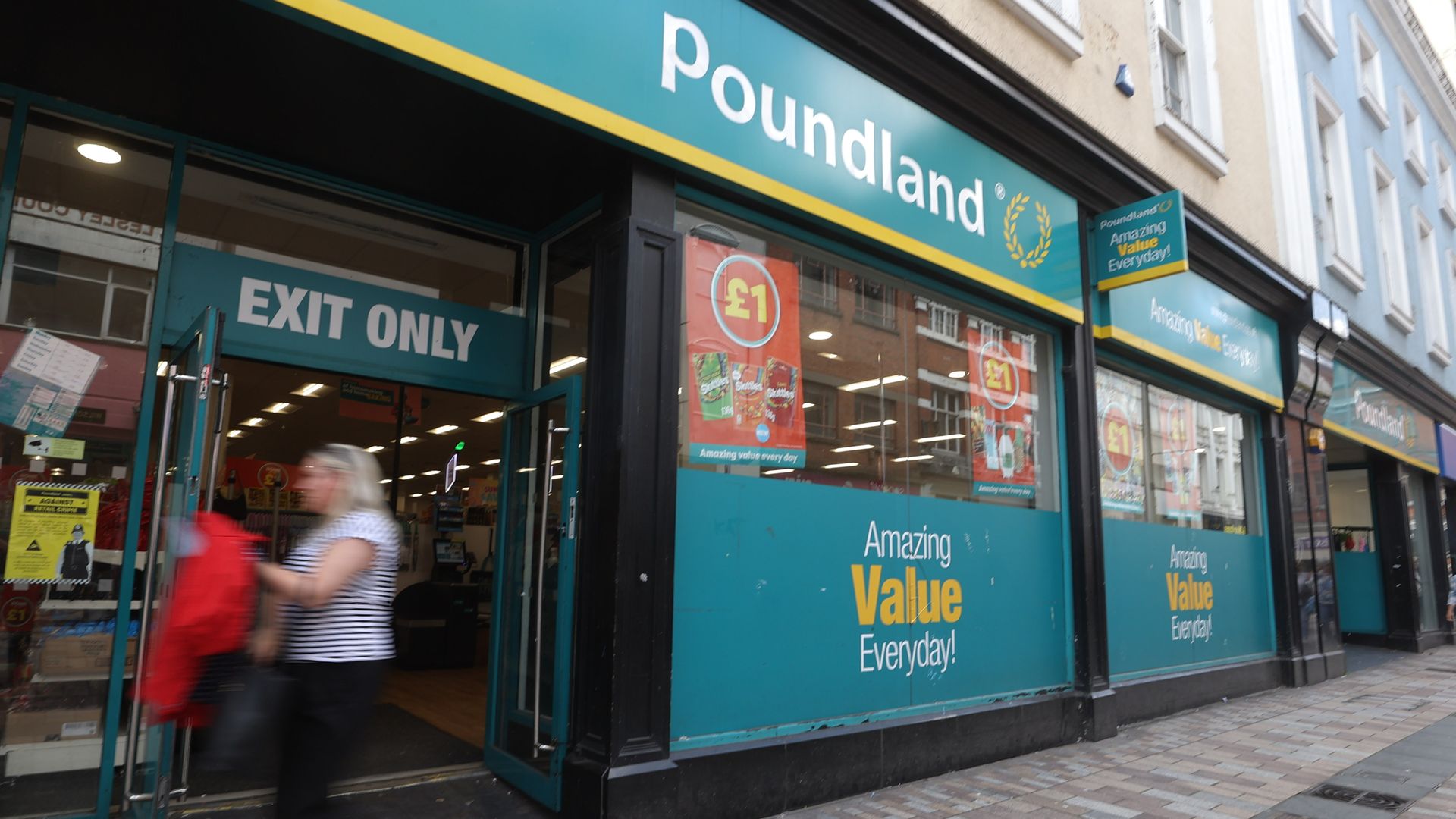
Poundland is staring down a severe existential crisis, driven by a toxic combination of evaporating profit margins, broken unit economics, and a sudden exodus of senior leadership. When newly appointed directors begin heading for the exits before their seats are even warm, it rarely signals a routine corporate reshuffle. It signals that the people hired to fix the ship have looked below the waterline and realized the hull is compromised. For years, the British discount retail giant survived on footfall and volume, banking on the simple promise that everything on the shelf cost a pound. Inflation destroyed that promise, forcing the chain into a messy identity crisis that left it caught between supermarkets on price and pure-play discounters on cost structure. Now, with parent company Pepco Group scrambling to contain the bleeding and key executives bailing out, the high street staple faces a brutal reckoning that could end in widespread store closures, a distressed sale, or outright administration.
The retail graveyard is full of brands that mistook busy aisles for a healthy balance sheet. Walk down any British high street on a Saturday afternoon, and Poundland still looks alive. Baskets are full. Queues snake past the impulse-buy racks of batteries and discounted chocolate. To the casual observer, the business appears immune to the broader economic chill, thriving precisely because households are strapped for cash.
That illusion is the most dangerous trap in modern retail.
High footfall means nothing when the cost of keeping the lights on outpaces the pennies squeezed from every transaction. Over the past two years, the fundamental math of running a multi-price discount chain in the United Kingdom has broken down. The sudden departure of new directors is not the cause of Poundland’s distress; it is the final, undeniable symptom of a business model that has run out of room to maneuver.
The Anatomy of a Broken Price Point
To understand why Poundland is teetering on the edge, you have to look at the original sin of single-price retailing. When the company launched in Burton upon Trent in 1990, the £1 price point was a stroke of psychological genius. Shoppers did not need to do mental arithmetic in the aisles. Everything was a pound, full stop. That simplicity drove massive impulse purchasing and allowed the chain to scale rapidly across towns and retail parks.
Inflation eventually killed the single-price model. You cannot sell a tin of branded beans, a pack of AA batteries, or a bottle of shampoo for a pound when wholesale costs, freight rates, and factory wages have surged by double digits. Poundland was forced to abandon its core identity and transition into a multi-price retailer, introducing items at £1.50, £2, £5, and higher.
The moment Poundland dropped the single-price guarantee, it lost its moat.
Once a shopper has to check price tags, Poundland is no longer competing in a category of one. It is suddenly fighting a two-front war against much stronger rivals. On one side sit the established supermarkets—Tesco, Sainsbury’s, Asda, and Morrison’s—which have deployed aggressive loyalty card pricing and Aldi Price Match campaigns to defend their entry-level grocery market share. On the other side sit lean, out-of-town operators like B&M and Home Bargains, which boast vastly superior supply chains, larger store footprints, and lower occupancy costs per square foot.
Poundland got stuck in the middle. Its legacy high street stores were too small to carry the high-margin general merchandise, garden furniture, and homeware that keep B&M profitable. At the same time, its grocery prices were no longer noticeably cheaper than a standard supermarket loyalty deal. Consumers noticed. When core customers realize they can get the same multi-pack of crisps or bottle of bleach at Tesco for the same price—without having to make a separate trip to a cramped high street unit—the raison d'être of the discount store evaporates.
Why New Directors Walk Away
In corporate turnaround situations, the arrival of fresh executive talent is supposed to calm nervous suppliers and reassure lenders. Turnaround specialists thrive on chaos; they are hired specifically to make unpopular cuts, renegotiate leases, and rewrite failing strategies. When those very directors start heading for the door shortly after arriving, seasoned industry watchers pay close attention.
Executives do not walk away from lucrative turnaround packages because the job is hard. They walk away when they discover that the levers they expected to pull are jammed or nonexistent.
Consider what a newly appointed director faces upon opening the books at a distressed high street retailer. First, there is the issue of operational autonomy. Poundland operates under the umbrella of the Warsaw-listed Pepco Group, which also owns the rapidly expanding Pepco brand across mainland Europe and Dealz. Historically, Pepco Group relied on Poundland as its mature, cash-generative anchor in Western Europe while it poured capital into opening hundreds of new Pepco stores across Central and Eastern Europe.
When the parent company’s own margins come under pressure, the dynamic flips. A new director brought in to rescue Poundland may quickly realize they lack the capital expenditure budget required to overhaul aging IT systems, fix clunky warehouse logistics, or modernize dilapidated stores. Instead of investing for growth, they are ordered to extract cash to prop up group-level metrics.
Second, there is the sheer weight of fixed liabilities. You cannot cost-cut your way out of an uncompetitive lease portfolio overnight. A hypothetical scenario illustrates the bind: imagine a retail director taking over a chain of 800 stores, only to find that 250 of those locations are locked into upward-only rent reviews signed a decade ago, sitting on dying high streets where footfall has permanently dropped by 30 percent since 2019. Even if the director slashes head office staff and optimizes delivery routes, the sheer drag of loss-making stores swallows every penny of operational savings.
If the boardroom consensus resists the kind of radical, painful restructuring required—such as a Company Voluntary Arrangement (CVA) or a pre-pack administration to shed toxic leases—an incoming director faces a binary choice. They can stay, preside over a slow-motion train wreck, and attach their name to a high-profile corporate failure. Or they can resign early, preserve their professional reputation, and let someone else take the fall.
The Structural Squeeze on British High Streets
Poundland’s crisis cannot be separated from the broader economic reality crushing physical retail in the UK. Operating a network of hundreds of high street shops has become an exercise in absorbing relentless, state-mandated cost increases.
Look at the cost stack hitting retail balance sheets:
- Wage inflation: Successive, steep increases in the National Living Wage have added tens of millions of pounds to annual payroll expenses for labor-intensive retailers. Discount stores rely heavily on hourly staff to unpack boxes, restock shelves manually, and run checkouts. Unlike luxury boutiques, they cannot simply raise prices by 10 percent to cover higher wages without destroying demand.
- Business rates: The UK’s commercial property tax system remains deeply punitive for physical retailers with large high street footprints. Even as property values in town centers have stagnated or fallen, business rates continue to act as a massive fixed tax that must be paid before a single item is sold.
- Supply chain volatility: Discount retail depends on predictable, cheap shipping from manufacturing hubs in Asia. Geopolitical disruptions, container shortages, and rerouted maritime freight have repeatedly spiked import costs, squeezing gross margins on low-ticket items where there is almost zero financial cushion.
To survive this environment, a discount retailer needs ruthless cost-to-serve efficiency. Every time a store employee has to open a cardboard box with a box cutter and place individual items onto a shelf, margin is lost. This is why Aldi and Lidl have dominated the grocery sector; their entire operation is engineered around shelf-ready packaging, minimal SKU counts, and rapid stock rotation.
Poundland’s legacy estate was never built for that kind of frictionless logistics. Many of its high street stores occupy awkward, multi-story Victorian or mid-century buildings with cramped stockrooms, narrow loading bays, and no freight elevators. Getting stock from a delivery lorry to the shop floor requires immense manual labor. In an era of soaring minimum wages, inefficient real estate becomes a fatal liability.
The Folly of the Chilled and Frozen Gamble
In an attempt to drive repeat visits and capture a larger share of the weekly household shop, Poundland invested heavily in rolling out chilled and frozen food sections across hundreds of stores, notably acquiring Fultons Foods in 2020 to accelerate the push. On paper, the strategy looked sound. Milk, bread, ready meals, and frozen peas bring shoppers through the door multiple times a week, whereas batteries and birthday cards only bring them in occasionally.
In practice, chilled and frozen food is one of the most unforgiving categories in retail.
Dry goods—tins, toiletries, stationery, cleaning supplies—are forgiving. If a pallet of dish soap sits in a warehouse for three weeks, it loses zero value. Chilled food has a ticking clock measured in days. It requires expensive, energy-hungry refrigeration units in every store, complex cold-chain logistics, and sophisticated inventory forecasting to prevent catastrophic spoilage.
When footfall dips even slightly, chilled food turns into pure waste. Every unsold sandwich or expired pack of sausages is a 100 percent write-off, directly eroding the razor-thin profits generated by the rest of the store. Furthermore, adding chilled food forced Poundland to compete even more directly with convenience chains like Tesco Express, Sainsbury’s Local, and Aldi—operators that possess decades of cold-chain mastery and vastly greater buying power in fresh food.
Instead of saving the business, the push into chilled and frozen goods added massive operational complexity and energy overhead at the exact moment wholesale electricity prices in the UK went through the roof. Keeping thousands of open-front chillers running across 800 stores during an energy crisis burned through cash reserves at an alarming rate.
The Supplier Trust Deficit and Credit Insurance
When headlines start swirling about potential collapse and departing directors, the most immediate threat to a retailer does not come from shoppers. It comes from the financial plumbing behind the scenes.
Modern retail runs on trade credit. Poundland does not pay for goods the moment they leave a factory; it pays suppliers 30, 60, or 90 days after delivery. To protect themselves against the risk of a retailer going bust before paying its bills, suppliers rely on credit insurance from major underwriters like Euler Hermes, Atradius, and Coface.
Credit insurers are notoriously unsentimental. They monitor boardroom stability, cash flow forecasts, and parent-company backing with cold precision. When newly hired directors abruptly resign, credit insurers immediately view it as a red flag for undisclosed financial distress.
If underwriters decide the risk has spiked, they slash or withdraw credit insurance cover for Poundland’s suppliers. Once credit insurance disappears, the dominoes fall rapidly:
- Suppliers demand cash upfront: Manufacturers refuse to ship new stock unless Poundland pays upon order or delivery.
- Working capital evaporates: Suddenly having to pay upfront for inventory while still waiting to sell it in stores drains the company’s remaining cash reserves within weeks.
- Empty shelves appear: Suppliers hold back shipments, leading to visible gaps on store shelves.
- Shoppers abandon the store: Customers walk in, see half-empty aisles, assume the store is closing down, and take their money elsewhere.
This liquidity spiral is how major retailers die. Rarely does a chain run out of customers first; it runs out of credit, which starves the shelves, which then drives away the customers. Once that cycle begins, reversing it without an immediate, massive injection of emergency capital is almost impossible.
Pepco Group’s Strategic Dilemma
For parent company Pepco Group, Poundland has transformed from a crown jewel into an existential headache. Pepco’s leadership has already been forced to write down hundreds of millions of euros in goodwill associated with the British chain, acknowledging on paper that the business is worth a fraction of what it once was.
The parent company now faces an acute capital allocation dilemma. Every euro spent propping up loss-making UK high street stores is a euro taken away from opening high-returning Pepco stores in markets like Poland, Romania, and Spain, where labor costs are lower, competition is less saturated, and brand perception remains strong.
Institutional investors in Warsaw and London have little patience for conglomerates subsidizing failing divisions out of nostalgia. Shareholders want decisive action. That leaves Pepco Group with three unenviable paths forward, none of which guarantee the survival of Poundland in its current form.
The first option is a radical restructuring via insolvency mechanisms. Using a UK Restructuring Plan or pre-pack administration, Pepco could attempt to shed hundreds of unprofitable high street leases, write off historic liabilities, and emerge with a smaller, leaner core of 400 to 500 profitable retail park stores. While legally viable, this route carries immense reputational damage, triggers fierce backlash from commercial landlords, and guarantees the permanent destruction of credit insurance for the foreseeable future.
The second option is a distressed sale to a private equity turnaround firm. Restructuring specialists like Hilco, Gordon Brothers, or Modella Capital—the latter having already stepped in to acquire struggling UK retail assets like WHSmith’s high street business—specialize in buying distressed chains for a nominal sum, often £1, in exchange for taking on the liabilities. Pepco would walk away clean, avoiding the messy optics of overseeing mass layoffs, while a turnaround specialist takes a hatchet to the store estate.
The third option is a managed wind-down. If no buyer steps forward willing to take on the lease liabilities and pension obligations, Pepco could simply stop renewing leases as they expire, liquidate remaining stock, and gradually shrink the footprint until the brand vanishes from the high street entirely—much like the slow, painful demise of Wilko before its eventual administration.
The Illusion of the Indestructible Discounter
For more than a decade, retail analysts operated under the assumption that discount chains were counter-cyclical winners. The logic seemed bulletproof: when the economy booms, people shop; when the economy crashes, people trade down to discount stores.
Poundland’s unraveling exposes the flaw in that dogma. Discount retail only wins when its cost structure is radically lower than the competition’s. You cannot run a high-cost, labor-heavy, high-street real estate portfolio and survive on penny-ante margins. When inflation drives up wages, energy, and rent simultaneously, the middle-ground discounter gets crushed between the ruthless efficiency of the German supermarkets and the warehouse-scale economics of out-of-town value giants.
The departing directors saw the math clearly. You cannot merchandise your way out of structural obsolescence, and no amount of creative shelf-stacking can fix a store footprint built for a bygone era of British retail. Unless Pepco Group finds a buyer willing to absorb massive restructuring pain—or takes the axe to hundreds of stores itself—Poundland is destined to become the next cautionary tale boarded up on the high street.