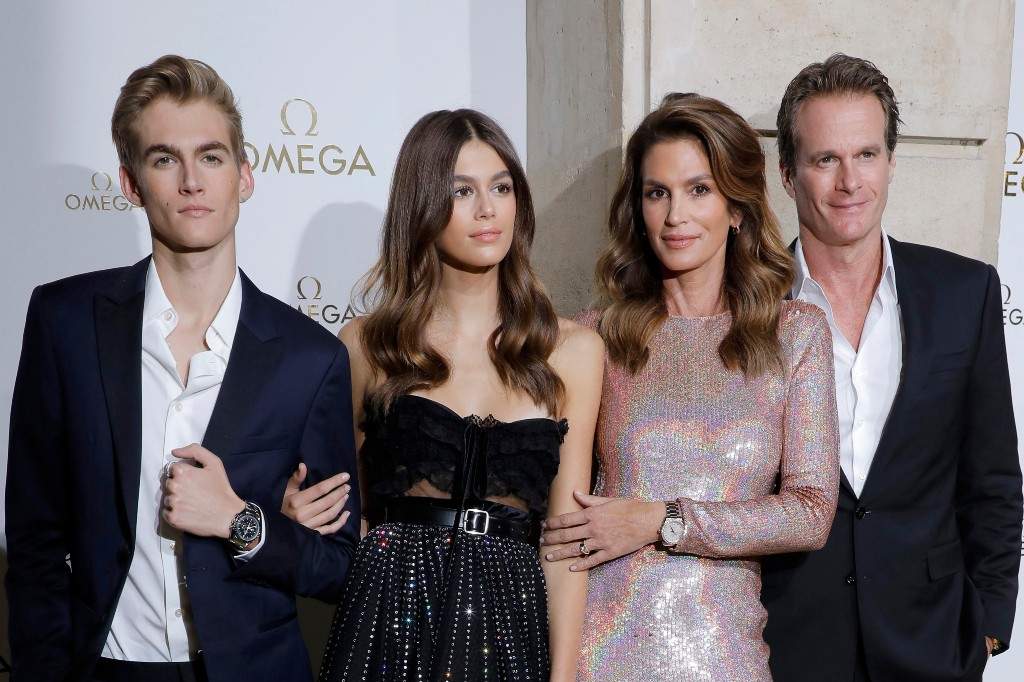
When a famous family issues a statement calling themselves "beyond heartbroken," the public usually sees grief. Having covered celebrity dynasties, crisis PR, and public estrangements for over twenty years, I see something else entirely. I see a carefully calibrated containment strategy. Headlines framing the Presley Gerber family response around raw emotional devastation often miss the structural mechanics driving the public narrative. When family members step forward to speak about Presley Gerber, emotion is rarely the only variable in the room. Reputation management, brand insulation, legal caution, and generational friction all sit right underneath the tears.
To understand what actually happens when a high-profile household publicly addresses a crisis involving one of its own, you have to look past the sympathetic phrasing. Grief is real. Grief can also be deployed, shaped, and timed with surgical precision.
How Family Statements Function as PR Shields
Public statements from celebrity families rarely emerge in a vacuum. They arrive after phone calls, legal consultations, and quiet debates over who gets to speak and what gets left unsaid. When relatives of Presley Gerber address public scrutiny or personal turmoil, their words do two jobs at once. They express personal concern while building a perimeter around the family brand.
In entertainment and fashion circles, public perception operates like a balance sheet. Every member of a high-visibility household carries implicit equity tied to the family name. When one person becomes the center of uncomfortable headlines, speculation, or concern, everyone adjacent to that name feels the ripple. A unified or sorrowful family message signals care and solidarity. It also sends a quiet warning to onlookers and tabloids that the family is watching closely.
Consider a hypothetical example involving a fictional modeling family. Suppose the eldest son makes headlines after erratic social media posts and a cancelled appearance. Within forty-eight hours, a relative releases a tearful statement saying the family is devastated and praying for him. To the casual reader, that looks like pure vulnerability. To an industry insider, it functions as a circuit breaker. It shifts coverage from ongoing speculation about what went wrong to sympathy for the people standing on the sidelines.
That does not mean the pain is fake. People who love each other genuinely hurt when things spiral in front of millions of strangers. Yet emotional authenticity and strategic messaging can coexist in the exact same paragraph. Treating a family statement purely as a diary entry blinds you to the incentives shaping every word.
The Spotlight Tax on Second-Generation Fame
Growing up inside a recognizable household creates a distinct set of pressures that outsiders routinely underestimate. Second-generation public figures inherit doors that stay locked to almost everyone else. They also inherit expectations they never asked to carry.
Presley Gerber has spent years living under the dual weight of inherited visibility and individual identity. When you grow up with cameras around your family, normal developmental missteps become public property. A bad night, a messy breakup, a public quarrel, or a period of personal instability does not happen behind closed doors. It happens under floodlights, archived forever by search engines and repost accounts.
Inherited Expectations Versus Personal Autonomy
Every child of famous parents faces a version of the same quiet bargain. Access comes with scrutiny. If you lean into the family orbit, people accuse you of coasting on connections. If you pull away or test boundaries, people scrutinize every move as rebellion or trouble.
Over decades of watching celebrity children grow into adults, a clear pattern emerges. The hardest years often arrive right when the novelty of being "the kid" wears off and adult accountability begins. You are judged not just on your own work, but on how your choices reflect on the lineage. That dynamic puts immense strain on family bonds, especially when private concerns collide with public appearances.
When Concern Becomes Public Spectacle
Families dealing with a loved one's struggles face an agonizing choice. Stay silent and risk looking indifferent or out of touch. Speak out and risk turning a deeply personal situation into a multi-day news cycle.
Once a relative says they are heartbroken, the story expands. Suddenly there are multiple characters, competing interpretations, and endless commentary from people who do not know any of them personally. Even well-intentioned remarks can escalate tension behind closed doors if the person being discussed feels ambushed, misunderstood, or cornered in public.
What Competitors Miss in Grief-Driven Coverage
Most entertainment coverage treats family reactions like a scorecard. Who commented. Who stayed quiet. Who liked whose post. Who sounded the most emotional. That approach generates quick clicks, yet it leaves readers with a shallow picture of what is actually unfolding.
A harder-hitting look asks three tougher questions. First, who benefits from the current narrative? Second, what information is conspicuously absent from the statement? Third, how does this moment reshape relationships inside the household once the headlines fade?
When articles stop at "beyond heartbroken," they flatten complex human dynamics into a single mood. Real families are messier than that. A parent might feel devastated while a sibling feels exhausted, angry, or protective. One relative might favor open transparency while another insists on strict privacy. Publicly, those differing instincts often get smoothed into one neat quote so the outside world sees a united front.
There is also a gray area around boundaries and enabling. Outsiders love to judge families for either speaking too much or staying too quiet. In reality, there is no clean playbook when someone you care about is navigating turbulent waters in the public eye. Stepping in too loudly can feel controlling. Stepping back can look cold. Families frequently stumble between those poles without any easy answers.
The Quiet Cost of Living Out Loud
Social media has accelerated every family drama into real-time theater. Decades ago, a tense Thanksgiving or a rocky stretch for a young adult might stay contained within a few inner-circle conversations. Today, every caption, unfollow, cryptic quote, and family statement is dissected frame by frame.
For anyone connected to Presley Gerber, that constant surveillance changes how ordinary human friction plays out. Disagreements that might normally cool down over coffee get amplified by millions of strangers taking sides. People project their own anxieties, family histories, and prejudices onto strangers they have never met.
Watch closely the next time a celebrity household announces it is heartbroken. Look past the sadness in the headline. Ask what pressure prompted the statement, what boundary it is trying to set, and what weight the family is carrying when nobody else is watching.