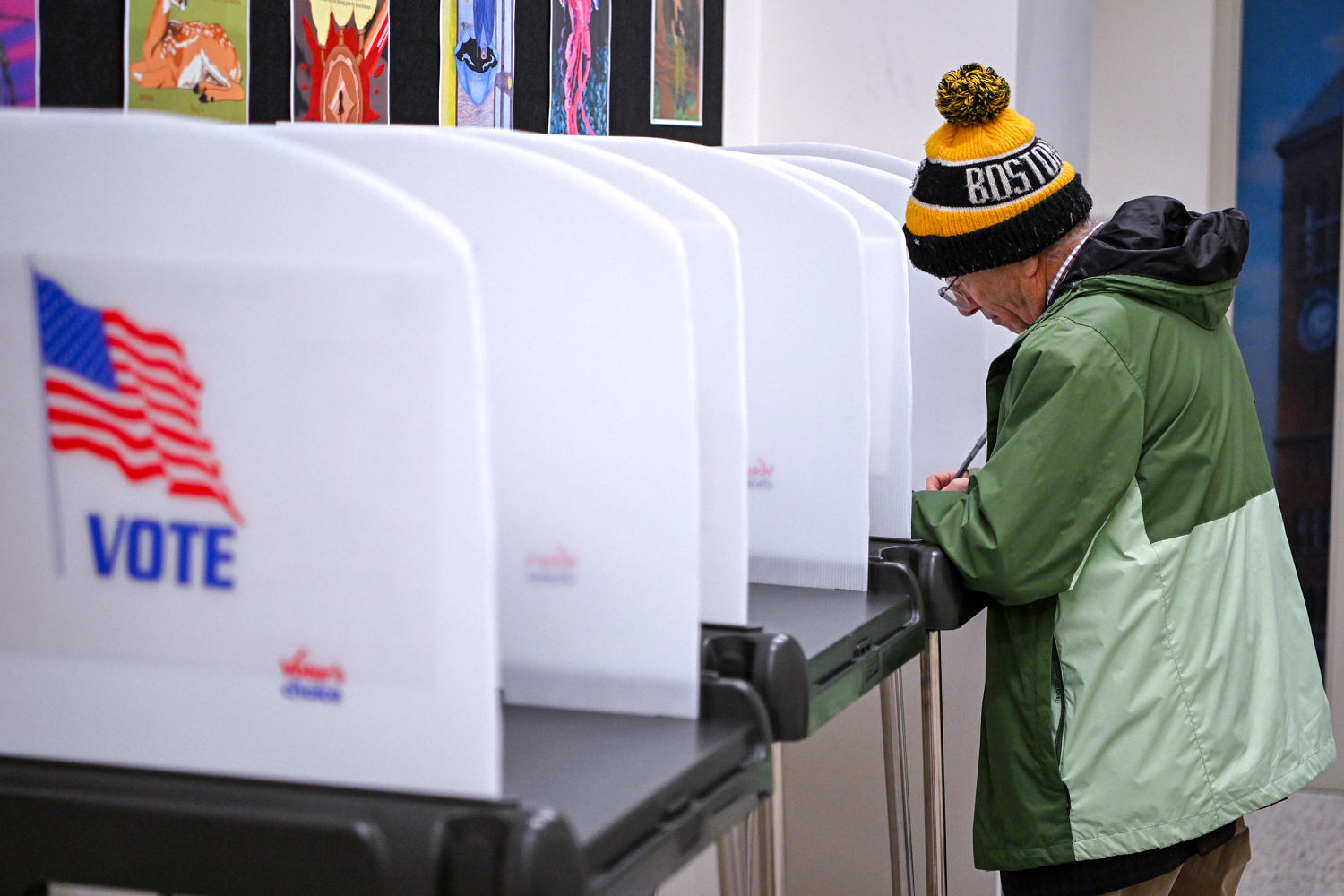
Whether Democrats can seize control of Congress on Election Day comes down to five concrete indicators that cut right through the noise of cable news panels. You need to watch the early suburban county returns in the Eastern time zone, the raw turnout split between mail-in ballots and Election Day walk-ins, the margin shifts among independent voters in rust-belt districts, the down-ballot coattails in states with high-profile gubernatorial or Senate races, and the speed of ballot curing in tight Western contests. Everything else is theater.
Every two years, the political-media complex manufactures a dramatic narrative out of thin air, treating an election like a sporting event with unpredictable momentum swings. Having covered Capitol Hill and statehouse trenches for decades, I can tell you that congressional elections rarely hinge on a last-minute gaffe or a viral campaign ad. They are mechanical exercises in math, geography, and turnout infrastructure. When a party tries to flip the House of Representatives or hold a razor-thin Senate majority, the outcome is baked into the structural mechanics of a few dozen battleground districts long before the first precinct closes. Discover more on a related subject: this related article.
The competitor headlines will tell you to watch a handful of marquee personalities or generic national polling averages. That is a rookie mistake. National polling averages are functionally useless for predicting control of the House, where gerrymandering and geographic sorting have insulated nearly 85 percent of seats from genuine competition. The real war is fought in the remaining sliver of swing districts—places where a two-point shift in voter enthusiasm decides who holds the gavel and who sits in the minority.
The Early Suburban Bellwethers Tell the Whole Story
Forget waiting until midnight for the West Coast to close. By 8:30 PM Eastern Time, the structural reality of the night will already be visible if you know where to look. The American political realignment over the past decade has turned inner-ring suburbs into the ultimate battleground, and nowhere is that clearer than in the collar counties around major Eastern and Midwestern cities. More reporting by The Washington Post delves into comparable views on this issue.
When polls close at 7:00 PM or 8:00 PM in states like Virginia, North Carolina, Pennsylvania, and Ohio, ignore the raw statewide totals. Those numbers are heavily distorted by the order in which precincts report. Rural counties with small populations and paper ballots often dump their entire totals within forty-five minutes of polls closing, creating a temporary mirage of overwhelming Republican strength. Conversely, dense urban centers take hours to process complex ballots, producing a late surge that partisan commentators routinely misinterpret as suspicious or anomalous.
Instead, pull up the precinct-level data from educated, moderately affluent suburban counties. Look specifically at places like Loudoun County in Virginia, Wake County in North Carolina, Chester and Montgomery counties in Pennsylvania, and Hamilton County in Ohio. Baseline benchmarking is the only metric that matters here. Compare the Democratic candidate's raw percentage against the performance of the party's previous standard-bearer in those exact same precincts.
If Democrats are running even two or three percentage points behind their previous benchmarks in these suburban strongholds, their path to a House majority narrows to a razor's edge. Suburban voters have become the most reliable midterm electorate in the country. They vote consistently, they pay close attention to national political messaging, and they tend to break late based on their assessment of the party in power. When they pull back, it signals an enthusiasm deficit that urban turnout alone almost never overcomes.
The Dangerous Illusion of the Red and Blue Mirages
Modern American elections no longer happen on a single Tuesday. They happen over a six-week window governed by a patchwork of fifty different state laws regarding early voting, mail-in balloting, and drop boxes. Understanding the sequencing of ballot tabulation is essential if you want to avoid being misled by early Election Night returns.
States fall into two distinct operational categories. Some, like Florida and North Carolina, allow election officials to process and scan mail-in ballots weeks before Election Day. When polls close in these states, the early vote hits the tally immediately. Because Democrats disproportionately utilize mail-in voting while Republicans favor showing up in person on Tuesday, states with pre-processing often show an immediate Democratic lead that slowly erodes as Election Day precinct totals roll in.
Other states, most notably Pennsylvania and Wisconsin, prohibit election workers from even opening mail-in ballot envelopes until the morning of Election Day. In those jurisdictions, the initial wave of results comes almost entirely from in-person Tuesday voters. This creates a massive early Republican advantage on the scoreboard, followed by a steady, predictable Democratic climb over the next twenty-four to forty-eight hours as workers slice open envelopes and feed ballots through high-speed scanners.
Consider a hypothetical example to see how this plays out in a tight congressional district. Suppose a district has 300,000 total votes, split evenly at 150,000 each. If 100,000 ballots were cast by mail and broke 70 percent for the Democrat, while 200,000 were cast in person and broke 60 percent for the Republican, the order of counting dictates the entire media narrative. In a state that counts in-person votes first, the Republican will appear to be winning 120,000 to 80,000 at 9:00 PM—a seemingly insurmountable 20-point blowout. Yet the final tally is an exact tie. Knowing your state's counting laws keeps you from falling for a statistical illusion.
Independent Voters and the Rust Belt Reality Check
While cable networks obsess over partisan base turnout, congressional control is actually decided by the roughly 10 to 15 percent of the electorate that holds no rigid allegiance to either party. These voters do not watch partisan television, they do not donate to campaign committees, and they rarely answer pollsters' phone calls. They make their decisions at the kitchen table based on tangible, immediate pressures: the cost of groceries, mortgage rates, local crime statistics, and perceived chaos in Washington.
Nowhere is this dynamic more volatile than in the industrial districts stretching from upstate New York through Pennsylvania, Michigan, and Wisconsin. For decades, these seats were the bedrock of the Democratic coalition, anchored by organized labor and manufacturing hubs. Today, they are hyper-competitive swing territories where economic anxiety overrides party loyalty.
To gauge how Democrats are faring with this crucial bloc, look at the split-ticket voting patterns in counties that contain both a mid-sized industrial city and surrounding rural townships. Look at Erie County in Pennsylvania, Saginaw County in Michigan, or Brown County in Wisconsin. Ticket splitting—where a voter casts a ballot for one party at the top of the ticket and the other party for Congress—has declined dramatically over the past twenty years, yet it still survives in these specific pockets.
Watch the margin difference between the congressional candidate and the statewide Senate or gubernatorial nominee in those counties. If a Democratic House candidate is outperforming the top of the ticket by three or four points, it indicates they have successfully localized the race and insulated themselves from national political headwinds. Conversely, if the congressional candidate is lagging behind the statewide nominee, it means the national party brand has become toxic with local independents, dragging down even strong incumbents.
The Ticket-Splitting Metric
- Outperforming the top of the ticket proves a candidate has built a durable personal brand capable of surviving an unfavorable national wave.
- Trailing the top of the ticket signals that opposition attack ads tying the candidate to unpopular national figures have successfully landed with undecided voters.
- Identical margins across the ballot indicate a completely nationalized race where local issues have been erased, leaving the outcome entirely dependent on base turnout.
Down-Ballot Coattails and the Turnout Engine
Congressional campaigns rarely possess the financial resources to build massive, independent field operations from scratch. Even in an era of record-breaking small-dollar fundraising, a House race is fundamentally a local retail operation that relies heavily on the organizational infrastructure built by larger statewide campaigns. This is the mechanics of reverse and top-down coattails, an overlooked factor that quietly decides dozens of close elections.
In states hosting competitive Senate races or fiercely contested gubernatorial elections, millions of dollars pour into voter registration drives, data analytics, knock-and-drag canvassing operations, and legal compliance teams. A Democratic House candidate running in a swing district inside a state with a marquee Senate race gets to ride on the back of that statewide turnout machine for free. Every door knocked by a Senate campaign organizer in a suburban neighborhood simultaneously delivers a voter to the local congressional candidate.
The flip side is brutal. If a Democratic House challenger is running in a state where the top of the ticket is uncompetitive—either because the state is safely blue and voters feel complacent, or safely red and statewide donors have abandoned the territory—that congressional candidate is stranded on an island. Without a statewide race driving marginal voters to the polls, turnout drops among the exact demographic groups Democrats need most: younger voters, occasional midterm participants, and low-propensity urban residents.
Look closely at the House battlegrounds in New York and California. Neither state typically features a competitive presidential or Senate race on the ballot. In midterm cycles, that absence of a top-of-the-ticket brawl creates a massive turnout vacuum. When casual voters stay home because there is no statewide drama to draw them in, the electorate shrinks and skews older and more conservative. Watching turnout rates in non-competitive states like New York and California compared to battleground states like Michigan and Arizona will tell you immediately whether Democrats are suffering from a structural enthusiasm gap.
The Grinding War of Attrition in Western Ballot Curing
If the race for the House of Representatives is as close as modern polarization suggests, we will not know who controls Congress on Tuesday night, Wednesday morning, or possibly even by the weekend. Control of the lower chamber will likely come down to a dozen hyper-competitive districts in California, Arizona, Washington, and Oregon—states that conduct their elections predominantly by mail.
In these Western states, the election does not end when the polls close; it merely transitions from a campaigning phase into a legal and administrative war of attrition known as ballot curing. Under state laws in places like California and Arizona, any mail-in ballot postmarked by Election Day is valid, even if it arrives at the county registrar's office several days later. Furthermore, election officials must verify that the signature on the outside of every mail-in envelope matches the signature on file in the voter's registration record.
Thousands of ballots are flagged every cycle for signature mismatches, missing signatures, or stray marks. State laws give voters a specific window—often between five and eight days after the election—to "cure" their ballot by verifying their identity and confirming their vote. This is where the true professionalization of modern politics reveals itself.
Both parties deploy armies of lawyers, data scientists, and paid canvassers the morning after Election Day. County registrars release daily lists of voters whose ballots have been challenged. Campaign operatives cross-reference those names against their internal partisan modeling, identify the challenged ballots that belong to their likely supporters, and physically knock on those voters' doors with tablets and affidavits to get the ballots cured before the statutory deadline expires.
To track who is winning this post-Election Day trench warfare, stop watching national television and start monitoring the daily afternoon ballot drops from county registrars in Orange County, Riverside County, and the Central Valley of California, alongside Maricopa County in Arizona. Look at the partisan composition of the late-arriving mail ballots. Historically, ballots dropped off on Election Day itself—rather than mailed weeks earlier—have tilted slightly more conservative than early mail returns, disrupting the assumption that every late batch automatically favors Democrats.
The party that takes control of the House gavel will not necessarily be the one with the sharpest television commercials or the most charismatic leadership. It will be the party whose ground game survives the unglamorous, exhausting administrative grind of tracking down five hundred unverified signatures in a strip-mall parking lot four days after the cameras have moved on.