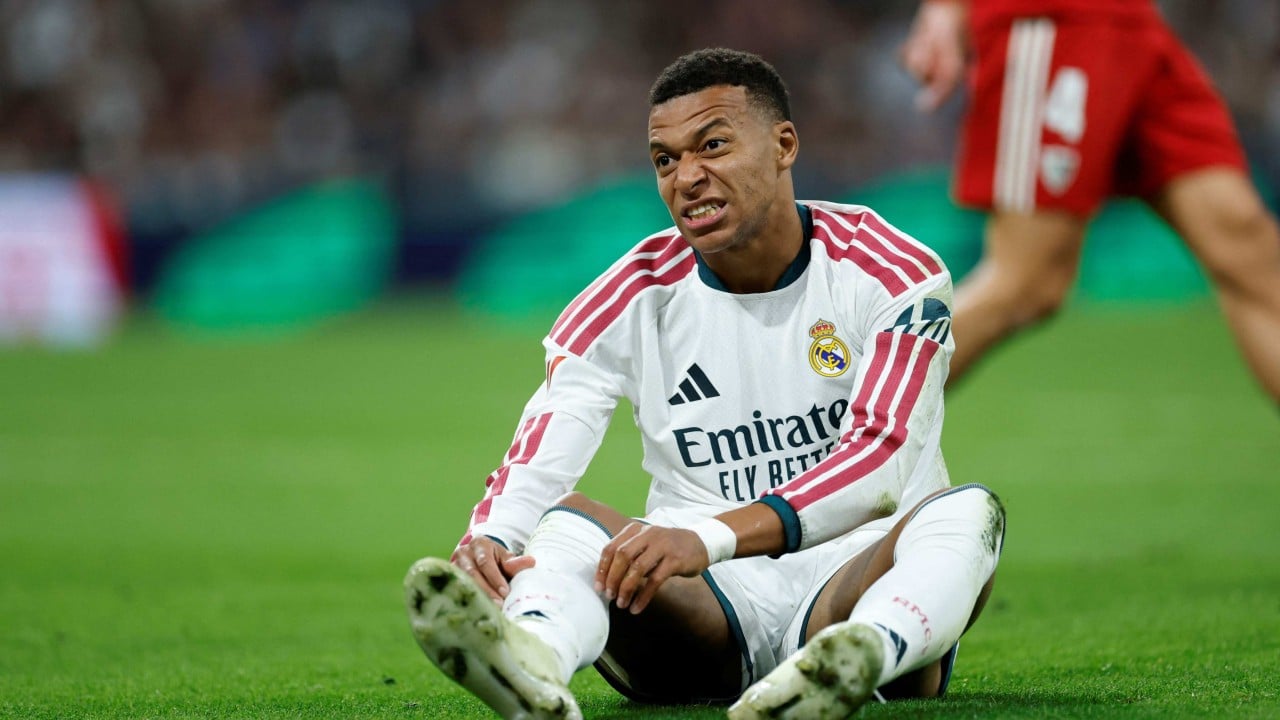
Real Madrid issued an official apology to the Chinese public after star striker Kylian Mbappe referred to former Chinese leader Mao Zedong as a dictator during a media appearance. The Spanish club moved rapidly to distance itself from the remark, publishing a statement on Chinese social media platform Weibo to protect its commercial relationships, broadcast rights, and massive fanbase in East Asia.
It was a predictable script. When a global sports institution collides with geopolitical sensitivity, the corporate PR machine activates within hours. Yet looking closely at the mechanics of this apology reveals far more than simple damage control. It exposes the fragile architecture of modern football economics, where European clubs rely heavily on Asian revenue streams while fielding superstar athletes who possess neither the diplomatic training nor the historical context to avoid stepping on geopolitical landmines.
The Anatomy of a Geopolitical Flashpoint
To understand why Real Madrid acted with such urgency, you first have to understand the scale of the market at stake. China is not merely an auxiliary fanbase for European football clubs. It is a foundational pillar of their commercial growth strategy. Over the past decade, clubs like Real Madrid, Barcelona, Manchester United, and Bayern Munich have poured millions into localized content, regional offices, and preseason tours across mainland China.
When Mbappe made his off-the-cuff remark about Mao Zedong, the reaction on Chinese social media was immediate. Clips of the comment circulated rapidly on Weibo and Douyin, accompanied by demands for accountability. Within hours, hashtags referencing both the player and the club began trending, attracting scrutiny not just from football fans, but from broader nationalist commentators.
Real Madrid did not wait for the controversy to escalate to state media or government regulators. Their statement on Weibo was carefully calibrated. It avoided defending the player's right to free expression while simultaneously stopping short of throwing their marquee signing under the bus. The club emphasized its deep respect for the Chinese people, its long-standing friendship with the country, and its commitment to cultural exchange.
This linguistic tightrope is standard operating procedure in international sports management. A club cannot afford to alienate its domestic European audience by appearing overly submissive to foreign censorship, nor can it afford to lose access to hundreds of millions of consumers in Asia. The result is a carefully worded corporate compromise that satisfies nobody completely, yet cools the temperature just enough to prevent commercial boycotts.
Why European Football Cannot Afford to Lose China
The financial reality behind Real Madrid's apology is straightforward. European football is currently locked in an arms race for revenue, driven by skyrocketing player wages, transfer fees, and stadium redevelopment costs. Domestic television rights in leagues like La Liga and the Premier League have largely plateaued, forcing elite clubs to look outward for growth.
China represents one of the few markets with the population size and middle-class purchasing power capable of moving the needle on a club's balance sheet. Revenue from the region flows into Madrid through several distinct channels.
- Sponsorships and Regional Partnerships Many global brands partner with Real Madrid specifically to utilize the club's crest and player likenesses in Asian marketing campaigns. A diplomatic freeze renders those sponsorships useless overnight.
- Broadcast and Streaming Rights La Liga relies heavily on international broadcast deals to fund its distribution model. If Chinese streaming platforms drop matches featuring Real Madrid, the financial ripple effects hit the entire Spanish league.
- Merchandising and Licensing Official retail stores, e-commerce partnerships on platforms like Tmall, and localized apparel lines generate tens of millions in high-margin revenue.
- Preseason Tours A single summer friendly match in Beijing or Shanghai can net a top European club several million euros in appearance fees alone, alongside invaluable brand exposure.
We have seen what happens when Western sports organizations fail to contain these controversies. In 2019, Houston Rockets general manager Daryl Morey posted a tweet supporting pro-democracy protesters in Hong Kong. The fallout was catastrophic for the NBA. State broadcaster CCTV pulled NBA games from the airwaves for over a year, Chinese sponsors severed ties, and league commissioner Adam Silver later admitted the financial losses ran into the hundreds of millions of dollars.
In 2019, Arsenal midfielder Mesut Ozil criticized China's treatment of Uyghur Muslims on social media. Arsenal immediately distanced themselves from his comments, stating the club was strictly apolitical. Despite the club's rapid disavowal, state television removed Arsenal's upcoming match against Manchester City from its schedule, and Ozil's likeness was scrubbed from Chinese versions of popular video games.
Real Madrid executives know this history intimately. They watched the NBA bleed cash and saw Arsenal scramble to salvage its broadcast presence. When Mbappe spoke, Madrid's leadership did not see a philosophical debate about historical figures. They saw a nine-figure balance sheet risk.
The Modern Superstar Paradox
The incident also highlights a growing structural tension within elite sports. Today's top footballers are no longer just athletes. They are autonomous media brands with massive global reach, often commanding more followers on Instagram and TikTok than the clubs that employ them.
Kylian Mbappe is the ultimate manifestation of this shift. Throughout his career, he has fought aggressively for control over his image rights, famously clashing with the French Football Federation over sponsorship obligations that conflicted with his personal values. He operates with an entourage of lawyers, communications specialists, and brand managers designed to protect his autonomy.
Yet autonomy carries risk. When athletes step outside the tightly scripted boundaries of post-match interviews, they frequently encounter topics for which they are entirely unprepared. A casual historical reference in a Western European context—where characterizing Mao Zedong as an authoritarian dictator is uncontroversial mainstream consensus—becomes an inflammatory political statement the moment it crosses borders.
Clubs want the commercial upside of signing globally famous, outspoken superstars. They want the jersey sales, the social media engagement, and the cultural relevance that someone like Mbappe brings to the Santiago Bernabeu. What they do not want is the diplomatic fallout when that superstar speaks candidly without considering the geopolitical map of the club's sponsor portfolio.
The Failure of Media Training
Most elite clubs subject their players to extensive media training, but that training is overwhelmingly defensive. Players are taught how to deflect questions about transfer rumors, refereeing decisions, and locker room drama. They are trained to speak in harmless clichés that give journalists nothing to print.
Almost none of this preparation covers international geopolitics or historical sensitivities. Clubs assume their players will simply stick to talking about football. As athletes increasingly engage in long-form podcasts, lifestyle interviews, and unfiltered social media livestreams, that assumption is breaking down.
The Geopolitical Tightrope of Corporate Apologies
When a Western institution apologizes to an Asian audience, it immediately triggers a secondary backlash at home. Critics in Europe and North America routinely accuse sports clubs of hypocrisy, pointing out that organizations eager to champion human rights, anti-racism, and social justice at home suddenly go silent when authoritarian markets are involved.
This criticism is entirely valid, yet it misses the pragmatic reality of how multinational corporations operate. Real Madrid is not a human rights NGO. It is a sports entertainment enterprise owned by its members, competing in a ruthless financial market against state-backed clubs like Paris Saint-Germain and Manchester City.
If Real Madrid refused to apologize, taking a principled stand on historical accuracy and free speech, the club would suffer immediate financial penalties while its direct rivals on the pitch would quietly absorb the vacated Chinese market share. In the cutthroat world of European football, unilateral moral stands rarely happen because the competitive cost is too high.
How Weibo Statements Function
Notice the specific mechanism Real Madrid used to issue its apology. The statement appeared on Weibo, China's domestic microblogging platform, rather than on X, Instagram, or the club's primary Spanish-language website.
This is a deliberate strategy known as geofenced crisis management. By keeping the apology localized to Chinese platforms, the club accomplishes two goals simultaneously.
- It demonstrates immediate contrition to Chinese fans, sponsors, and authorities in their native language and digital ecosystem.
- It minimizes visibility in Western media, reducing the likelihood that European journalists will frame the story as a major club bowing to foreign political pressure.
The tactic usually works for a few days, until international news agencies translate the Weibo post and bring it back into the Western news cycle. By that point, however, the initial outrage in China has often subsided, allowing the club to weather a brief wave of Western criticism without losing its Asian commercial foothold.
What This Means for Future Club Operations
The Mbappe incident will inevitably force changes behind the scenes at Valdebebas, Real Madrid's training complex. Legal and communications departments across Europe are already rewriting player contracts and conduct guidelines to account for geopolitical flashpoints.
Expect to see stricter clauses regarding unauthorized media appearances, particularly long-form interviews where players are encouraged to relax and speak off the cuff. Clubs are increasingly insisting that a club press officer be present during all external media engagements, retaining the right to veto questions or edit final transcripts before publication.
Furthermore, player onboarding at major clubs is expanding beyond medicals and tactical briefings. When a club invests hundreds of millions of euros in signing bonuses and wages for a single athlete, educating that athlete on the commercial sensitivities of the club's top five international markets becomes basic risk management.
The irony is unmistakable. Football likes to market itself as a universal language that unites cultures across borders. In reality, the global expansion of the sport has exposed deep ideological fault lines that money cannot easily bridge. As long as European clubs chase growth in markets with strict political boundaries, corporate apologies like Real Madrid's will remain an unavoidable cost of doing business.