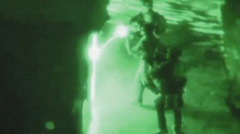
Newly disclosed photographic evidence submitted to the UK’s Independent Inquiry relating to Afghanistan provides critical visual proof that British Special Air Service (SAS) operatives may have staged combat scenes after executing unarmed Afghan detainees between 2010 and 2013. For years, official military investigations dismissed allegations of unlawful killings due to a lack of physical corroboration beyond soldiers' own operational reports. These images—documenting weapons placement and bodily injuries—challenge the long-standing official narrative of legitimate self-defense during night raids, forcing legal investigators to confront systemic failures in military oversight and command accountability.
The stakes could not be higher. If the inquiry determines that elite British troops systematically murdered civilians and falsified after-action reports, it will shatter decades of carefully guarded institutional reputation.
The Anatomy of a Cover-Up
To understand why these photographs carry such explosive weight, you have to look at how special forces operations were documented during the height of the Helmand province campaign. When a British special forces squadron conducted a deliberate detention operation—commonly known as a night raid—the official account relied almost entirely on the operators themselves. There were no embedded journalists. Body-worn cameras were not standard issue for covert units operating in the dark.
Once the dust settled, the official narrative was constructed through Operational Summaries (OPSUMs) and Serious Incident Reports (SIRs). Again and again, these documents told a remarkably consistent story. A compound was breached. A detainee was escorted back inside to help clear the building or point out hidden weapons caches. Suddenly, the detainee reached for an AK-47 or a grenade hidden behind a curtain, forcing the British trooper to open fire in self-defense.
On paper, the rules of engagement were followed to the letter. Yet the math rarely added up.
In dozens of raids, the number of enemy fighters killed exceeded the number of weapons recovered at the scene. Investigators and bereaved Afghan families pointed out an obvious absurdity: unarmed men who had already been searched, restrained, and separated from their families were somehow repeatedly finding loaded assault rifles inside their own bedrooms and choosing to commit suicide by attacking heavily armed elite soldiers.
Without independent witnesses, however, the word of decorated British soldiers carried absolute weight in London. Previous inquiries, most notably Operation Northmoor—a massive Royal Military Police (RMP) investigation launched in 2014—ultimately closed without a single prosecution. At the time, Ministry of Defence (MoD) officials maintained there was insufficient evidence to bring charges.
The newly surfaced photographs disrupt that defense entirely.
What the Camera Actually Saw
Visual forensics leaves very little room for creative storytelling. During the inquiry hearings in London, legal teams representing the Afghan families—specifically the Saifullah and Noorzai families, who lost multiple relatives in separate 2011 and 2012 raids—emphasized that contemporary photographs taken at the scenes tell a starkly different story than the written reports.
When a human being is shot while actively reaching for a weapon, the physical evidence follows predictable patterns. Blood spatter, entry wounds, the trajectory of rounds, and the resting position of the firearm all align with dynamic movement.
In the disputed raids, the post-operation photographs reveal anomalies that forensic experts find deeply troubling. Weapons appear placed beside bodies in ways that defy basic physics, such as pristine rifles resting cleanly next to individuals who suffered catastrophic, close-range trauma without a drop of blood on the firearm itself. In other instances, bullet holes in walls and floors indicate that victims were sitting or lying down at floor level when shot, contradicting official accounts of insurgents lunging forward in a firefight.
"Photographic evidence does not suffer from memory loss, institutional loyalty, or the fog of war. It freezes a moment in time and forces the witness statement to conform to physical reality, rather than the other way around."
This is why lawyers told the inquiry chaired by Lord Justice Haddon-Cave that these images are essential. They bridge the gap between circumstantial suspicion and hard, physical proof. When internal emails from senior special forces officers—previously leaked and submitted to the inquiry—already contained blunt warnings about an "unofficial policy" of killing fighting-aged males regardless of threat, the photographs act as the missing link. They show what that policy looked like on the mud floors of Afghan compounds.
The Institutional Failure of Military Justice
A common defense raised by supporters of the armed forces is that war is chaotic, split-second decisions are unforgiving, and hindsight from an air-conditioned courtroom in London is unfair to soldiers risking their lives. That argument deserves serious consideration. Night raids in Helmand were genuinely terrifying. Insurgents frequently booby-trapped doorways, hid suicide vests under clothing, and fought with suicidal intensity. Mistakes happen in the dark.
However, the core issue before the inquiry is not a handful of tragic split-second errors. It is the alleged pattern of systematic execution followed by coordinated cover-ups.
Consider the timeline of how these allegations were handled internally:
- 2011 – Internal Alarms: Senior officers within UK Special Forces (UKSF) raised explicit concerns via email about one specific sub-unit's unusually high body count and suspiciously repetitive after-action reports.
- 2014 – Operation Northmoor: The Royal Military Police launched an investigation into alleged unlawful killings by British forces in Afghanistan, eventually examining over 50 incidents.
- 2017 – Premature Closure: Despite investigators gathering substantial material, the MoD moved to shut down Operation Northmoor, citing a lack of evidence—a decision later criticized by former RMP detectives who claimed they were blocked from accessing crucial records and interviewing key witnesses.
- 2022 – Public Inquiry Launched: Following relentless legal pressure from human rights lawyers and investigative journalism by the BBC, the government finally established a statutory public inquiry with the power to compel witnesses and demand unredacted documents.
Look closely at step three. For years, the British military insisted it could police itself. Yet the RMP sits within the military chain of command. Investigators seeking to question elite special forces operators faced immense cultural and bureaucratic resistance. Servers containing crucial operational data were reportedly wiped or became inaccessible just as detectives sought to examine them.
When an institution investigates itself, the instinct for self-preservation almost always overrides the pursuit of uncomfortable truths. The photographic evidence now under scrutiny was largely kept out of public view—and away from independent forensic scrutiny—for over a decade precisely because the military controlled the archive.
Why Elite Units Slip Into Rogue Behavior
How does a world-renowned unit like the SAS, prized for discipline and surgical precision, allegedly descend into extrajudicial killings? History offers clear lessons.
During the surge years in Afghanistan between 2010 and 2013, UK special forces were deployed on relentless rotation schedules. Squadrons were conducting raids almost every single night. The operational tempo was punishing, psychological fatigue was acute, and the pressure from political and military leadership to degrade the Taliban network was immense.
At the same time, British troops grew deeply frustrated with the Afghan justice system. Operators would risk their lives to capture high-value targets, hand them over to Afghan authorities, and watch those same insurgents walk free weeks later due to local corruption or lack of evidence—only to encounter them again on the battlefield.
In that pressure cooker, a toxic subculture can easily take root. When small, insular teams operate in extreme secrecy with minimal external oversight, accountability erodes. Loyalty to the squad replaces loyalty to the law. If a commanding officer turns a blind eye to a suspicious shooting—or worse, subtly encourages aggressive metrics—the boundary between lawful combat and murder disappears.
The United States faced an identical crisis with certain SEAL platoons in Iraq and Afghanistan, and Australia confronted it starkly in the Brereton Report of 2020. The Australian inquiry found credible evidence that elite soldiers murdered 39 Afghan prisoners and civilians, often using "throwdowns"—untraceable weapons carried by troops specifically to plant on dead bodies to justify the killings.
The parallels between the Australian findings and the photographic evidence currently before the British inquiry are unmistakable. Both involve the exact same theater of war, the exact same timeframe, and the exact same alleged mechanism for fabricating self-defense.
The Legal and Political Reckoning Ahead
Unlike a criminal trial, the UK’s Independent Inquiry relating to Afghanistan cannot convict anyone or hand down prison sentences. Its mandate is to establish the facts, determine whether credible evidence of unlawful killings exists, and assess whether the military leadership covered up wrongdoing.
Yet its findings carry massive legal teeth. Under the Inquiries Act 2005, Lord Justice Haddon-Cave has the power to compel testimony under oath. Lying to the inquiry is a criminal offense. Furthermore, if the final report concludes that war crimes likely occurred and that previous investigations were compromised, the evidence will be referred directly to the Service Prosecuting Authority or civilian prosecutors for criminal charges—not just against trigger-pullers, but potentially against senior commanders who failed to stop it.
The Ministry of Defence still maintains a cautious posture, insisting it is cooperating fully with the inquiry while urging the public not to prejudge the outcome before all witnesses are heard. Many veterans rightly point out that the vast majority of British personnel served with honor under brutal conditions, and painting an entire regiment with a broad brush would be a grave injustice.
That distinction is precisely why rigorous accountability matters. Protecting those who committed war crimes in the name of preserving institutional honor does the exact opposite—it stains every legitimate soldier who wore the badge.
True accountability requires stripping away the veil of national security secrecy whenever it is used to hide unlawful acts rather than protect live operations. Until the military justice system is permanently separated from the operational chain of command, and until every special forces deployment carries mandatory, tamper-proof visual recording, the shadow of Helmand will continue to haunt British defense policy.


