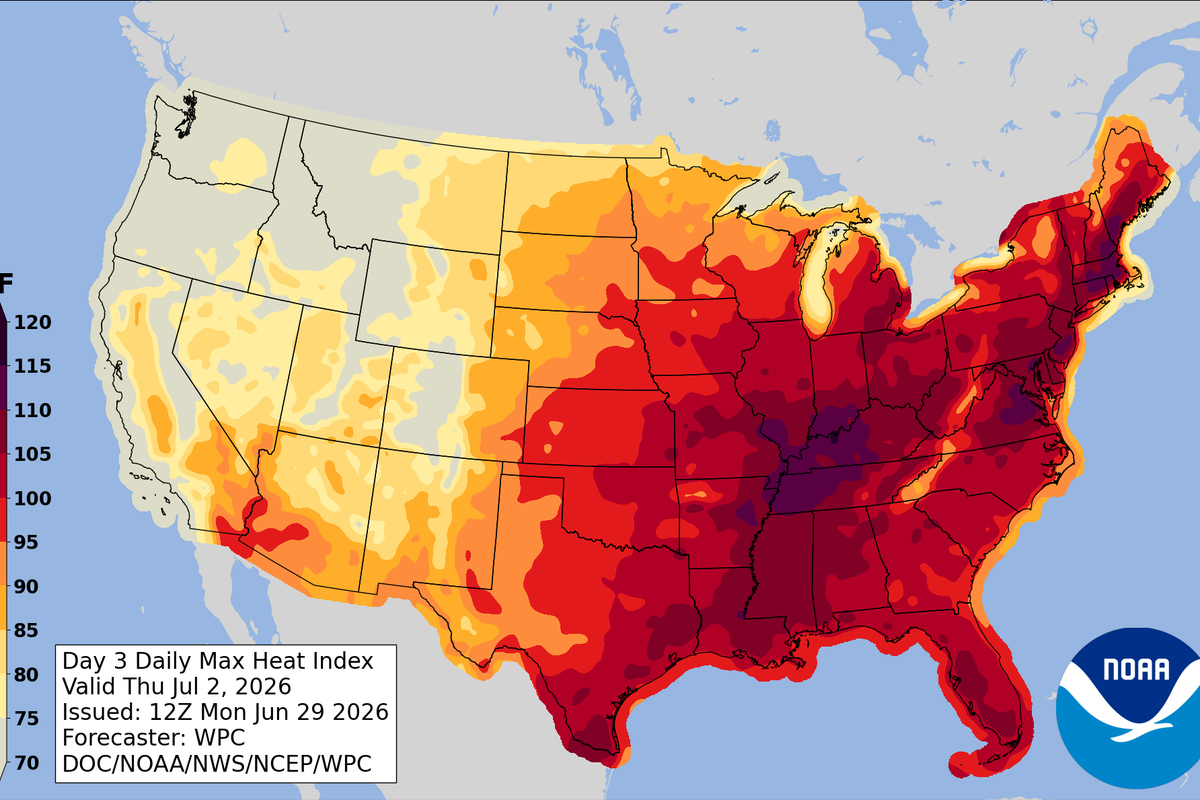
A brutal heat dome is locking down a massive stretch of the American heartland, grounding regional economies, shutting down school systems, and forcing widespread cancellations from Iowa to Michigan. As the stifling air mass moves directly toward the eastern seaboard, municipal leaders are leaning on a familiar script of cooling centers and hydration warnings. This reactive playbook masks a far more dangerous reality. The recurring summer shutdowns across the Midwest and East Coast are no longer mere weather anomalies. They represent a structural failure of public infrastructure built for an environmental era that no longer exists.
When a broken water line at a University of Wisconsin-Madison cooling facility recently forced the sudden closure of 23 public buildings and displaced summer classes, it was handled as an isolated maintenance issue. It was not. It was a textbook demonstration of cascading infrastructure fragility under thermal stress. Across the country, the physical foundations of commerce and daily life are cracking under sustained high humidity and triple-digit heat indexes. Read more on a related topic: this related article.
The Myth of the Isolated Maintenance Failure
Mainstream coverage focuses on the immediate inconveniences of extreme summer weather. News stations interview families at water parks or detail the sudden cancellation of farmers markets and outdoor summer camps. These stories treat each event like an unpredictable stroke of bad luck.
The structural engineering community sees something entirely different. They see a compounding mechanical toll. Thermal expansion is actively warping steel rail lines, buckling concrete highways, and pushing electrical transformers past their cooling limits. Further journalism by The Guardian explores similar perspectives on this issue.
Traditional building codes and municipal engineering designs rely on historical temperature averages that have been completely outpaced. When air temperatures hover in the upper 90s and humidity drives the heat index past 110 degrees Fahrenheit, the ambient environment stops absorbing heat from machinery. Industrial air conditioning units must work twice as hard to reject heat into an already boiling atmosphere.
The failure at UW-Madison is an omen for the wider electrical grid and public utility network. When primary cooling systems face unyielding demand without overnight relief, mechanical components wear down at an accelerated rate. In urban centers like Detroit, Chicago, and St. Louis, the situation is compounded by the urban heat island effect. Concrete and asphalt absorb solar radiation all day and bleed it back into the night air. This prevents equipment from cooling down during what used to be the safest hours of the day.
The Invisible Financial Toll of Preemptive Shutdowns
A cancelled summer camp or a closed drive-in theater might seem like minor cultural adjustments. The economic reality is much harsher for local workforces.
Hourly workers bear the immediate brunt of these closures. When outdoor construction projects pause, municipal trash collection schedules get delayed, or logistics hubs slow down their operations to protect workers from heat stroke, wages vanish. Unlike salaried corporate employees who can work remotely in air-conditioned comfort, the blue-collar economy stops dead in its tracks when the thermometer spikes.
Consider the agricultural and distribution sectors that form the economic backbone of the Midwest. Trucking fleets transporting perishable goods must burn significantly more diesel fuel just to keep their onboard refrigeration units operational. When a truck gets stuck in traffic on a buckled highway in 105-degree heat, those cooling units work at absolute maximum capacity. A single mechanical failure can spoil tens of thousands of dollars in cargo within minutes.
Insurance markets are quietly reassessing these risks. For decades, business interruption insurance was triggered by sudden, violent events like tornadoes or floods. Now, companies are trying to claim losses from prolonged heat waves that make physical labor impossible or drive utility bills to unsustainable heights. Actuaries are struggling to price this ongoing disruption. The costs are ultimately passed down to consumers through higher prices for food, energy, and basic services.
Why the Electrical Grid Cannot Simply Build Its Way Out
The immediate response to any major heat wave is a collective shudder over the stability of regional power grids. Operators like MISO in the Midwest and PJM in the Mid-Atlantic issue warnings urging consumers to conserve electricity during peak afternoon hours. The public conversation usually centers on a simple equation of supply versus demand.
The real problem is a physical limitation of the transmission lines themselves.
As aluminum and steel transmission wires get hot from both the ambient air and the friction of electricity moving through them, they naturally sag. If a line sags too low, it can touch nearby trees or ground out, triggering instant localized blackouts.
[Ambient Heat] + [Electrical Friction] -> Line Sag -> Localized Blackouts
High ambient temperatures drastically reduce the actual efficiency of power plants and transmission networks. Standard gas-fired power plants become less efficient at generating electricity when the intake air is hot and less dense. Solar panels also experience a drop in efficiency when temperatures rise well above baseline testing thresholds.
The grid is being hit by a triple whammy. Generation efficiency drops, transmission capacity shrinks due to line sag, and consumer demand skyrockets as millions of air conditioners run simultaneously.
Building more power plants does not solve this systemic bottleneck. If the wires cannot safely transport the energy through a boiling atmosphere, the extra generation capacity is useless. The entire architecture of the American grid relies on the assumption that extreme heat will be regional and brief. A massive heat dome covering the entire central and eastern United States simultaneously destroys the ability of neighboring regions to share power back and forth.
The Toothless State of Heat Labor Protection
As outdoor activities face mandatory cancellations, the conversation inevitably turns to the safety of those who have no choice but to work. From roofers in Ohio to delivery drivers in Pennsylvania, millions of laborers face immediate physiological danger during these prolonged heat domes.
The regulatory framework protecting these workers is virtually nonexistent.
There is no federal heat standard protecting workers from extreme thermal conditions. The Occupational Safety and Health Administration relies on a broad general duty clause to punish employers only after a worker suffers a catastrophic medical emergency or dies on the job. A few states have attempted to implement their own outdoor work rules, but these efforts face intense resistance from industry lobbying groups who argue that mandatory rest breaks destroy productivity.
This regulatory vacuum forces localized, chaotic decisions. Some municipal managers call for voluntary pauses, while private contractors push through the heat to meet rigid project deadlines. The result is an uneven playing fire where worker safety depends entirely on the ethics of individual employers.
Emergency rooms across the Midwest are already seeing the consequences. Doctors note that the first major heat wave of the summer is always the deadliest because the human body requires weeks to safely acclimate to extreme temperatures. When a cold spring turns into a triple-digit June overnight, the biological system fails just as quickly as a poorly maintained water line.
Rethinking the Summer Blueprint
The current approach to extreme heat is a form of managed decline. Cities cannot continue to rely on temporary cooling centers and ad-hoc event cancellations as a permanent strategy for a season that grows more hostile every year.
True structural resilience requires an overhaul of foundational municipal engineering. This means moving away from traditional dark asphalt that absorbs heat, investing heavily in underground transmission lines that are insulated from atmospheric temperatures, and legally mandating climate-adapted building designs for public institutions.
Until urban planning treats extreme heat as a predictable, high-impact structural threat rather than a surprise weather event, the cycle of emergency closures will only accelerate. The Midwest is currently serving as a laboratory for this systemic breakdown. The East Coast is next.