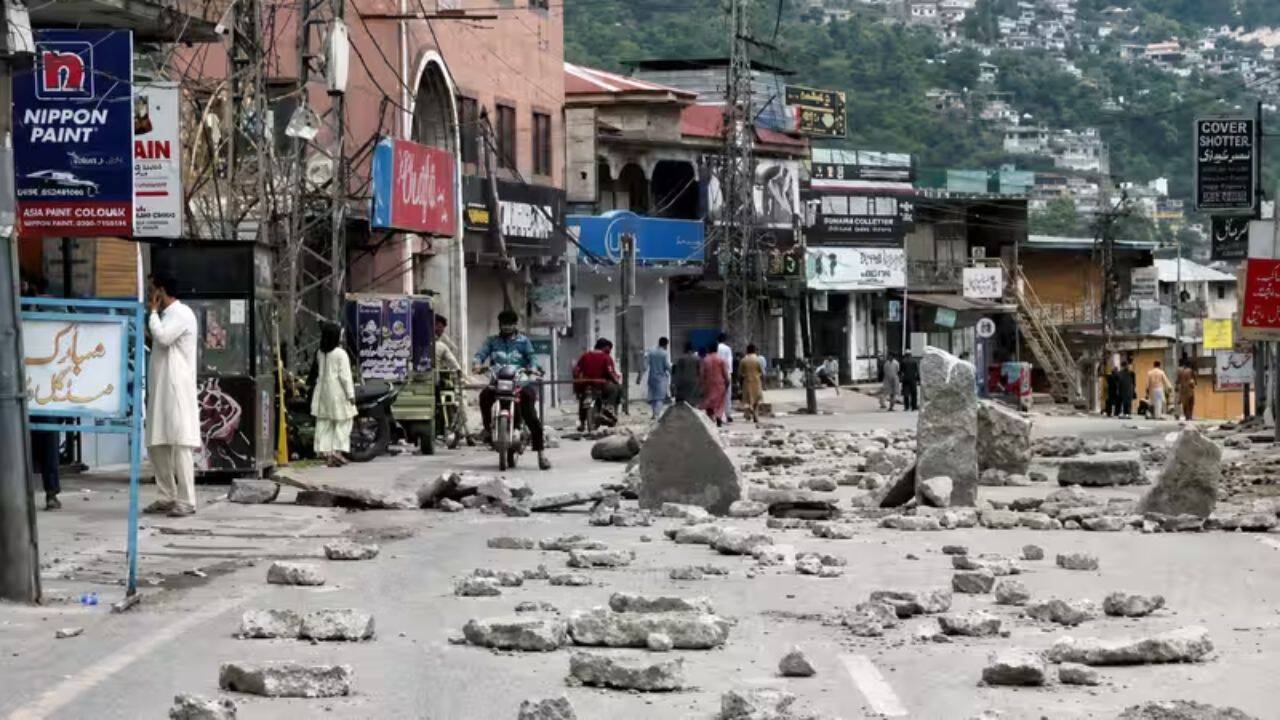
A British national lies dead in the rugged terrain of Pakistan-administered Kashmir, while another languishes behind bars for more than two months without formal closure or transparent consular access. This incident is not merely an isolated consular headache for London or Islamabad. It represents a flashpoint in a long-standing territorial dispute where international citizens increasingly find themselves caught in the crosshairs of aggressive intelligence operations and security crackdowns.
When foreign passports enter disputed regions like Pakistan-administered Kashmir, or PoK, the rules of diplomacy stretch to breaking point. Governments posture, families scream for answers from thousands of miles away, and local security apparatuses clamp down with absolute severity. Yet beneath the diplomatic cables and hurried statements from the Foreign, Commonwealth & Development Office lies a murkier reality. This tragedy exposes systemic blind spots in how dual nationals and foreign travelers navigate high-security geopolitical fault lines.
The Anatomy of a Cross-Border Crisis
The sequence of events remains heavily contested, wrapped in layers of official denials and security justifications. What we know for certain is that a British citizen lost their life during violent clashes in the region, while a second individual was detained and held indefinitely under opaque legal pretenses.
In intelligence reporting, a contested border is a zone of maximum friction. When a citizen holding a Western passport crosses into these areas, they operate outside standard tourist corridors. Local security forces view every outsider through a lens of extreme suspicion. Are they journalists pushing past accreditation limits? Are they diaspora activists testing the boundaries of local agitation? Or are they simply travelers who miscalculated the volatility of the terrain?
The tragedy in PoK highlights a dangerous disconnect. Travelers often assume that holding a powerful passport grants a measure of immunity. It does not. In zones governed by emergency ordinances, counter-terrorism laws, and military oversight, foreign citizenship can make an individual a high-value pawn rather than a protected person.
[UK Passport Holder Enters Region]
       │
       ▼
[Classified as Security Risk / Intelligence Target]
       │
       ▼
[Clash / Arbitrary Detention] ──> [Consular Bottleneck & Information Blackout]
Consular Failure and the Limits of Intervention
For decades, foreign ministries have relied on standard playbooks for citizens in distress abroad. Issue a travel advisory, demand consular access, and issue measured press statements expressing deep concern. These tools work in stable democracies. They fail entirely in heavily militarized frontier zones.
When a British national is detained for over two months without clear charges brought to light, it signals a breakdown in bilateral leverage. Why is Islamabad stonewalling? Why is London struggling to secure basic access?
The answers point to the sensitive nature of the jurisdiction itself. Pakistan-administered Kashmir occupies a unique, highly contested constitutional status. Local authorities answer to a complex matrix of regional civil administration and federal military oversight. When an incident occurs involving foreign nationals, jurisdictional turf wars erupt behind closed doors. Intelligence agencies step in, civilian police step back, and the bureaucratic machinery grinds to a halt.
Families are left in an information vacuum. They endure weeks of silence, relying on rumors filtered through local fixers and intermittent updates from overworked desk officers in Whitehall. This silence is deliberate. In protracted security crises, information control is the primary weapon used by regional authorities to manage the fallout.
The Dual National Trap
A significant number of travelers caught in these geopolitical traps are not backpacking tourists seeking an adrenaline rush. They are dual nationals returning to ancestral roots.
This distinction matters immensely. To a British citizen of Kashmiri descent, the region feels like home. They speak the language, navigate the towns with ease, and possess familial ties that stretch across generations. They view themselves through the lens of their heritage.
The state, however, views them strictly through the lens of current passport control.
When civil unrest flares, local authorities rarely care about an individual's emotional or familial ties to the soil. If a dual national participates in local protests, documents human rights abuses, or simply happens to be in the wrong tea shop when a riot breaks out, they are treated as foreign agitators or domestic subversives depending on whichever designation serves the immediate security narrative.
This creates a brutal identity trap. Western governments expect dual nationals to respect local laws that may curtail freedom of speech and assembly, yet those same governments struggle to protect citizens when authoritarian security forces overreach. The British national currently detained in PoK is paying the price for this legal and conceptual ambiguity.
The Geopolitical Context of Silence
Why has international media coverage of this specific incident remained relatively muted compared to detentions in other global hotspots?
Geopolitics dictates the volume of outrage. Kashmir remains one of the most heavily militarized and diplomatically sensitive disputes on earth. Major powers tread carefully to avoid alienating regional nuclear-armed states. When a Western citizen dies or is imprisoned in this theater, foreign offices weigh the PR victory of a vocal rescue campaign against the risk of fracturing fragile intelligence-sharing agreements or trade partnerships with Islamabad and New Delhi.
Public diplomacy requires rhythm. Governments prefer quiet, backchannel negotiations over public showdowns. Yet quiet diplomacy has a dark side. It gives security forces carte blanche to hold individuals indefinitely without facing immediate public scrutiny. Two months of detention without formal public accounting is not a bureaucratic delay. It is a deliberate choice to let a situation rot in the dark until public interest fades.
Navigating the Frontier
The death in PoK and the ongoing detention serve as a brutal wake-up call for anyone underestimating the lethality of modern border disputes. Travel advisories that warn against all travel to a region are not mere bureaucratic caution; they are accurate reflections of zero-tolerance security environments.
When individuals ignore these warnings, they step past the safety net of international law. Governments cannot project power into territories where their writ does not run. The illusion of safety provided by a globalized world shatters the moment a military checkpoint drops and the wire goes up.
The detained British citizen remains inside a holding facility, waiting for a diplomatic breakthrough that may take months or years to materialize. The family of the deceased mourns thousands of miles away, facing an uphill battle for forensic transparency and accountability. And the borderlands remain as volatile as ever, swallowing up the unwary while the capitals negotiate in whispers.
:max_bytes(150000):strip_icc()/ar-American-Cheese-taste-test-horizon-4x3-54cc339550cd44b9a818c17bdfd5428d.jpg)