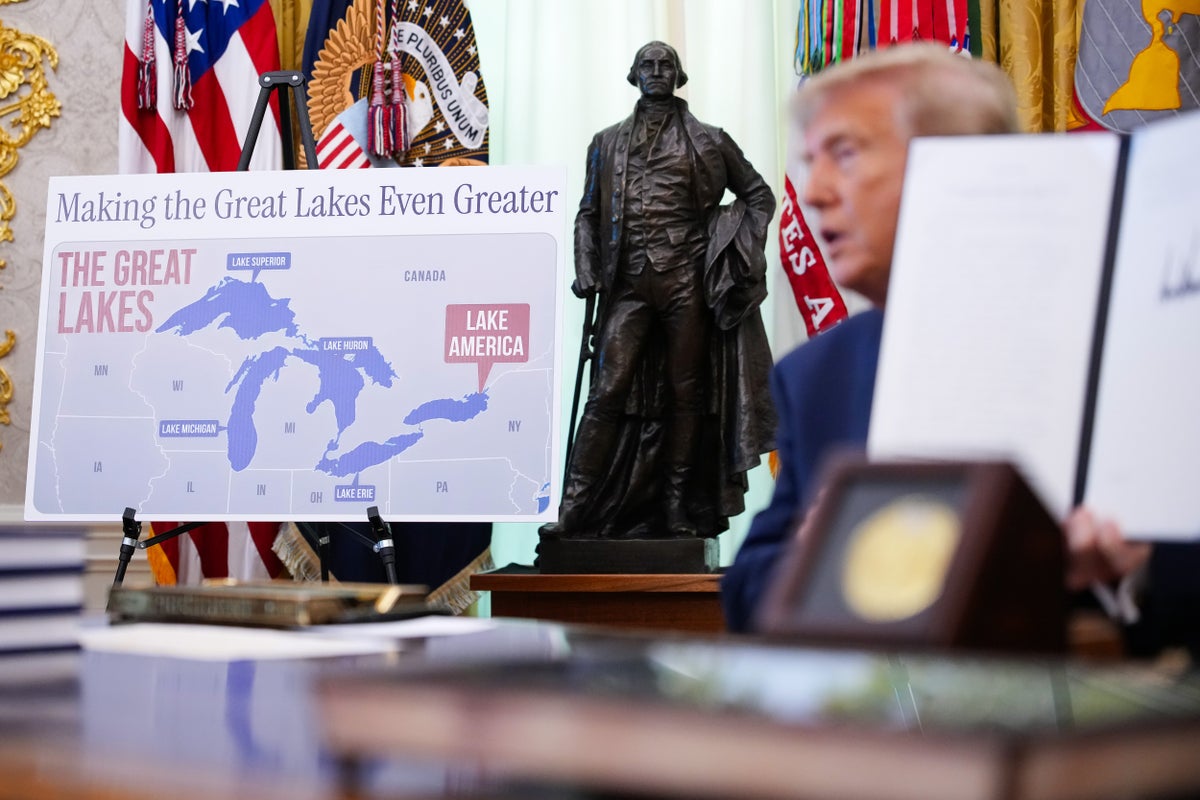
Apple recently updated its native mapping software to label the U.S. portion of Lake Ontario as "Lake America," bowing to direct pressure from the White House. Following Alphabet's Google, which quietly instituted the modification for domestic users over a weekend, Cupertino officials executed the change to align their cartographic database with the U.S. Geographic Names Information System. This federal registry absorbed the new moniker following an executive order signed by President Donald Trump.
The corporate compliance arrived amidst deteriorating trade negotiations between Washington and Ottawa. Interior Secretary Doug Burgum publicly confirmed that the administration bypassed standard bureaucratic channels, stating that the president contacted corporate leadership directly to demand the alteration. For an industry that frequently champions corporate neutrality and user privacy against government overreach, the rapid submission underscores a pragmatic, defensive survival instinct. Big Tech companies do not fight symbolic culture-war decrees when billions of dollars in hardware imports, supply chain exemptions, and regulatory scrutiny hang in the balance.
Cartography is never neutral. Maps are political instruments masquerading as scientific data. When digital monopolies update their vector tiles to mirror domestic geopolitical whims, they codify executive authority into the daily routines of hundreds of millions of citizens.
The Mechanics of Digital Compliance
Big Tech platforms rely on official government repositories to maintain geographical integrity. Google cited its long-standing policy of mirroring the Geographic Names Information System. Apple followed an identical logic, restricting the "Lake America" label strictly to domestic Internet Protocol addresses while preserving "Lake Ontario" for Canadian users and a dual-label approach for international views.
This technical partitioning offers a neat legal defense. Corporations argue they are merely reflecting local administrative realities. Yet, applying a unilateral presidential decree to a shared international body of water crosses the line from passive database maintenance to active endorsement. The administrative burden of resisting an executive branch armed with tariff authority and antitrust hammers is simply too high.
Consider the precedent set during previous white house rebranding efforts, such as the alteration applied to the Gulf of Mexico. Platforms initially dragged their feet, absorbing minor public relations friction before eventually capitulating. This time, the turnaround was compressed into days. Direct presidential lobbying short-circuited any corporate appetite for a prolonged public fight.
The Geopolitical Fallout
The timing of the cartographic shift aligns with a broader diplomatic fracture. Strained trade talks and aggressive tariff implementations on Canadian imports created a volatile operational climate for multinational firms operating across North America. By forcing American corporations to display nationalist nomenclature, the administration leverages domestic software as an extension of foreign policy.
Canadian leadership and regional stakeholders rejected the decree immediately. Prime Minister Mark Carney noted that the original term stems from the Wendat word Ontari'io, carrying a history spanning more than four centuries—predating both the American Declaration of Independence and Canadian confederation. Furthermore, tribal authorities such as the Seneca Nation condemned the move, pointing out that overriding indigenous naming conventions violates centuries-old treaties and demonstrates institutional indifference to native heritage.
Despite regional pushback, Silicon Valley cares more about jurisdictional exposure in Washington than historical accuracy in Indigenous communities or foreign capitals. Apple faces persistent scrutiny over manufacturing footprints, App Store antitrust litigation, and tax policies. Picking a fight over a lake label provides zero shareholder value, whereas appeasing the executive branch costs very little in terms of engineering overhead.
The Shrinking Boundaries of Corporate Independence
The quiet compliance of firms like Apple and Google signals a permanent shift in how digital infrastructure mediates reality. As governments increasingly weaponize administrative registries, software architecture becomes subservient to nationalist mandates. Users opening their navigation apps are no longer looking at an objective physical world. They are looking at a fragmented, geofenced projection designed to keep corporate compliance departments out of the crosshairs of regulators and chief executives wielding executive orders.
The map on your smartphone screen is no longer a window to the physical earth. It is a corporate ledger balancing political survival against geographic truth.


:max_bytes(150000):strip_icc():focal(719x250:721x252)/dillon-gabriel-zo-caswell-4-100225-d09ae75894f348649bc8b8c0bd6afb94.jpg)