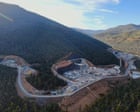
Snowy Hydro 2.0 has surged to an estimated cost of up to $25 billion—roughly twelve times the $2 billion figure floated when the project was first pitched in 2017—while pushing full commissioning back to late 2029. Chief executive Dennis Barnes argues the outcome "could have been worse" without the 2023 contract reset and closer coordination with the contractor.
He is technically right about the ceiling having a worse version. He is dead wrong if he thinks a twelve-fold jump from the opening headline number closes the book on what Australian taxpayers and power consumers are actually underwriting.
Anyone who has spent decades watching megaprojects across heavy civil engineering knows a familiar script. Politicians announce a bold physical asset on the back of back-of-the-envelope math. Boards sign off on a final investment decision before the rock underneath the mountain has been properly understood. Years later, when the tunnel boring machines stall and the invoices stack up, executives stand before cameras and praise the "reset" as if shifting risk back onto the public balance sheet were an engineering triumph.
The Original Sin Happened Before a Single Meter Was Bored
To understand how a pumped hydro expansion in New South Wales went from a $2 billion political soundbite to a target cost of $22.2 billion with contingency up to $25 billion, you have to look back to 2017 and 2018. In March 2017, prime minister Malcolm Turnbull unveiled the concept amid a fierce political fight over grid reliability and coal closures, putting a $2 billion price tag on it. Feasibility work later that year put the numbers between $5.4 billion and $6.9 billion, and a final investment decision landed in December 2018 at roughly $6.1 billion—before full geological investigations and key approvals were wrapped up.
That sequence breaks a cardinal rule of underground construction. You do not lock in a fixed-cost fantasy before you know what the mountain is made of.
A tunnel boring machine is a precision factory wrapped in steel. Feed it uniform rock and it chews forward at a predictable clip. Feed it fractured fault zones, high water pressure, or pockets of soft ground, and it stops cold while crews grope in the dark.
At Snowy Hydro 2.0, the work involves roughly 27 kilometers of deep tunnels linking Tantangara and Talbingo reservoirs to deliver 2,200 megawatts of capacity and 350,000 megawatt-hours of storage. One of the massive machines, Florence, hit soft ground just 150 meters into a 15-kilometer drive in early 2023 and sat immobilized for close to a year, running into further ground troubles even after getting moving again. By late October 2026, machine tunnelling stood around 65 percent complete, with Lady Eileen Hudson beginning decommissioning after completing its second tunnel and Florence still short of the halfway mark on its long run.
When critical site investigation is skipped or rushed at the front end, geology doesn't negotiate. It bills you later—in months, in machine wear, and in hundreds of millions of dollars per kilometer.
Why Resets Rarely Fix Broken Risk Allocation
Barnes pointed to the collaborative relationship with principal contractor Future Generation Joint Venture—led by Italian builder Webuild—and the 2023 reset as proof that things were kept from spiraling even further. In its October 2026 reassessment, Snowy Hydro cited construction complexities, contractor productivity falling short of targets, underestimating delivery scope, and global cost inflation for equipment, labor, and services outstripping what the 2023 reset assumed.
There is an uncomfortable commercial reality baked into those three lines. When a megaproject blows past its original contracting model and gets "reset" onto a more incentivized or cost-reimbursable footing, the contractor gets a lifeline to stay on the job and keep cash flowing. The project owner—here, a government-owned entity backed by public money—absorbs the open-ended tail risk whenever productivity lags or inflation bites harder than forecast.
Consider a hypothetical example to see how the math shifts. Suppose a contractor originally prices a complex rock-tunnelling package assuming steady daily advance rates and fixed labor margins, then hits unforeseen ground that cuts advance rates by two-thirds. Under a rigid structure, the contractor faces catastrophic losses and potential walk-away disputes; under a reset structure, the owner funds remedies, re-baselined schedules, and revised rates to keep the tunnel moving. That might indeed prevent a total site shutdown or a multi-year legal stalemate. It does not make the cost low. It simply moves the bill onto the taxpayer while letting leadership claim credit for avoiding chaos.
The Hidden Bill Beyond the $25 Billion Fence Line
Even a $25 billion build estimate is only part of the picture if you care about total system cost rather than project-level accounting.
Pumped hydro does not sit in isolation on a spreadsheet. To move massive blocks of power into and out of the Snowy Mountains when wind and solar dip or surge, the grid needs high-capacity transmission infrastructure and associated network upgrades. Critics and energy analysts have repeatedly warned that once transmission and related grid works are tallied alongside construction overruns, the all-in cost to the broader energy system climbs well past the headline build figure.
| Metric / Factor | Reported Position | What It Means for Real-World Delivery |
|---|---|---|
| Headline Build Estimate | $22.2B target, up to $25B contingency | Roughly 12x the original $2B pitch; excludes broader grid/transmission add-ons |
| Target Completion | Late 2029 | Nearly a decade past early expectations, leaving years of execution exposure |
| Tunnelling Progress | ~65% complete overall by Oct 2026 | High-risk deep underground work and cavern/mechanical fit-out still remain |
| Contractor & Cost Drivers | FGJV productivity gaps, scope & inflation | New on-site leadership brought in; further funding/oversight structures flagged |
Supporters of the project—including Barnes and energy ministers across successive governments—emphasize that once running, Snowy Hydro 2.0 is a long-life asset designed to provide massive long-duration storage, bolster grid security, and put downward pressure on wholesale electricity prices over decades. Consulting analysis cited by Snowy Hydro projects billions in economic contribution during delivery and wholesale price benefits stretching out to 2075.
Those benefits are real in theory, and long-duration storage matters in a grid with high variable renewables. Yet every billion dollars added to capital cost and every year pushed out to 2029 raises the hurdle rate Snowy Hydro 2.0 must clear to justify its return on public capital. When capital costs multiply twelve-fold, an asset that looked like a bargain at $2 billion—or even plausible at $6.1 billion—has to work vastly harder for decades just to make economic sense.
Governance, Oversight, and the Credibility Gap
A project employing around 5,000 workers across rugged alpine terrain is never simple, and ministers have called it one of the most complicated engineering undertakings globally. Still, credibility is earned through accurate forecasting, not through saying things could have looked worse.
When a major public build revises upward from roughly $12 billion or $13 billion toward $25 billion within a few years, observers naturally ask what changed inside the estimating models—and whether the latest numbers carry enough contingency to survive the final stretch to late 2029. Bringing in a new project director focused on daily cost and schedule performance on the ground is a practical move, as is tightening oversight. Paper governance rarely fixes subterranean surprises on its own, though; hard rock and complex mechanical-electrical commissioning do not care about reporting lines.
What Must Happen Between Now and Late 2029
If Snowy Hydro 2.0 is to finish in late 2029 without another shock announcement, discipline has to show up in granular daily execution rather than optimistic press releases.
First, treat the $25 billion ceiling as a live operational constraint, not a cushion to burn through early. Second, ring-fence and publish clear cost tracking that separates direct Snowy Hydro 2.0 project spending from connected transmission and grid reinforcement costs so the public can see the true total price tag. Third, tie contractor incentives and leadership accountability strictly to verified physical milestones—advance rates in remaining drives, cavern readiness, and commissioning gates—rather than activity alone.
Watch the monthly tunneling meters, the commissioning schedule for the underground power station, and the upcoming government oversight and financing details closely; in megaprojects, the real truth always shows up in the gap between schedule promises and rock face reality.



