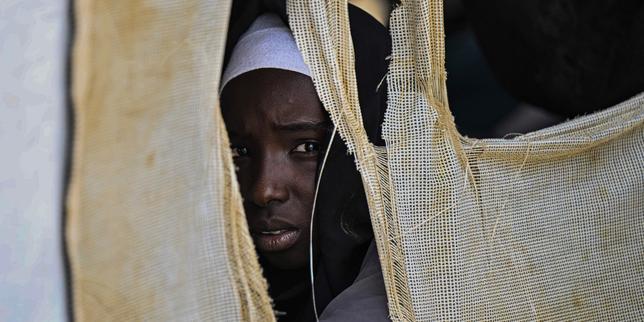
The warning signs were visible years before the first shots tore through Khartoum in April 2023. For decades, the structural machinery of violence in Sudan had never actually been dismantled; it had merely been rebranded, reorganized, and left waiting for the next power vacuum. Today, the civil war between the Sudanese Armed Forces (SAF) and the Rapid Support Forces (RSF) has metastasized into the world's largest displacement and humanitarian catastrophe, echoing the darkest chapters of the Darfur genocide with a terrifying, magnified intensity.
To treat this conflict merely as a personal duel between two rival generals—General Abdel Fattah al-Burhan and Mohamed Hamdan Dagalo, known as Hemedti—is to misunderstand the mechanics of modern atrocities. Beneath the high-level maneuvering lies an entrenched system of racialized violence and territorial conquest. The communities trapped in the crosshairs—predominantly non-Arab African populations such as the Masalit, Fur, and Zaghawa—are enduring a methodical campaign of annihilation that bears the unmistakable hallmarks of ethnic cleansing.
The Architecture of Impunity
History repeats itself because the architects of past horrors were never held accountable. During the early 2000s, the Khartoum regime weaponized nomadic militias known as the Janjaweed to crush rebellions in Darfur, leaving an estimated 300,000 dead and millions displaced. Instead of prosecuting these crimes, the state institutionalized the perpetrators. The Janjaweed were formally absorbed into the state apparatus, transforming into the RSF.
Hemedti built an economic and military empire from this impunity, securing gold mines, political legitimacy, and foreign patrons. When the fragile transition to civilian rule collapsed in 2023, this paramilitary apparatus turned its accumulated resources against the state and civilian populations alike. The foot soldiers of 2003 wear newer uniforms and deploy modern drone technology, but the core strategy remains unchanged. Total displacement, mass sexual violence, and the systematic erasure of community infrastructure are deployed as tools of territorial acquisition.
In cities like El Geneina and El Fasher, the results have been catastrophic. Prolonged sieges, deliberate starvation, and targeted executions have wiped out entire neighborhoods. Human rights monitors and international investigators have documented mass graves and ethnically motivated slaughter on a scale that dwarfs the initial years of the 2003 crisis. Millions have fled across borders into Chad, South Sudan, and Egypt, while those remaining face widespread famine and a collapsed medical infrastructure.
The Regional Web and Economic Engines
What separates the current conflict from its predecessor is its geographic breadth and internationalized matrix. While the 2003 war was largely concentrated in the western periphery of Darfur, the 2023 conflagration has engulfed the capital, Khartoum, and spread deep into the agricultural heartlands of Al-Jazirah and Kordofan.
External actors have rushed to back opposing sides, turning Sudan into a proxy battleground for regional dominance and resource extraction. Gold smuggling networks, agricultural investments, and geopolitical positioning along the Red Sea coast provide continuous financial lifelines to the warring factions. As long as external patrons supply money, fuel, and weaponry, neither general faces an incentive to compromise. The war is profitable for the men holding the rifles, even as the nation collapses into structural insolvency.
International diplomacy, meanwhile, remains paralyzed. High-level summits and humanitarian appeals routinely fall short of reality. Pledges of financial aid go unfulfilled, and humanitarian corridors are continuously blocked by bureaucratic obstruction and active combat. Local volunteers—who have organized mutual aid networks, soup kitchens, and emergency clinics across the country—bear the brunt of the relief effort, often targeted or killed for their humanitarian work.
The Cost of Looking Away
The crisis in Sudan represents a profound failure of the international collective security framework. When accountability is treated as optional, history demonstrates that violence scales upward rather than fading away. The destruction of cultural heritage, the fracturing of social cohesion across generations, and the sheer volume of trauma inflicted upon millions of civilians ensure that even if a ceasefire were signed tomorrow, the scars will dictate the country's trajectory for decades.
The illusion that localized conflicts remain contained has been shattered. A failed state of forty-five million people situated at the crossroads of the Sahel, the Horn of Africa, and the Red Sea creates shockwaves that reach far beyond its borders. Yet, despite the staggering numbers of dead and displaced, the crisis struggles to maintain consistent global attention, eclipsed by competing geopolitical flashpoints.
The silence surrounding the systematic erasure of civilian life in Sudan is not an oversight. It is a choice. Every week that passes without effective intervention or targeted accountability deepens a humanitarian disaster that was entirely foreseeable, driven by forces that were never dismantled.