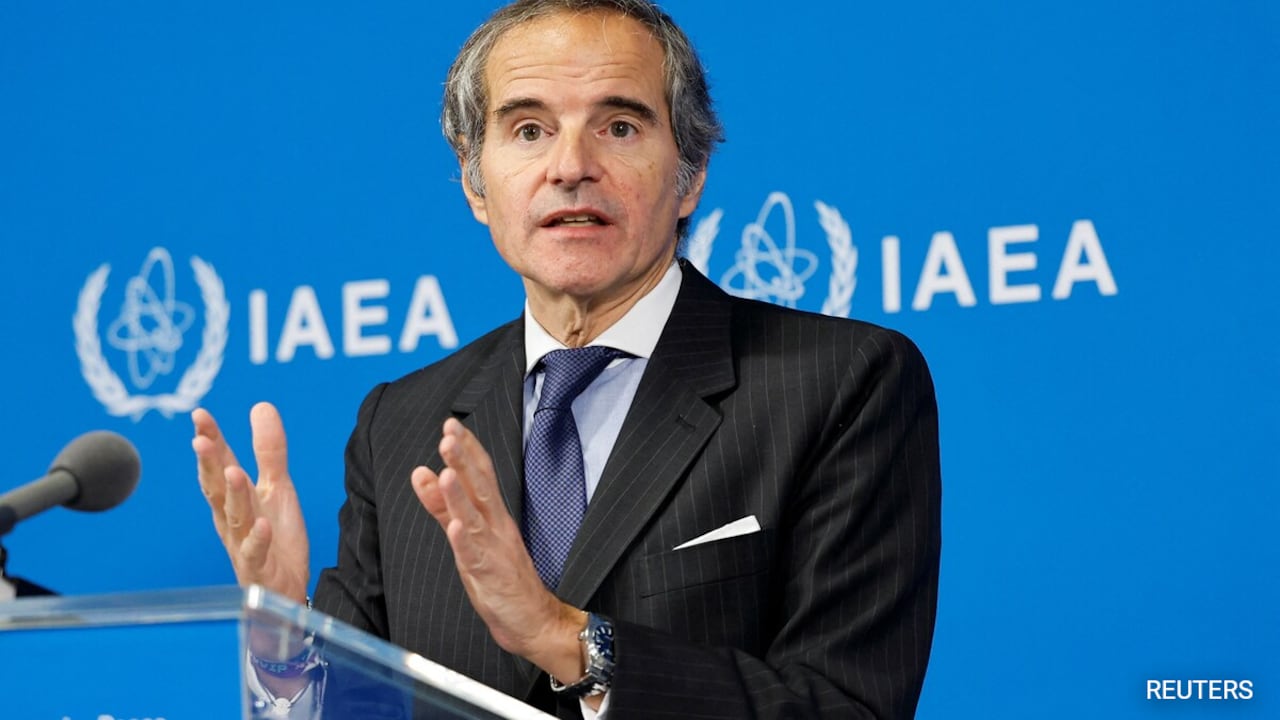
International Atomic Energy Agency Director General Rafael Grossi confirmed the discovery of several tonnes of nuclear material at a previously undeclared site in Syria, a revelation that lays bare the lingering radioactive ghost of the deposed Bashar al-Assad regime. Speaking in Damascus alongside Syrian Foreign Minister Asaad al-Shaibani, Grossi acknowledged a voluntary disclosure made by the new transitional authorities. Yet beneath the diplomatic praise for transparency lies an urgent security question. What does a stockpile of several tonnes of poorly documented nuclear waste or feed material actually mean for a fractured state struggling to rebuild?
Decades of clandestine operations left a messy paper trail. Long before the 2007 Israeli airstrike flattened the covert reactor at Al-Kibar, the Assad regime played a cat-and-mouse game with international inspectors. They hid blueprints, scrubbed facilities, and moved equipment across porous borders. The recent discovery points directly to that dark era. When an authoritarian government collapses, its most dangerous assets rarely vanish into thin air. Instead, they get buried under bureaucratic neglect or hidden in plain sight within industrial complexes.
The Anatomy of an Undeclared Stockpile
We are talking about material that predates the current administration by many years. While high-ranking officials in Damascus insist the substances do not pose an immediate radioactive emergency, the risk profile of raw or semi-processed nuclear material extends far beyond standard meltdown scenarios. Unsecured yellowcake or low-grade processing remnants carry a different kind of danger. They represent primary ingredients for radiological dispersal devices, commonly known as dirty bombs.
Consider a hypothetical scenario where criminal syndicates or fragmented militias gain access to industrial-grade radioactive compounds. They do not need a sophisticated uranium enrichment centrifuge cascade to cause mass panic. Traditional explosives combined with accessible radioactive waste can contaminate urban infrastructure, rendering commercial districts uninhabitable for decades. The physical volume reported by the UN watchdog—several tonnes—magnifies this threat exponentially.
Why Damascus Chose Cooperation
The decision by Syria's new leadership to flag the site on July 17 was calculated. Breaking away from the opacity of the past serves an immediate diplomatic and economic purpose. International sanctions relief and reconstruction aid depend heavily on verifiable non-proliferation compliance. By inviting IAEA inspectors into the capital to excavate and sample the material, the transitional government signals to Western capitals that it wants a clean break from the nuclear ambitions of the previous regime.
Trust remains hard currency in international diplomacy. IAEA inspectors are currently cataloging the remnants, determining exact isotopic compositions, and establishing stringent monitoring protocols. Yet keeping the material inside Syrian borders under international safeguards, rather than shipping it out of the country immediately, introduces logistical vulnerabilities.
The Long Shadow of Proliferation
Security architectures in post-conflict zones remain fragile. Even with the best intentions from current ministries, institutional capacity to guard sensitive scientific sites against insider threats or localized insurgent raids is limited. International oversight provides a critical buffer, but inspectors operate under constant security constraints.
The timeline of Syria's nuclear file stretches back nearly twenty years, marked by consistent denials from Damascus and stubborn persistence from global monitors. Finding these tonnes of material proves that the historical record was far more extensive than previously acknowledged. It forces a re-evaluation of what else might remain hidden beneath the rubble of a country carved up by years of civil war.
Accountability demands more than a press conference. As IAEA teams pore over excavation data in Damascus, the global community must decide whether current safeguards are enough to contain a nuclear legacy born from absolute secrecy. The materials remain on the ground, guarded by fragile political agreements and the watchful eye of a nuclear watchdog racing against time