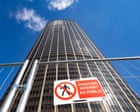
The Tour Montparnasse renovation has stalled because the tower is not a single building in any functional sense, and its co-owners cannot agree on how to pay for an overhaul that keeps changing shape under their feet. On paper, a headline about owner disagreements sounds like routine commercial real estate friction. In practice, Paris has backed itself into a governance trap where decades of fragmented title, strict heritage constraints, and shifting cost math turn every renovation plan into a veto fight.
Anyone who has watched mega-projects die in boardrooms knows the pattern. When a building has multiple owners with different balance sheets, different time horizons, and different risk tolerances, capital expenditure stops being an engineering question. It becomes a proxy war over who absorbs downside risk first.
Why a Single Tower Acts Like a Committee of Strangers
Large urban towers rarely belong to one tidy landlord for very long. Over generations, office floors get split, sold, bundled into funds, or held through layered corporate vehicles. Even when a skyscraper looks monolithic from the street, its internal legal reality can resemble a condominium association with high-stakes commercial tenants.
Think about what happens when structural, facade, or mechanical upgrades are proposed in that environment. One owner might hold long-dated debt and want aggressive modernization to attract institutional tenants. Another might treat the asset as a cash-yield bond and balk at multi-year rent interruptions. A third might be waiting for a market window to exit, viewing a heavy renovation as dead weight on a near-term sale.
When governance rules require supermajorities or unanimous sign-off for major capital calls, stalemate becomes the default equilibrium. Nobody wants to be the party that approves a budget only to watch interest rates, material costs, or regulatory demands move the goalposts six months later.
The Hidden Economics of Retrofitting an Icon
Renovating a landmark tower is nothing like building one from scratch. You are working inside a known envelope with unknown liabilities. Asbestos remediation, outdated riser shafts, fire-code upgrades, and curtain-wall tolerances all carry contingency lines that make finance committees nervous.
Consider a hypothetical example to see how the math fractures. Suppose three co-owners hold stakes in a mid-century office tower and receive an initial refurbishment estimate of 300 million euros. Six months into pre-construction studies, acoustic, thermal, and accessibility standards tighten, pushing projected costs to 380 million euros while extending the timeline by a year. Owner A wants to lock in contractors immediately before steel and labor drift higher. Owner B wants to strip the scope back to core safety compliance. Owner C refuses to commit fresh equity without a revised leasing forecast. None of them is acting irrationally on their own spreadsheet. Together, they freeze the entire project.
That dynamic explains why a Tour Montparnasse renovation can halt even when everyone agrees the building needs work. Agreement on the problem does not produce agreement on the bill.
Heritage Politics and the Moving Target Problem
In a city like Paris, high-rise interventions carry symbolic weight that goes far beyond square footage. A tower that already polarizes public opinion cannot simply be wrapped in generic glass and declared modern. Every design revision invites scrutiny from urban planners, preservationists, and municipal officials.
Each round of public or regulatory pushback costs time. Time in commercial property is never neutral. Financing terms expire, construction crews get reallocated elsewhere, and tenant pre-leasing commitments evaporate. By the time a revised architectural concept clears one hurdle, the underlying financial assumptions used to justify the original Tour Montparnasse renovation may no longer hold.
Owners then face an ugly choice. Either inject more capital into a thinner margin, or admit that the original vision is dead. Stalling is often the path of least resistance because it preserves optionality, even if it leaves the asset stranded in limbo.
What Gets Overlooked When Headlines Focus on Feuds
Media coverage loves a personality or boardroom clash. It is clean, human, and easy to summarize in a single sentence. Yet framing a stalled overhaul purely as owner bickering misses the structural flaw that made the feud inevitable.
First, legacy ownership structures were rarely designed for deep decarbonization and modern building standards. A tower built for mid-twentieth-century office norms faces massive upfront expenditure just to remain compliant and marketable. Splitting those costs across mismatched balance sheets is a recipe for paralysis.
Second, renovation risk is asymmetric. The upside of a successful repositioning is shared across stakeholders, while the pain of a cost overrun hits hardest whoever has the least liquidity or the strictest covenant limits. When downside protection is uneven, veto power gets used defensively.
Third, there is a reputational overhang. Every month a flagship property sits in suspended animation, prospective occupiers look elsewhere. Brokers quietly steer tenants toward newer or unencumbered stock. The longer the Tour Montparnasse renovation remains frozen, the harder it becomes to underwrite the eventual return on investment.
The Counter-Argument Nobody Wants to Voice
There is a contrarian view circulating among seasoned property operators, though few say it on the record. Sometimes a stalled renovation is not a failure of governance. It is disciplined capital preservation.
When construction inflation, borrowing costs, and regulatory uncertainty collide, pushing ahead on an unhedged mega-refurbishment can destroy more value than leaving the building under-invested. From a cold financial standpoint, halting work forces owners to re-test whether the tower's highest and best use has shifted permanently.
Maybe the asset does not need a maximalist architectural reinvention. Maybe it needs staged, modular interventions that can be funded out of operating cash flow rather than massive joint capital calls. Or maybe one owner eventually buys out the others at a discount once fatigue sets in. None of those outcomes looks tidy in the short term, yet all of them beat pouring good money after uncertain returns.
How Stalled Tower Overhauls Actually Get Unstuck
History shows that gridlocked multi-owner buildings rarely break out of stalemate through polite persuasion. Something external or structural has to force a reset.
- Ownership consolidation: One party acquires enough equity—or distressed debt—to stop negotiating with peers and dictate execution.
- Scope unbundling: Structural and life-safety work is separated from cosmetic or commercial repositioning, allowing smaller, less contentious packages to move forward.
- Refinancing resets: Lenders step in when maturity dates loom, compelling co-owners to agree on a credible capex plan or hand over control.
- Phased leasing strategies: Instead of betting everything on a single big-bang reopening, owners commit to floor-by-floor upgrades tied to pre-committed tenants.
None of these routes is painless. Every one of them requires at least one stakeholder to swallow a write-down or surrender influence.
The Real Lesson for Urban Real Estate
A stalled flagship project is a warning light for aging commercial districts everywhere. Cities spent decades treating tall buildings as permanent trophies, assuming capital would always show up when a tower needed a second life.
That assumption is breaking down. Modernizing an old skyscraper is capital-intensive, politically sensitive, and unforgiving of fragmented ownership. When multiple owners hold keys to the same lock, even minor disagreements over timing or scope can bring cranes to a halt.
Until the ownership math and governance rules align, the Tour Montparnasse renovation will remain less a construction story and more a case study in how complex assets trap the people who own them. Pick up any term sheet for a multi-party tower overhaul and look at the dead-lock clauses first—that is where the real project lives or dies.