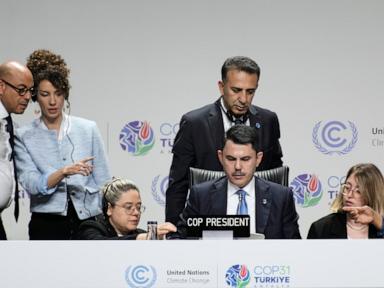
UN climate talks routinely fracture over fossil fuels because the negotiations are built on an irreconcilable structural contradiction. Nearly two hundred nations are asked to unanimously sign off on ending the very energy system that underpins global industrial power, state budgets, and sovereign debt repayment, all without a binding mechanism to finance the replacement. The public fight is always framed around whether a final text uses the phrase phase out or phase down, yet that linguistic battle is merely a proxy war for trillions of dollars in stranded assets, sovereign revenue collapse, and energy security.
If you have spent enough years watching exhausted diplomats argue over commas at four in the morning in conference centers from Glasgow to Dubai to Baku, the script becomes painfully familiar. Every summit ends in overtime. Every summit produces a last-minute plenary drama where oil-producing blocs refuse to sign language threatening hydrocarbon extraction, while small island states and European delegates threaten to walk out over weak ambition. The press releases call it a historic compromise or a bitter deadlock. Neither label captures the reality of what is actually happening behind closed doors.
The Illusion of Consensus Diplomacy
The United Nations Framework Convention on Climate Change operates on consensus rule. Unlike a legislature where a majority vote carries the day, consensus in UN climate diplomacy means the absence of formal objection. A single country—or a coordinated bloc of petrostates—can effectively veto any sentence in a cover decision simply by raising a flag and refusing to budge.
This procedural reality turns every summit into a hostage negotiation over vocabulary. For three decades, negotiators managed to avoid explicitly naming coal, oil, and gas in final COP decisions, focusing instead on abstract emissions targets. When fossil fuels finally entered the formal text in recent years, the fight shifted immediately to qualifiers. Adding words like unabated or transitioning away creates massive legal and financial loopholes that allow producers to keep drilling while claiming compliance.
Critics argue that abandoning consensus for majority voting would unlock faster action. That misses the point entirely. A majority-vote treaty that major emitters and fossil fuel exporters refuse to ratify is just an expensive piece of paper. The UN process moves at the speed of its most reluctant participant because international law has no police force to compel a sovereign nation to leave profitable resources in the ground.
Why Petrostates Will Never Voluntarily Sign Their Own Fiscal Warrant
To understand the ferocity of the resistance at these summits, stop looking at carbon molecules and start looking at national budgets. In dozens of developing and middle-income economies, state-owned oil and gas companies are not merely commercial enterprises. They are the primary engines of public finance, funding everything from food subsidies and public sector salaries to military hardware and infrastructure.
Consider the math facing a finance minister in a hydrocarbon-dependent economy. Global climate models indicate that meeting strict temperature targets requires leaving a vast majority of proven fossil fuel reserves unburned. On a balance sheet, those unburned reserves become stranded assets. For a private multinational corporation, stranded assets mean a lower stock price and angry shareholders. For a national government, stranded assets mean sovereign default and domestic political unrest.
Asking these governments to sign an unconditional fossil fuel phase-out without a guaranteed, equivalent stream of replacement revenue is asking them to commit political suicide. Until climate diplomacy addresses the fiscal survival of producer states, those states will continue to deploy every procedural tool available to stall, dilute, and block elimination timelines.
The Finance Trap Dividing the Global South
The narrative that UN climate talks pit wealthy green heroes against stubborn oil villains is dangerously incomplete. The deepest fault line in the negotiation rooms actually runs straight through the developing world, separating nations that export energy from nations that are drowning under the impacts of climate change—and both groups are united in their frustration with wealthy industrialized economies.
Developing nations require trillions of dollars annually to build renewable grids, adapt coastal cities, and recover from extreme weather events. Wealthy nations, which built their industrial dominance on two centuries of unrestricted fossil fuel burning, have consistently failed to deliver climate finance at the scale and speed required. When money does arrive, it frequently comes in the form of high-interest loans rather than grants, pushing vulnerable countries deeper into debt.
The High Cost of Capital
A hypothetical solar project in Germany and an identical solar project in Sub-Saharan Africa use the exact same panels and inverters. Yet the project in Africa often costs two to three times as much to build because international lenders demand massive risk premiums to invest in emerging markets.
Without subsidized concessional finance or credit guarantees from wealthy nations, developing countries cannot afford the upfront capital costs of wind, solar, and grid storage. Faced with growing populations and urgent demands for electricity, many developing nations view coal and natural gas not as ideological preferences, but as the only financing options they can actually secure on global markets.
The Carbon Capture Escapism
Whenever talks hit an impasse over fossil fuel phase-out language, carbon capture and storage inevitably surfaces as the diplomatic escape hatch. By inserting the word unabated before fossil fuels, negotiators allow countries to continue extracting and burning oil, gas, and coal so long as they promise to capture the resulting emissions and bury them underground.
On paper, this looks like an elegant engineering compromise. In practice, it relies on technology that remains prohibitively expensive, energy-intensive, and deployed at a fraction of the scale needed to alter global emissions trajectories. Most existing carbon capture facilities are attached to gas processing plants or used for enhanced oil recovery, a process where captured carbon dioxide is injected into aging oil fields to push out more crude oil.
Relying on hypothetical future capture capacity gives policymakers an excuse to approve new pipelines and export terminals today. It shifts the burden of emissions reductions onto unproven infrastructure decades down the line, preserving short-term profits while locking in high-carbon assets that will operate for forty years.
The Geopolitical Reality Outside the Conference Halls
The sharpest indictment of the UN climate process is the stark contrast between what diplomats say inside the plenary hall and what their governments do the moment they fly home. Even the loudest champions of fossil fuel phase-outs frequently operate on a glaring double standard when domestic energy prices spike or geopolitical supply chains fracture.
When European gas supplies were severed following the invasion of Ukraine, governments that had spent years lecturing the developing world on green transitions scrambled to sign long-term liquefied natural gas contracts, reopen shuttered coal plants, and fund new overseas gas infrastructure. Meanwhile, the world's largest democracies continue to issue new drilling permits and subsidize domestic fossil fuel consumption to shield voters from inflation at the gas pump.
Energy Security Always Wins
In every capital city on earth, political survival depends on keeping the lights on and keeping fuel affordable. When climate commitments collide with immediate energy security or domestic inflation, energy security wins every single time.
This explains why global fossil fuel consumption and subsidies have repeatedly hit record highs even as UN climate pledges have grown more ambitious. The treaties negotiated in UN halls are non-binding declarations of intent, whereas energy markets respond to hard physical realities—supply, demand, refining capacity, and grid reliability.
Where Real Decarbonization Actually Happens
If UN climate talks are structurally incapable of forcing a rapid end to fossil fuels, the logical question is what actually drives the energy transition. The answer is rarely found in a UN cover decision. Real change is driven by industrial policy, brutal technological cost curves, and supply chain dominance.
Solar panels, wind turbines, and lithium-ion batteries have plummeted in cost not because diplomats agreed on a verb in a treaty, but because countries like China, the United States, and members of the European Union poured hundreds of billions of dollars into manufacturing subsidies, tax credits, and research mandates. Once renewable power becomes cheaper to build and operate than an existing coal or gas plant, utilities switch for purely commercial reasons.
Capital markets are similarly indifferent to diplomatic rhetoric. Institutional investors and commercial banks pull back from coal and high-cost oil projects when they see declining returns and rising regulatory risks, regardless of whether a UN summit ends in triumph or acrimony.
The Quiet Pivot to Bilateral Deals and Trade Walls
Recognizing the limits of consensus diplomacy, major economies are increasingly bypassing the UN process in favor of aggressive trade mechanisms and bilateral partnerships. The most potent weapon in modern climate policy is no longer a UN resolution, but the carbon border adjustment mechanism.
By slapping tariffs on imported steel, cement, aluminum, and fertilizers based on the carbon emitted during their production, large consumer markets force foreign exporters to clean up their manufacturing grids if they want to keep selling their goods. A steelmaker in India or Turkey might ignore a non-binding UN declaration, but they cannot ignore a massive tariff at the European border that wipes out their profit margin.
At the same time, wealthy nations are forming targeted just energy transition partnerships with major coal-consuming countries like Indonesia, South Africa, and Vietnam. These bilateral deals attempt to trade specific pools of public and private finance for the early retirement of individual coal plants. Even these targeted efforts have struggled with slow disbursements and domestic political pushback, proving just how difficult it is to dismantle legacy energy infrastructure in the real world.
Why the Summits Still Survive Despite the Gridlock
Given the endless procedural fights, diluted texts, and yawning gap between pledges and physical reality, it is easy to dismiss UN climate talks as an expensive exercise in diplomatic theater. Yet dismantling the process would create a dangerous vacuum.
The summits remain the only global forum where the smallest, poorest nations on earth have an equal legal voice alongside superpowers and oil giants. Without the annual spotlight of a COP summit, wealthy nations would quietly abandon their climate finance commitments, and major polluters would face zero coordinated international scrutiny.
More importantly, these gatherings function as massive global trade shows where sovereign wealth funds, technology developers, utility executives, and regulators strike the actual deals that deploy clean energy capital. The real action at a modern climate summit rarely happens in the sterile plenary rooms where diplomats haggle over fossil fuel semantics; it happens in the crowded pavilions and hotel lobbies where engineers and financiers negotiate power purchase agreements and battery supply chains.
Diplomats will continue to fight over the exact wording of fossil fuel phase-outs because language signals the direction of future regulation and market risk. Yet no treaty signed in a convention center will ever shut down an oil field or retire a coal plant on its own. Fossil fuels will only exit the global economy when clean alternatives become cheaper, more reliable, and easier to finance in every corner of the world than the hydrocarbons buried beneath it.



