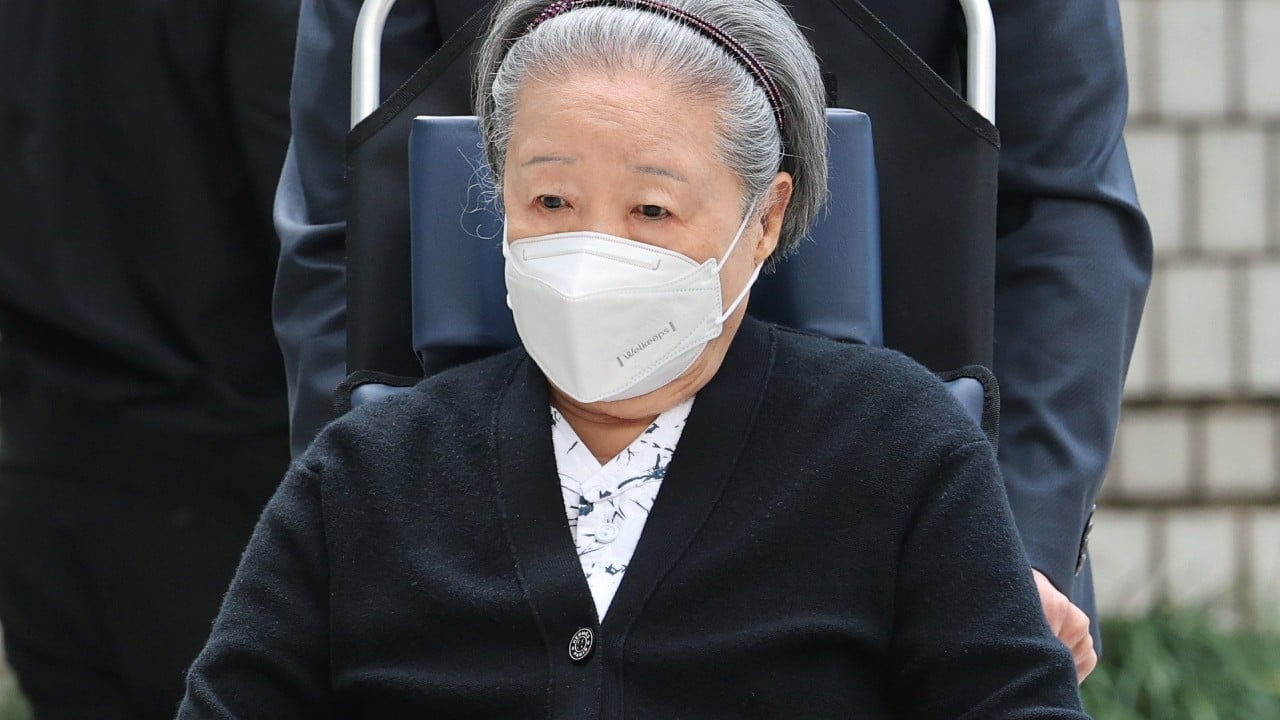
South Korean judicial authorities revoked the bail of a senior Unification Church leader after investigators uncovered unauthorized, clandestine meetings that directly violated court-mandated release conditions. The revocation immediately returned the executive to detention, halting a temporary reprieve originally granted on strict humanitarian and medical grounds. This sudden judicial reversal exposes the fragile friction between wealthy religious conglomerates and South Korea’s tightening anti-corruption enforcement.
Money talks in Seoul. For decades, massive organizational wealth and entrenched political networks insulated senior figures within the Family Federation for World Peace and Unification—widely known as the Unification Church—from the sharpest teeth of the South Korean legal system. When a court grants bail to a high-profile defendant in South Korea, the decision is rarely casual. Judges impose tight geographic boundaries, communication bans, and strict non-contact orders to prevent witness tampering and evidence destruction. Breaking those rules is not a minor administrative slip. It is a direct challenge to judicial authority that forces prosecutors to drop the hammer. For a different view, check out: this related article.
The Mechanics of Bail Revocation in South Korea
To understand why these secret visits triggered an immediate return to a detention cell, you have to look at how South Korean criminal procedure actually operates. Unlike the cash-bail systems common in North America, South Korean courts rely heavily on conditional release frameworks designed to neutralize flight risks and preserve evidentiary integrity during ongoing trials.
When defense attorneys argue for bail in high-stakes corporate or religious cases, they almost always lean on two primary levers: acute medical necessity or the need to prepare a complex legal defense. Judges evaluate these petitions against the severity of the underlying charges, which in cases involving large organizational hierarchies frequently center on embezzlement, breach of trust, or illegal political lobbying. Further reporting on this trend has been published by The Washington Post.
Once bail is approved, the defendant enters a strict surveillance perimeter. The court typically prohibits contact with co-defendants, subordinate executives, and potential witnesses. Even routine operational briefings can cross the line into criminal obstruction if prosecutors determine the defendant is coordinating testimony or directing the movement of organizational funds.
When surveillance teams or whistleblowers document unauthorized meetings, the prosecution does not need to prove a brand-new crime. Under the South Korean Criminal Procedure Act, merely violating the explicit conditions of release gives the court full legal authority to cancel bail, forfeit any posted bond, and issue an immediate detention warrant.
Why Secret Meetings Carry Explosive Legal Weight
In tight-knit hierarchical organizations, leadership does not stop at the prison gate. The Unification Church operates through a deeply centralized command structure where senior officials exercise immense authority over financial allocations, real estate holdings, and international asset transfers.
Prosecutors view unauthorized meetings through a very specific lens: witness intimidation and narrative control.
Consider a hypothetical scenario common in white-collar investigations. Suppose an executive is released to receive specialized medical treatment at a private clinic in Seoul. Instead of staying confined to the hospital ward, the executive meets privately with mid-level financial directors in an unmonitored suite. Even if no recording device captures a direct order to shred documents, the mere presence of the top boss reminds subordinates where their loyalty lies. In a culture where organizational hierarchy carries tremendous social weight, a single face-to-face conversation can freeze cooperation from key witnesses overnight.
Investigators tracking the Unification Church leadership recognized this dynamic immediately. Secret visits bypass digital paper trails. Encrypted messaging apps leave metadata, and phone calls generate carrier logs, but an unannounced physical meeting inside a private facility leaves almost nothing for digital forensics teams to trace—unless physical surveillance or internal leaks expose the rendezvous.
The Medical Bail Loophole Under Scrutiny
South Korea has a long, contentious history with medical bail (often referred to locally as byeong-boseok). For years, critics and legal reformers have pointed out that affluent defendants—ranging from chaebol conglomerate heirs to influential religious leaders—secure temporary release at far higher rates than ordinary citizens by presenting thick dossiers of specialist medical evaluations.
The public backlash against perceived double standards has forced the South Korean judiciary to adopt a much harder stance. Judges know that every high-profile bail decision is dissected by investigative reporters and civic watchdog groups. When a defendant granted mercy on health grounds is caught holding clandestine meetings, it embarrasses the bench. The court’s swift revocation serves a dual purpose: it neutralizes an immediate investigative threat while signaling to the public that judicial leniency is not a free pass to resume executive operations.
Historical Friction Between the Church and State Authorities
The Unification Church is no stranger to legal scrutiny across East Asia. Founded in Seoul in 1954 by Sun Myung Moon, the movement evolved over seven decades into a sprawling global enterprise spanning media outlets, educational foundations, manufacturing plants, and massive real estate portfolios.
While the organization cultivated deep ties with conservative political figures in South Korea, Japan, and the United States during the Cold War era, the geopolitical and regulatory climate in Northeast Asia has shifted dramatically over the past few years. Following high-profile political scandals in neighboring Japan that triggered intense legislative scrutiny of the church’s fundraising and political lobbying practices, South Korean authorities have faced growing pressure to examine the group’s domestic financial operations with equal rigor.
Legal analysts who have tracked religious and corporate prosecutions in Seoul for decades note a distinct pattern in how these investigations unfold:
- Phase One (Financial Tracing): Prosecutors follow cross-border wire transfers, real estate acquisitions, and tax-exempt foundation expenditures to establish probable cause for embezzlement or tax evasion.
- Phase Two (Detention and Leverage): Investigators seek pretrial detention warrants for key intermediaries, using custody to pressure mid-level officials into turning state’s evidence.
- Phase Three (Bail Battles): Senior leaders petition for release on humanitarian grounds, triggering fierce courtroom clashes over flight risk and organizational influence.
- Phase Four (Compliance Monitoring): Prosecutorial teams quietly monitor the released executive’s movements, waiting for a single misstep that justifies re-incarceration.
The exposure of secret visits sits squarely in Phase Four. It represents a catastrophic tactical blunder by the defense team, handing prosecutors the exact ammunition they needed to lock the courtroom doors once again.
The Gray Areas of Religious Autonomy and Criminal Prosecution
Any honest assessment of this case requires acknowledging the legal and constitutional gray areas that make prosecuting religious leaders uniquely complex. South Korea’s constitution guarantees freedom of religion, and defense attorneys routinely argue that aggressive prosecutorial surveillance infringes upon legitimate spiritual governance and pastoral consultation.
Where does legitimate religious leadership end and criminal obstruction begin? That line is notoriously blurry.
If a church elder visits a detained or bailed leader to pray or discuss theological matters, defense lawyers will frame the encounter as protected religious expression. Prosecutors, however, argue that when an organization’s spiritual hierarchy is identical to its financial management structure, every private meeting carries the inherent risk of evidence tampering. South Korean courts have increasingly sided with prosecutors on this point, ruling that constitutional protections for religious belief do not grant immunity from standard criminal procedure or asset-tracing laws.
Still, legal scholars warn that overzealous enforcement carries its own risks. If courts treat every organizational interaction as presumptive obstruction, defense teams face genuine obstacles in mounting a coordinated legal defense, particularly in sprawling cases involving thousands of pages of accounting records and dozens of international affiliates.
What Bail Revocation Means for the Broader Trial
Returning a high-ranking defendant to custody fundamentally alters the trajectory of a criminal trial in South Korea. Beyond the immediate loss of personal freedom, bail revocation delivers three concrete blows to the defense strategy.
First, it cripples operational coordination. Preparing a defense against complex financial charges requires constant communication between the accused, forensic accountants, and legal counsel. Inside a detention center, every visit is logged, time-limited, and conducted under strict institutional oversight.
Second, it shifts psychological leverage toward the prosecution. Subordinates and co-defendants watching from the outside see that the organization’s top leadership cannot even protect itself from the court’s reach. That realization frequently accelerates plea negotiations and encourages lower-tier officials to cooperate with state investigators rather than fall on their swords for the leadership.
Third, it taints judicial perception ahead of sentencing. South Korean criminal trials do not separate guilt and sentencing into distinct phases the way American courts do; the same panel of judges decides both verdict and punishment simultaneously. A defendant who violates court trust during pretrial release faces an uphill battle when asking those very same judges for leniency at the conclusion of the trial.
The End of Untouchable Institutional Insulation
For decades, South Korea’s most powerful institutions operated under an unspoken assumption that sufficient wealth, elite legal representation, and political proximity could soften the blow of criminal accountability. That era is closing fast. Digital financial forensics, aggressive investigative journalism, and a judiciary hyper-aware of public cynicism have stripped away the traditional buffers that once protected institutional elites.
When the court revoked bail over those secret visits, it drew a hard, unmistakable boundary: courtroom conditions apply equally to billionaire executives, political brokers, and religious patriarchs alike, and any attempt to govern from the shadows will be met with cold steel bars.