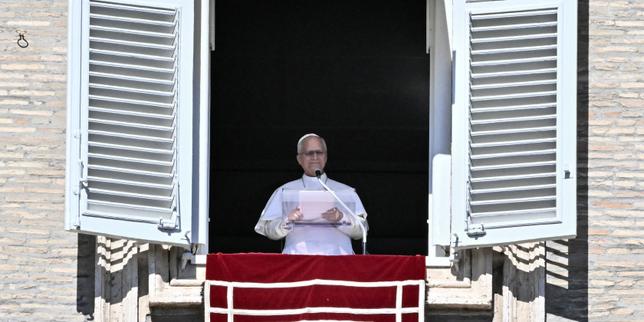
When Pope Leo XIV stood at his window to address the faithful during the Angelus prayer, he broke decades of rigid Vatican tradition with a few sentences. A pulmonary nodule had been detected on his lung during routine checks, and an operation at Rome's Agostino Gemelli hospital was imminent. There was no defensive ambiguity. No vague press statements about a minor summer flu or fatigue from a demanding schedule. Just a direct, calm admission of a medical reality that immediately shifted the global spotlight back onto the fragile intersection of absolute spiritual authority and mortal biology.
For generations, the Holy See treated the physical decline of the Supreme Pontiff as a state secret. History remembers the agonizing final years of John Paul II, where the progression of Parkinson's disease played out behind closed doors while officials downplayed the severity of his condition. Even during the tenure of his predecessor Francis, updates on respiratory struggles and abdominal surgeries were frequently filtered through layers of bureaucratic reticence. Leo XIV chose an entirely different path. By announcing his scheduled pulmonary resection himself, the 71-year-old pontiff upended the traditional playbook of Vatican communication, replacing secrecy with immediate candor.
This shift is not merely stylistic. It reflects a modern administrative necessity in an era where global communication loops outpace institutional spin. When a leader of 1.4 billion Catholics faces thoracic surgery, information vacuums instantly fill with market speculation, diplomatic anxiety, and conspiracy theories. By taking ownership of the narrative before checking into the Gemelli hospital—often dubbed the third Vatican—the administration minimized market panic and institutional instability.
Yet, openness creates its own set of pressures. Disclosing a localized nodule at an early stage invites microscopic scrutiny into every post-operative bulletin issued by Matteo Bruni and the Holy See Press Office. When subsequent pathology reports confirmed that the resected tissue from the lower right lung lobe was malignant, the Vatican faced the delicate task of balancing transparency with the privacy owed to any patient. The immediate confirmation that the surgery lasted roughly ninety minutes without acute complications satisfied initial curiosities, but it also established a high-water mark for public expectation. Future medical updates are now bound to this standard of disclosure, leaving no room for a return to old habits of obfuscation.
Beyond communications strategy, the episode forces a hard look at the physical toll of the modern papacy. Elected in May 2025, Leo XIV assumed control of a sprawling, bureaucratic institution during a period of intense global realignment. The physical demands placed on a man in his seventies are immense. Long-haul travel, continuous diplomatic audiences, and grueling liturgical schedules exact a heavy toll. While the pontiff's staff maintained that his upcoming apostolic journey to South America remained under review following his week-long hospital stay, the reality of post-operative recovery introduces unavoidable friction into the Vatican's diplomatic calendar.
The canon law of the Church remains notably silent regarding papal incapacitation short of abdication or death. There are no constitutional workarounds or automated protocols for a CEO of a global faith undergoing pulmonary surgery. Authority cannot be delegated to a board of directors or an interim executive officer. This structural reality underscores why medical transparency matters so intensely. When the chief executive of an ancient global institution faces the operating table, absolute clarity is the only tool capable of preventing institutional paralysis.
The quiet corridors of the Gemelli hospital have witnessed the final chapters of multiple pontificates. For Leo XIV, this intervention represents an early interruption rather than a twilight struggle. How the Vatican manages the aftermath of this procedure will shape the precedent for how future leaders handle the inescapable vulnerability of the human body beneath the white cassock.