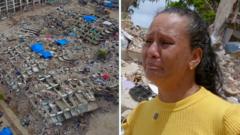
A month after violent seismic shocks struck Venezuela, thousands of families remain stranded in a nightmare of official silence, picking through rubble with bare hands to recover the bodies of their missing relatives. Official death tolls stagnate while local search operations suffer under severe gear shortages and broken infrastructure. The state claims recovery efforts are progressing smoothly. Reality on the ground reveals a total breakdown of disaster response systems, leaving grieving communities to shoulder the physical and emotional burden of excavation alone.
The Infrastructure Trap Behind the Collapse
Seismic events do not destroy cities entirely on their own. Unchecked corruption, non-existent building codes, and deteriorating civil engineering transform moderate tremors into mass-casualty events.
For decades, urban expansion across key Venezuelan hubs ignored basic seismic engineering standards. Concrete structures were built with sub-standard rebar, unreinforced masonry, and poor foundation depth. When the tremors hit, these buildings failed catastrophically, pancake-collapsing into dense, impassable layers of debris.
Emergency response teams face an immediate structural barrier. Modern disaster recovery relies heavily on specialized equipment, including thermal imaging cameras, acoustic listening devices, and heavy pneumatic lifters. Venezuelan search teams, stripped of federal funding over years of economic strain, possess almost none of these tools.
Consider a standard urban search scenario as an illustration. In a functional infrastructure model, heavy machinery clears access roads within six hours to deploy hydraulic cutters and structural stabilization crews. In this crisis, local volunteers spend three days clearing a single intersection using rusted shovels and manual jacks. By the time heavy equipment arrives, the window for finding survivors has closed, and the focus shifts entirely to body recovery.
The Politics of Official Numbers
Accurate statistics save lives during natural disasters. They dictate where international aid flows, how supplies are rationed, and where search crews deploy. Yet, state authorities have maintained an aggressive policy of information control.
Local officials underreport casualty numbers to project stability and minimize international scrutiny. Independent reporters and community leaders tracking missing persons report numbers far higher than those broadcast on state media channels.
This statistical suppression carries direct practical consequences.
- Emergency aid shipments are capped based on suppressed population numbers rather than actual displaced headcounts.
- International relief agencies face bureaucratic red tape and delayed visas because the government refuses to declare a full state of emergency.
- Local search efforts are denied access to military-grade excavation tools under the pretext that national reserves are sufficient.
Without clear, transparent data, international aid organizations remain paralyzed. Donors hesitate to send specialized search equipment without official requests from host governments, leaving families in the affected zones entirely isolated.
The Human Cost of Manual Excavation
When institutions collapse, citizens fill the vacuum out of sheer necessity. Across affected towns, neighborhood groups have organized makeshift recovery units.
These volunteer crews operate under brutal conditions. Without proper safety gear, volunteers suffer severe lacerations, respiratory issues from inhaled concrete dust, and psychological trauma. The lack of proper mortuary infrastructure compounds the tragedy. Refrigerated transport units are virtually non-existent in remote regions, forcing communities to construct improvised gravesites to handle bodies retrieved in advanced states of decomposition.
The psychological toll on families searching through structural debris is devastating. Every hour spent digging without proper machinery deepens community trauma. Relatives sit on piles of fractured concrete from dawn until dusk, waiting for signs of lost loved ones while municipal leaders maintain that rescue operations are proceeding according to plan.
Systemic Failure and the Path to Accountability
Natural disasters expose structural weaknesses that governments spend years hiding. Fixing this broken disaster management model requires radical transparency and immediate institutional restructuring.
First, international humanitarian organizations must be granted direct, unhindered access to affected regions without political preconditions. Bypassing central bureaucratic bottlenecks guarantees that specialized search teams and heavy excavation equipment reach the hardest-hit zones directly.
Second, transparent registry systems managed by independent non-governmental organizations must replace state-controlled casualty lists. Accurate data is the minimum requirement for effective disaster relief.
Finally, long-term reconstruction demands strict enforcement of structural building codes. Rebuilding the same unsafe concrete structures guarantees a repeat of this tragedy during the next seismic event.
Families waiting beside the rubble do not need speeches or promises of future aid. They need heavy machinery, professional search crews, and the simple dignity of burying their dead. Until state authorities prioritize human life over political optics, the true toll of this catastrophe will remain buried beneath the concrete.


