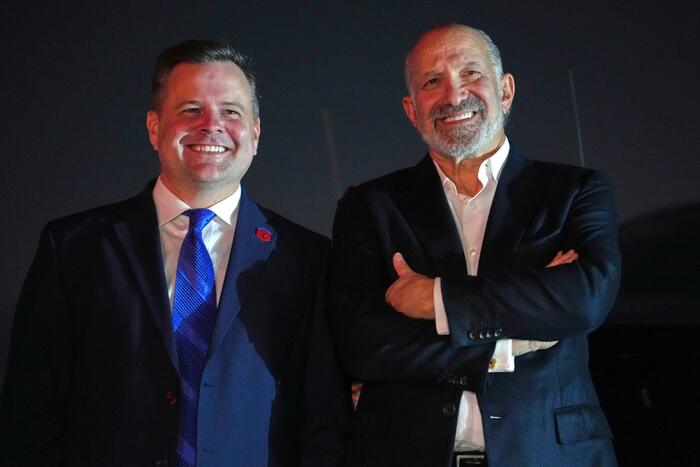
Treasury Secretary Scott Bessent and Commerce Secretary Howard Lutnick are locked in a quiet, high-stakes dispute over who bears responsibility for the illicit diversion of advanced Nvidia artificial intelligence chips to restricted foreign buyers. At the center of the friction is the Commerce Department's failure to promptly place a key intermediary firm onto the federal Entity List, a delay that Treasury officials argue left a massive loophole open while high-end processors flowed past export controls. The clash exposes a deep structural fracture in how the United States polices semiconductor supply chains, pitting Treasury's financial-enforcement mindset against Commerce's slower, trade-balanced licensing apparatus.
Washington loves a clean scapegoat. When high-end silicon meant to stay in allied data centers turns up inside server racks halfway across the world, nobody wants to hold the smoking gun when congressional committees start issuing subpoenas.
To understand why two of the most powerful economic officials in the executive branch are pointing fingers, you have to look at the mechanics of modern chip smuggling and the bureaucratic architecture built to stop it. Export controls on advanced semiconductors—specifically Nvidia’s H100, H200, and newer Blackwell architectures—were designed on the assumption that physical hardware is easy to track. Unlike software or financial derivatives, a server rack loaded with eight flagship graphics processing units weighs hundreds of pounds, requires specialized liquid or high-airflow cooling, and draws enough electricity to power a small neighborhood. Yet tracking those machines once they leave a contract manufacturer in Taiwan or a system integrator in California has proven extraordinarily difficult.
How the Diversion Pipeline Actually Works
The problem is not that Nvidia is shipping pallets of prohibited hardware directly to sanctioned jurisdictions. The company sells its chips to authorized distributors, original equipment manufacturers, and cloud service providers across North America, Europe, the Middle East, and Asia. From there, the hardware enters a secondary market governed by shell companies, freight forwarders, and data-center operators with opaque ownership structures.
Consider a hypothetical example of how a typical diversion unfolds. A newly registered technology consultancy in Southeast Asia signs a multi-million-dollar lease for rack space at a local colocation facility. Using financing routed through holding companies in offshore jurisdictions, the consultancy purchases dozens of high-end AI servers from a legitimate regional distributor, claiming the hardware will be used to train local language models for regional telecom firms. Once the servers are delivered and powered on, the physical boxes never necessarily have to cross another border. Instead, access to the compute clusters is leased remotely over encrypted fiber lines to engineers operating inside restricted jurisdictions, or the servers are quietly unbolted, crated as generic networking equipment, and routed through free-trade zones where customs inspections rarely open sealed commercial manifests.
By the time intelligence agencies or investigative reporters piece together the ownership trail, the hardware has already been deployed. That lag between commercial transaction and intelligence verification is precisely where the friction between Bessent and Lutnick ignites.
The Bureaucratic Chasm Between Treasury and Commerce
On paper, the division of labor in Washington looks straightforward. The Bureau of Industry and Security (BIS), housed inside Howard Lutnick’s Commerce Department, writes the export control rules, reviews license applications, and maintains the Entity List—the blacklist that bars designated foreign companies from receiving U.S.-origin technology without a special license that is almost always denied. Meanwhile, Scott Bessent’s Treasury Department oversees the Office of Foreign Assets Control (OFAC) and the Financial Crimes Enforcement Network (FinCEN), giving it sweeping authority to freeze dollar-denominated assets, cut off access to the global banking system, and trace suspicious wire transfers across correspondent banks.
In practice, these two agencies operate on entirely different clocks and answer to competing institutional mandates.
Treasury is built for speed and financial strangulation. When OFAC identifies a sanctions evader, it moves to sever the target’s banking lifelines before the money can be moved. Commerce, by contrast, is an agency historically tasked with promoting American exports and managing bilateral trade relationships. Even within BIS, adding a company to the Entity List requires an interagency consensus process involving State, Defense, Energy, and Commerce itself. Every addition carries diplomatic baggage, potential retaliatory tariffs, and intense lobbying from American hardware makers and foreign governments.
When Treasury analysts flag suspicious wire transfers linking an overseas tech broker to restricted entities, they expect rapid administrative action to cut off the broker’s supply of chips. When that broker remains off the Entity List for months while Commerce weighs diplomatic fallout or demands higher evidentiary thresholds, Treasury officials see an avoidable national security failure.
The Evidentiary Trap
Commerce officials have a counter-argument, and it is not trivial. Blacklisting a foreign firm on the basis of preliminary financial intelligence carries severe legal and diplomatic risks. If BIS adds a major data-center operator or electronics distributor to the Entity List without ironclad, unclassified proof of diversion, the targeted company can challenge the designation, allied governments may accuse Washington of weaponizing export controls to protect domestic cloud giants, and legitimate supply chains can seize up overnight.
Lutnick’s camp operates in an environment where every semiconductor restriction intersects with broader trade negotiations, tariff threats, and industrial policy goals. Moving too aggressively against intermediaries in friendly or neutral nations risks pushing those countries closer to rival supply chains. Moving too slowly, however, hands critics like Bessent an easy target when a major diversion scandal breaks into public view.
Why Nvidia Sits in the Crosshairs Without Pulling the Trigger
Whenever an enforcement gap surfaces, public attention immediately snaps to Nvidia. As the dominant supplier of AI training hardware, Nvidia’s logo sits on the boards at the center of every smuggling investigation. Yet treating this as a simple corporate compliance failure misses the structural reality of global electronics manufacturing.
Nvidia does not sell individual loose chips to random buyers off a loading dock. It designs the silicon, contracts fabrication to foundries like TSMC, and sells completed chips and reference boards to major partners—companies such as Supermicro, Dell, Hewlett Packard Enterprise, and large Asian original design manufacturers. Those partners assemble the chips into complete servers and sell them through multi-tiered distribution networks spanning dozens of countries.
Once a server enters that third or fourth tier of distribution, the original chip designer has zero contractual visibility into who plugs it into a wall socket. Nvidia has repeatedly stated that it requires all partners to comply with U.S. export laws and terminates relationships with distributors caught violating diversion rules. Short of embedding physical GPS trackers or cryptographic kill-switches directly into the silicon—a measure that legitimate enterprise and sovereign customers fiercely resist over security and reliability concerns—no chip designer can unilaterally police the global grey market.
This reality leaves federal regulators arguing over who should have stopped the middlemen. Treasury tracks the money; Commerce controls the export licenses. When an intermediary slips through the cracks, each agency has ample ammunition to blame the other’s processes.
The Structural Flaws in Current Semiconductor Enforcement
Even if Bessent and Lutnick resolved their differences tomorrow, the underlying enforcement machinery faces three severe handicaps that no single cabinet secretary can fix alone.
- Severe underfunding at BIS. Despite being handed responsibility for policing the most consequential technology race of the twenty-first century, the Bureau of Industry and Security operates on an annual budget roughly equivalent to the cost of a couple of fighter jets. Its network of overseas export control officers—the investigators actually responsible for visiting foreign warehouses and verifying end-use certificates—numbers in the dozens globally. Expecting a handful of field agents to audit thousands of data centers across Asia, Europe, and the Middle East is fantasy.
- The cloud compute loophole. Traditional export controls regulate physical goods crossing physical borders. They were written for an era of centrifuges, missile components, and machine tools. Today, an AI developer does not need to smuggle a server across a border to train a frontier model; they simply rent compute capacity over the internet from a data center located in a country that has unrestricted access to Nvidia hardware. Closing that loophole requires policing cloud service providers and data-center operators—an area where U.S. jurisdiction is murky and diplomatic pushback is intense.
- Interagency intelligence silos. Financial intelligence gathered by Treasury, signals intelligence collected by national security agencies, and commercial shipping data held by Commerce rarely flow into a single real-time operational picture. By the time classified intelligence is scrubbed for use in an administrative blacklisting package, the smuggling network has often dissolved one shell company and spun up three replacements.
What the Infighting Signals for the Tech Sector
For semiconductor executives, cloud providers, and institutional investors, the friction between Bessent and Lutnick is far more than Washington gossip. It signals an impending tightening of compliance expectations across the entire AI hardware ecosystem.
When cabinet secretaries publicly or privately trade blame over enforcement failures, the standard bureaucratic response is an aggressive overcorrection. Companies operating in the AI supply chain should expect stricter Know Your Customer (KYC) mandates modeled directly on banking regulations. Just as financial institutions are legally required to verify the beneficial ownership of corporate clients and flag suspicious transaction patterns, server manufacturers and data-center operators face growing pressure to audit their end-users and prove that hardware has not been sub-leased or relocated.
We are also likely to see Treasury take a more muscular role in semiconductor enforcement using secondary sanctions. If Commerce’s Entity List process proves too slow or diplomatically constrained, OFAC has the unilateral authority to sanction foreign financial institutions and holding companies that facilitate illicit tech procurement, effectively locking them out of the U.S. dollar system overnight. For an overseas distributor, losing access to dollar clearing is a faster death sentence than being placed on a Commerce trade blacklist.
The deeper truth behind the Bessent-Lutnick feud is that Washington is trying to enforce a twenty-first-century technological blockade using twentieth-century bureaucratic tools. Export controls were built to slow down proliferation, not to achieve absolute containment in a hyper-connected global economy where billions of dollars in venture capital and sovereign wealth are chasing scarce compute.
Until the White House forces a unified command structure over technology enforcement—merging Treasury’s financial teeth with Commerce’s licensing authority and funding actual field verification—advanced chips will continue to find their way through the cracks, and cabinet secretaries will keep pointing fingers whenever the receipts become public.