The lens of a camera is supposed to serve as an impartial witness. In the occupied West Bank, holding that lens has increasingly become a dangerous hazard. When veteran Agence France-Presse photographer Jaafar Ashtiyeh was beaten with rifle butts and stripped of his professional gear near the northern village of Aqraba, it was not an isolated incident of civilian lawlessness. It was part of an escalating campaign designed to blind international oversight.
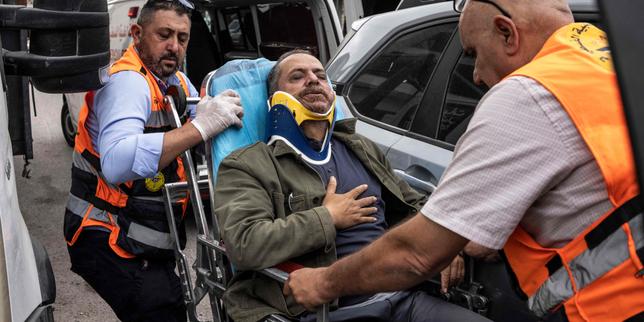
Ashtiyeh was documenting attacks on Palestinian olive farmers during the annual harvest—a seasonal flashpoint where agrarian livelihoods intersect with expanding outposts. Armed individuals approached the press corps, singled out Ashtiyeh, and struck him repeatedly while roughly a dozen Israeli soldiers stood roughly five hundred meters away, offering no intervention. Bruised, concussed, and robbed of his equipment, Ashtiyeh joined a growing ledger of media workers targeted in the territory. Weeks later, the Foreign Press Association and international press freedom organizations were forced to condemn not only physical assaults by ideological extremists but also a rising tide of arbitrary detentions targeting local correspondents working for global wire services.
The mechanics of this suppression rely on a quiet complicity. While military regulations technically mandate the protection of civilians and journalists within occupied territories, the operational reality on the ground tells a different story. Uniformed units frequently maintain a passive perimeter while civilian irregulars enforce territorial dominance. By creating an environment of active hostility, the strategy achieves its objective: local and international media think twice before deploying crews to document rural expulsions, outpost expansions, or olive grove vandalism.
For industry analysts watching the erosion of press freedom in conflict zones, the silence surrounding these assaults speaks volumes. Condemnations issued from Paris or New York routinely meet institutional inertia in local command structures. Investigations into settler violence rarely yield indictments, creating an atmosphere of absolute impunity. When the cost of recording historical reality involves fractured bones, destroyed cameras, and arbitrary military detention, the international public record is systematically starved of truth.
The consequences stretch far beyond fractured professional gear or bruised ribs. When independent documentation is choked off, accountability vanishes with it. The physical clearance of the agricultural landscape becomes invisible, reduced to administrative abstractions rather than human displacement. As long as armed actors operate with the tacit permission of passive security forces, the camera remains a target, and the truth remains an immediate casualty of territorial control.