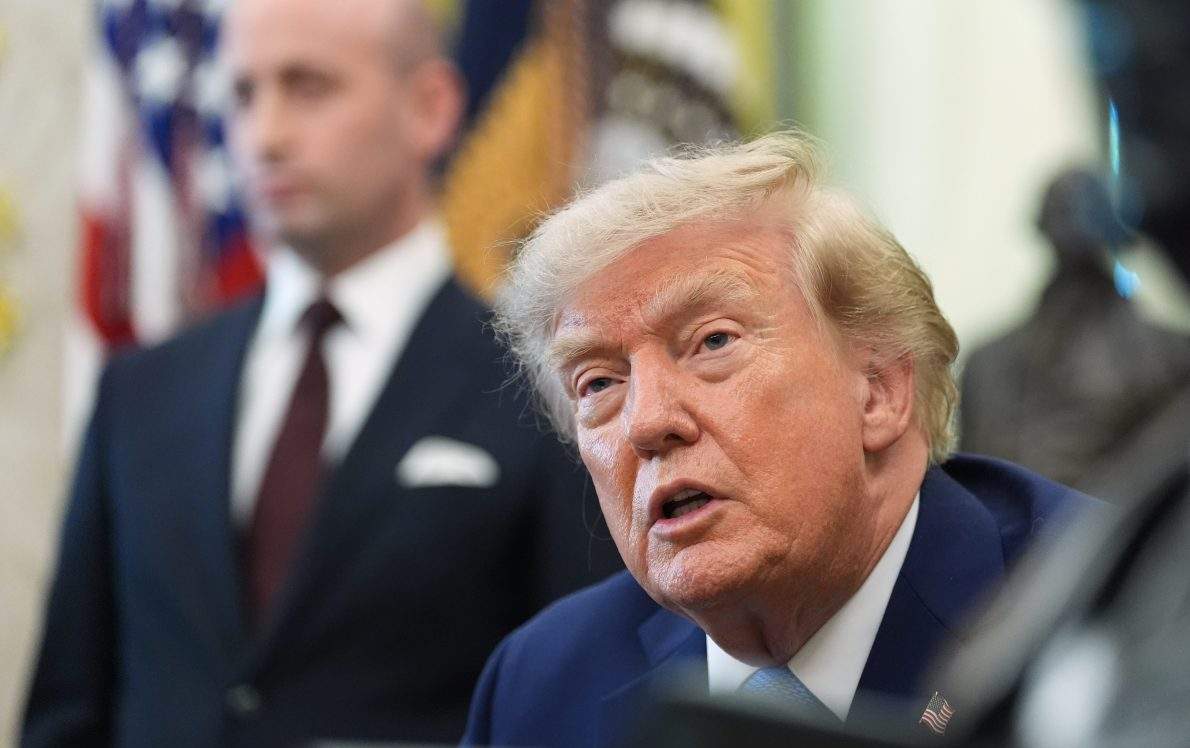
President Donald Trump has returned to the frontline of constitutional warfare, signing a fresh pair of executive orders designed to restrict birthright citizenship and cripple the commercial networks behind international maternity travel.
This maneuver arrives barely a month after the United States Supreme Court handed the administration a stinging defeat. In late June, the high court reaffirmed the traditional interpretation of the Fourteenth Amendment, swatting down an initial attempt to deny automatic citizenship to children born on domestic soil to parents lacking permanent legal status. Rather than conceding defeat, the White House has pivoted. Instead of launching a frontal assault on the constitutional text, the new directives seek to squeeze the boundaries of citizenship through targeted historical exemptions and a heavy-handed crackdown on foreign actors.
The strategy exposes a deep, unresolved friction point between executive ambition and foundational constitutional design. It also lays bare an administration determined to test how far administrative power can stretch when judicial checks block the path.
The Anatomy of the New Directives
The executive strategy relies on two distinct instruments. The first order compiles a non-exhaustive catalog of exceptions to the Citizenship Clause. For generations, legal precedent and historical practice recognized very narrow boundaries where birthright citizenship did not apply—such as children born to occupying foreign military forces, foreign diplomats accredited to the nation, or children born on foreign vessels.
The administration wants to widen these historic category gates. Drafted alongside policy architects like White House deputy chief of staff Stephen Miller, the new text asserts that children born to members of designated foreign terrorist organizations or individuals acting as agents or lobbyists for foreign governments should fall outside the constitutional guarantee. Furthermore, the text targets children born in territories or territorial waters where federal citizenship statutes do not automatically confer it—a provision currently applicable to American Samoa—alongside infants whose parents allegedly engaged in fraudulent activity to secure entry or status.
The second directive turns its crosshairs explicitly toward birth tourism. This operational arm instructs the Department of State and the Department of Homeland Security to choke off the commercial pipelines that facilitate travel for pregnant foreign nationals seeking an American passport for their newborns.
Commercial maternity hotels and facilitation agencies have operated in legal gray zones across states like California for years. These networks market luxury accommodations, medical coordination, and legal navigation to wealthy foreign clients. The administration's order directs consular officers to scrutinize temporary non-immigrant visa applications with heightened aggression, searching for indicators that an applicant might intend to give birth during a domestic visit.
Separating Scale from Rhetoric
During remarks in the Oval Office, the president did not mince words regarding his assessment of the practice. He claimed that hundreds of thousands of individuals exploit the system annually, turning a constitutional provision into a commercial commodity.
Data from independent demographic institutions tell a more measured story. Estimates compiled by organizations like the Migration Policy Institute suggest that the actual scale of birth tourism hovers significantly lower, tracking between twenty-two thousand and twenty-six thousand births annually based on census calculations. Federal figures recording births to mothers with direct foreign addresses place the indicator even lower. Even at the upper bound, these figures represent a fraction of one percent of total annual domestic births.
Yet the political utility of the issue transcends raw numerical impact. For a base constituency attuned to border enforcement and national sovereignty, the imagery of foreign nationals gaming the system remains potent. By framing the practice as a security vulnerability rather than merely a demographic footnote, the administration attempts to justify extraordinary executive interventions.
The Inevitable Judicial Collision Course
Legal analysts are viewing the latest paperwork with a mixture of skepticism and clinical inevitability. The core vulnerability of the new orders lies in their direct tension with the Fourteenth Amendment. The text of the amendment states plainly that all persons born or naturalized in the United States, and subject to the jurisdiction thereof, are citizens.
Civil rights organizations, including the American Civil Liberties Union, mobilized immediately following the announcement, denouncing the action as an unconstitutional end-run around the Supreme Court's June ruling. Past legal battles demonstrated that federal judges are thoroughly prepared to issue nationwide injunctions against administrative efforts to rewrite constitutional baselines by executive fiat.
The administration is betting that by narrowing the focus onto specific peripheral categories—such as alleged fraudsters, foreign agents, and commercial operators—it can isolate softer targets that might survive judicial scrutiny even if sweeping categorical bans fail. It is a calculated gamble designed to force the judiciary to parse the precise definition of being subject to domestic jurisdiction.
The Practical Realities of Enforcement
Enforcing these orders introduces staggering administrative hurdles. Consular officers stationed abroad already shoulder immense workloads, processing millions of visa requests under strict time constraints. Tasking these officials with unmasking covert intentions of pregnancy during standard tourist visa interviews opens a operational quagmire.
For instance, consider a hypothetical traveler arriving in the fourth month of pregnancy on a valid tourist visa. Proving intent at the port of entry requires more than speculation; it demands evidentiary standards that withstand administrative appeals and federal scrutiny. Because traveling to the United States while pregnant is not explicitly illegal under existing statutory law—provided the applicant is completely truthful on visa forms and possesses adequate funds to cover medical costs without public assistance—agencies must prove active deception rather than mere circumstance.
This evidentiary gap explains why federal authorities have historically relied on prosecuting the owners of underground maternity houses for visa fraud, tax evasion, and mail fraud, rather than prosecuting the foreign mothers themselves. The new executive directives command agencies to ramp up these investigations, yet the structural bottlenecks within the immigration court system remain unchanged.
The struggle over birthright citizenship is no longer just a debate over constitutional philosophy. It has devolved into a grinding trench warfare of administrative policy, judicial injunctions, and political positioning that will shape the boundaries of national belonging for years to come.