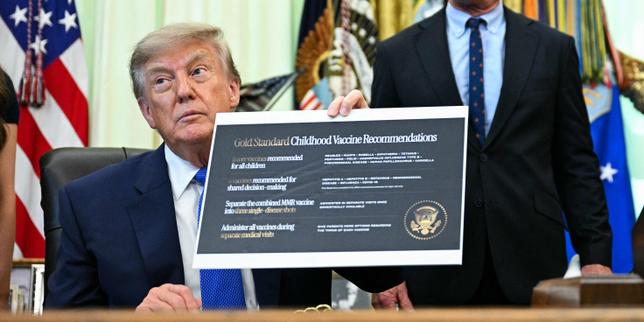
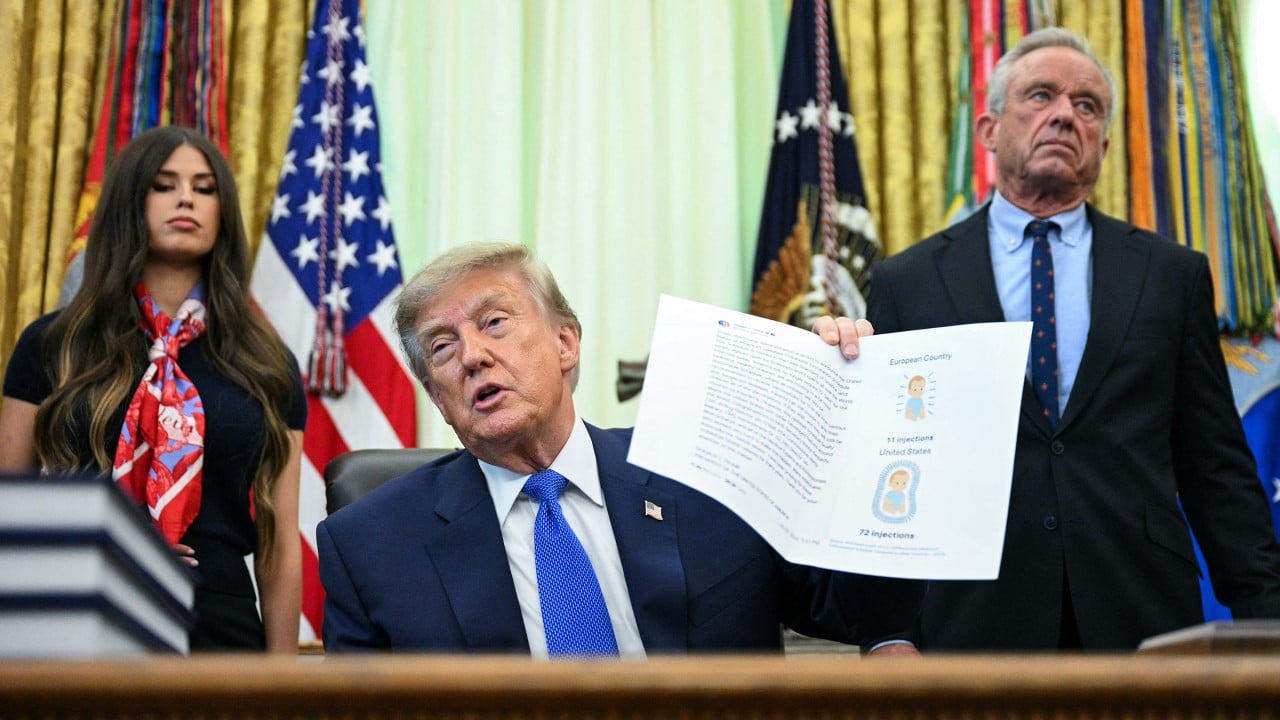
President Donald Trump has signed a high-stakes executive order targeting childhood immunization schedules, aiming to dismantle the standard delivery of vaccines and urging states to rethink longstanding school entry requirements. The directive challenges decades of pediatric practice by demanding that combination shots like the measles, mumps, and rubella (MMR) vaccine be split into separate single-disease inoculations. It also calls for individual immunizations to be administered across isolated medical visits rather than during routine, consolidated wellness checks.
The policy shift sets up a direct collision between federal ambition and state jurisdiction. While the executive order seeks to reshape public health optics and appease vaccine-skeptical factions within the administration's political base, school vaccine mandates remain firmly under the control of individual state legislatures and departments of health.
The Mechanics of Separation
At the center of the administration's strategy is the modification of the childhood immunization timeline. Under current guidelines, the MMR vaccine is delivered as a combined, two-dose series starting around the age of one. The White House order directs the Department of Health and Human Services to formulate a plan that makes separate measles, mumps, and rubella vaccines available for pediatric use.
Logistical hurdles immediately confront this mandate. Individual, licensed single-antigen measles, mumps, or rubella vaccines for routine pediatric use do not currently exist on the American market. Manufacturing single-disease shots requires pharmaceutical industry buy-in, extensive clinical evaluation, and formal Food and Drug Administration authorization. None of these steps occur overnight.
Even if manufacturing pivots to accommodate single-dose vials, pediatricians face a severe operational burden. Compressing multiple clinic visits into individual appointments for every single vaccine creates structural bottlenecks in primary care clinics. Parents would face increased copays, lost wages from repeated time off work, and heightened logistical strain just to keep children compliant with baseline preventative care.
Epidemiological data complicates the administration's premise further. Comprehensive public health tracking shows that combination shots significantly increase the likelihood that toddlers complete their full vaccine series before turning two. Splitting the injections introduces friction. Every extra trip to the clinic represents another opportunity for a family to drop out of compliance, leaving children vulnerable to preventable infections.
State Power and the Mandate Firewall
The federal government possesses no direct authority to dictate which vaccines children must receive to enter public classrooms. That power belongs entirely to the states.
Recognizing this constitutional boundary, the executive order relies on persuasion and legal pressure. The White House fact sheet notes that the administration's guidance advises state legislatures to reevaluate and rewrite their school vaccine mandates to align with the new, fractured schedule. Simultaneously, the directive signals potential legal challenges against states whose mandates clash with the administration's stance on religious, parental, or medical accommodations.
Yet state responses have fractured along political and institutional lines. Major medical organizations, including the American Academy of Pediatrics, immediately rejected the federal directive, urging physicians and school boards to maintain existing, evidence-based schedules. Numerous state health authorities have publicly committed to following established professional guidance rather than the shifting priorities of federal political appointees.
This creates a patchwork landscape across the country. A parent in one state might face strict enforcement of standard, combined-vaccine school entry rules, while a parent in a politically aligned jurisdiction might see state-level encouragement to space out inoculations.
The Real Political Calculus
The timing and composition of the executive order reflect a calculated appeal to a vital segment of the political coalition that powered the administration's return to office. Headed largely by figures associated with health skepticism and the broader movement questioning conventional medical institutions, this base has long championed parental autonomy over centralized public health consensus.
During the Oval Office signing event, leadership repeatedly invoked discredited theories linking vaccine timing to rising rates of autism spectrum disorder, brushing aside decades of robust, global scientific consensus confirming no such causal relationship. Public health leaders warn that lending institutional weight to these claims erodes public confidence in safe, life-saving immunizations.
When foundational public health recommendations become political footballs, the ultimate cost is borne by community immunity thresholds. Lower vaccination rates leave schools and neighborhoods exposed to preventable outbreaks of highly contagious pathogens like measles, testing the resilience of health infrastructure at the local level.
States remain the ultimate arbiters of school entry requirements, meaning the immediate practical effect of the executive order will vary wildly from county to county and state to state. The regulatory battle lines are drawn, and the fallout will be measured not in press releases, but in clinical waiting rooms and school enrollment records.