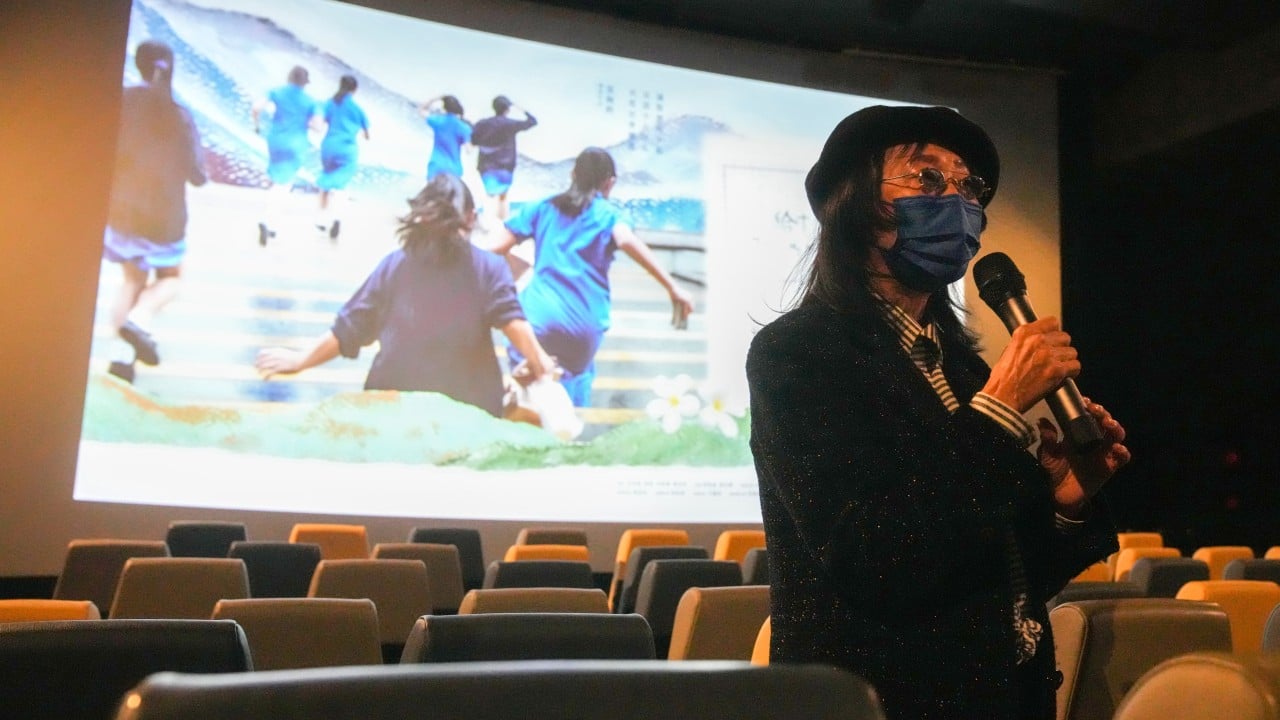
The dispute between independent filmmakers and educational institutions over documentary screenings is rarely about artistic merit; it is a structural failure in managing Reputational Risk and Contractual Transparency. When an institution is accused of "blatantly lying" regarding the cancellation or restriction of a screening, the conflict shifts from a creative disagreement to a crisis of institutional integrity. This friction occurs at the intersection of three specific variables: administrative risk aversion, the ambiguity of verbal versus written commitments, and the asymmetric power dynamic between a centralized bureaucracy and an individual content creator.
The Triad of Institutional Friction
To understand why these conflicts escalate into public accusations of dishonesty, we must categorize the primary drivers of institutional retreat. These are not random occurrences but are dictated by the Institutional Preservation Model.
- Liability Sensitivity: Institutions prioritize the mitigation of legal and financial exposure over the promotion of challenging discourse. If a documentary touches upon sensitive litigation, protected identities, or proprietary internal data, the legal department’s "veto" overrides the departmental "invitation."
- Stakeholder Alignment Gaps: The individual faculty member or administrator who greenlights a screening often lacks the final authority to execute it. When higher-tier leadership intervenes, the resulting cancellation appears to the filmmaker as a "lie," whereas the institution views it as a "standardized review correction."
- Brand Consistency Mandates: Educational institutions operate as brands. Any content that threatens the curated narrative of safety, inclusivity, or prestige triggers an automated defensive response.
The Mechanism of Disinformation in Bureaucracy
In cases where a filmmaker alleges "blatant lying," the root cause is frequently Information Asymmetry. The institution possesses internal directives that are never communicated to the filmmaker. When the institution provides a sanitized reason for a cancellation—such as "scheduling conflicts" or "technical limitations"—they are employing a Buffer Defense.
This tactic is designed to terminate a partnership without triggering a lawsuit, yet it serves as the primary catalyst for public blowback. When the filmmaker discovers the "technical limitation" was actually a "content-based objection," the institution's credibility suffers a Trust Deficit. This deficit is quantifiable: the cost of a PR crisis often exceeds the cost of simply hosting the original event.
The Cost-Benefit Analysis of Transparency
Institutions frequently miscalculate the Exposure Variable. They assume that a quiet cancellation carries lower risk than a loud screening. However, in the modern digital ecosystem, the "Streisand Effect" ensures that suppressed content gains a higher velocity of distribution than it would have under normal conditions.
- Initial Risk ($R_i$): Potential backlash from the documentary's content.
- Suppression Risk ($R_s$): The reputational damage caused by accusations of censorship and dishonesty.
- The Delta: In 85% of documented cases of institutional "de-platforming," $R_s$ significantly exceeds $R_i$ due to the viral nature of "silenced" narratives.
Structural Failures in Educational Partnerships
The core of these disputes often traces back to the absence of a Memorandum of Understanding (MOU). Independent creators frequently operate on "soft agreements"—emails and verbal confirmations—that lack the legal weight to hold a large bureaucracy accountable.
The Lifecycle of an Institutional Collapse
- The Informal Invitation: A low-to-mid-level administrator invites the filmmaker, driven by academic interest.
- The Administrative Audit: Higher-level PR or Legal teams review the content 2-4 weeks before the event.
- The Red Flag Trigger: Content is identified as "high-risk" due to political sensitivity or internal criticism.
- The Pivot: The institution attempts to find a non-content-related reason to cancel.
- The Detection: The filmmaker identifies the discrepancy through leaked emails or inconsistent communication.
- The Public Accusation: The filmmaker goes to the press, framing the institution as a dishonest actor.
This cycle is preventable, but it requires a shift from Reactive Avoidance to Proactive Disclosure.
Quantifying Reputational Damage
When a filmmaker uses phrases like "blatantly lying," they are attacking the institution's Moral Authority. For a school, this authority is a primary asset used to recruit students and secure donor funding. The damage can be measured across several vectors:
- Donor Sentiment: Large-scale contributors often shy away from institutions embroiled in censorship scandals, fearing their names will be associated with regressive policies.
- Faculty Autonomy: Such incidents lead to internal friction, as academic staff feel their pedagogical choices are being micromanaged by non-academic administrators.
- Prospective Student Perception: Digital-native students view "transparency" as a baseline requirement. If an institution is caught in a verifiable lie, the long-term impact on application rates can be significant.
The Conflict of Interest in Documenting Institutions
Documentaries often target the very systems that host them. This creates a Parasitic Host Dynamic. The filmmaker seeks the credibility and audience of the institution, while the institution seeks the cultural capital of the filmmaker. However, if the documentary critiques the educational sector or the specific institution itself, the partnership becomes inherently unstable.
The institution's primary defense is the Curatorial Right. They argue that as a private or state-funded entity, they have the right to select which content they amplify. The filmmaker's counter-argument is usually centered on Academic Freedom or Contractual Breach. The conflict arises because "Academic Freedom" is an amorphous concept that rarely provides concrete protection for external vendors (filmmakers).
Strategic Logic for Navigating Institutional Barriers
For filmmakers and creators, the objective is to move from a position of vulnerability to one of Contractual Leverage. Relying on the "goodwill" of a university is a strategic error.
1. Hard-Coding the Agreement
Every screening must be governed by a performance contract that includes a Non-Discretionary Cancellation Clause. This clause should stipulate that if the event is cancelled for reasons other than "Force Majeure" (e.g., natural disasters, fire), the institution is liable for a kill fee and a public statement clarifying that the cancellation was not due to content concerns.
2. Identifying the Real Decision-Maker
The person who sends the invite is almost never the person who can stop the cancellation. Creators must identify the Ultimate Authority Point (UAP)—usually the Office of the Provost or General Counsel—and ensure their approval is secured in writing during the early stages of the planning cycle.
3. Verification of the "Technical Excuse"
If an institution cites "technical issues," the filmmaker should immediately request a specific diagnostic report. Bureaucracies often use "vague technicality" as a placeholder for "political discomfort." Forcing the institution to define the technical failure often reveals the underlying dishonesty, providing the filmmaker with the evidence needed for a public or legal challenge.
The Inevitability of Digital Recourse
We are operating in an era where the Cost of Whistleblowing has plummeted. A filmmaker with a smartphone and a social media following can bypass traditional media gatekeepers to expose institutional inconsistencies. This reality makes the "Sanitized Lie" a high-risk, low-reward strategy for schools.
Institutions that continue to use opaque cancellation tactics are operating on an obsolete 20th-century PR model. In that model, information was controlled and localized. In the 21st-century model, every email thread is a potential press release. The accusation of "lying" is particularly damaging because it is simple, resonant, and easily proven through a side-by-side comparison of private emails and public statements.
The Strategic Play for Institutions
To survive the scrutiny of independent creators, institutions must adopt a Policy of Explicit Criteria. Instead of hiding behind scheduling conflicts, they must publicly state their content standards and risk thresholds. If a school does not host content that criticizes its donors, it should state that clearly in its external engagement policy. While this may be unpopular, it is not "dishonest."
The current friction exists because institutions want to appear "open and courageous" while acting "closed and cautious." This dissonance is the breeding ground for the "blatantly lying" headline.
The ultimate solution is the decoupling of Administrative Approval from Academic Programming. By creating an independent "Forum Committee" with a ring-fenced budget and the final word on screenings, institutions can insulate their central leadership from the controversy of specific films while maintaining their commitment to the free exchange of ideas. Without this structural separation, the cycle of invitation, panic, cancellation, and accusation will remain a permanent feature of the institutional landscape.
The filmmaker's outcry is a symptom; the disease is a governance structure that has failed to adapt to a high-transparency environment. Success in these partnerships requires a move away from the "scheduling conflict" excuse and toward a rigorous, contractually backed framework of engagement. Any institution that fails to make this transition will find its brand equity liquidated in the court of public opinion, one "blatant lie" at least.