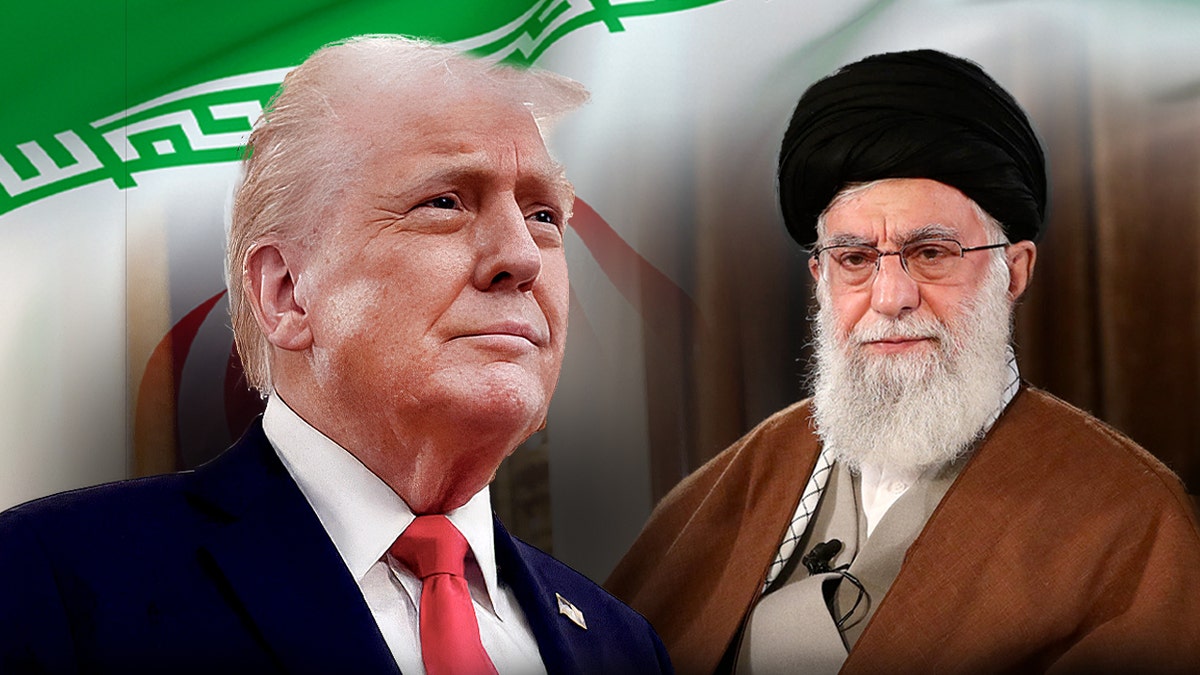
The stability of the Iranian state relies on a precarious equilibrium between the Islamic Revolutionary Guard Corps (IRGC), the conventional military (Artesh), and the clerical leadership. When headlines suggest a "hostage" scenario involving the Supreme Leader or a localized coup attempt, they describe a rupture in the Dual-Security Architecture. This architecture is designed to prevent a single point of failure by creating overlapping jurisdictions, yet it simultaneously generates the exact frictions that lead to high-stakes brinkmanship. Analyzing these events requires a transition from sensationalism to a structural assessment of command-and-control vulnerabilities, resource competition, and the specific thresholds that trigger internal kinetic action.
The Dual-Security Architecture Equilibrium
The Iranian state does not possess a monolithic security apparatus. Instead, it operates through a deliberate design of institutional redundancy. The Artesh is tasked with territorial integrity and border defense, while the IRGC focuses on internal security and asymmetric warfare. This separation serves as a coup-proofing mechanism; no single general commands enough comprehensive force to seize the state without immediate opposition from the other branch.
However, this design introduces a competition for legitimacy and physical assets. The IRGC has historically captured the majority of the defense budget and expanded into the commercial sector, controlling vast swaths of the Iranian economy through conglomerates like Khatam al-Anbiya. The Artesh, by contrast, operates on thinner margins and remains more closely aligned with traditional nationalist sentiment rather than revolutionary ideological purity.
The Mechanics of Factional Friction
Rifts within this system manifest through three primary vectors:
- Resource Asymmetry: When the IRGC’s economic dominance starves the Artesh of modernization funds, the resulting resentment creates a "ready-state" for dissent.
- Intelligence Silos: The Ministry of Intelligence (MOIS) and the IRGC Intelligence Organization frequently operate with conflicting mandates. A "bombshell claim" of a coup often signals a failure in these organizations to synchronize their internal monitoring.
- Succession Positioning: As the transition beyond the current Supreme Leader nears, various power blocs utilize the threat of force to secure their seat at the negotiating table.
Quantifying the Coup Threshold
A coup is not a singular event but a sequence of logistical successes. For a military faction to effectively "hold a leader hostage" or declare a takeover, they must clear four specific operational hurdles. If any of these thresholds are not met, the attempt remains a localized mutiny rather than a state-level transition.
1. Geographic Centrality and Seizure of Communications
In a centralized state like Iran, control is predicated on the physical occupation of Tehran. This involves securing the "Bait-al Rahbari" (The Leader’s House) and the state broadcasting infrastructure (IRIB). Without the ability to project a message of total control, a coup attempt triggers a civil war dynamic rather than a rapid transfer of power.
2. Neutralization of the Basij
The IRGC controls the Basij, a paramilitary volunteer force with millions of members integrated into every neighborhood. Any military faction attempting a coup must have a strategy to suppress this decentralized resistance. Failure to neutralize the Basij within the first six hours leads to a breakdown of urban order, making the coup unsustainable.
3. Economic Liquidity
A successful takeover requires the immediate cooperation of the Central Bank and the Bonyads (charitable foundations). If the financial heart of the regime remains loyal to the clerical establishment, the coup leaders cannot pay their soldiers or maintain the supply chains for basic goods, leading to a rapid loss of popular support.
4. International Recognition
The Iranian economy is heavily reliant on specific trade corridors. A coup faction must signal to regional powers—specifically Russia and China—that existing contracts and strategic alliances will be honored. A lack of external backing leads to immediate isolation and increases the likelihood of a counter-coup.
The Cost Function of Internal Dissent
The regime maintains a high "cost of betrayal" through the Hafiz (Protector) System. This involves internal surveillance where military officers are monitored by ideological commissars. For an officer to initiate a coup, they must calculate that the reward for success outweighs the near-certainty of execution upon failure. This calculation shifts only when the regime’s ability to provide patronage collapses.
When reports emerge of "bombshell claims" regarding military takeovers, they often indicate a stress test of the patronage network. If the state can no longer provide the IRGC or the Artesh with the necessary capital to maintain their institutional standard of living, the internal "loyalty price" rises. A coup attempt is essentially an audit of this price.
Operational Indicators of a Legitimate Threat
Observers should monitor the following variables to distinguish between psychological warfare and actual kinetic movement:
- Logistics Rerouting: The sudden movement of heavy armor divisions from border regions toward the capital.
- Signal Silence: The encryption of standard military communications or the shutdown of internet nodes in specific sectors of Tehran.
- Personnel Purges: High-frequency rotations of division commanders, which suggest the central leadership is attempting to break up burgeoning conspiratorial cells.
The Paradox of Clerical Control
The Supreme Leader maintains authority by acting as the ultimate arbiter between the IRGC and the Artesh. This role is effective only as long as the Leader is perceived as the source of legitimacy. If a military faction takes the Ayatollah "hostage," they destroy the very source of the authority they seek to inherit.
This creates a Strategic Deadlock. A military takeover that ignores the religious legitimacy of the state risks alienating the pious segments of the population and the Basij. Conversely, a military that remains subservient to an ineffective clerical leadership risks institutional decay.
The Role of Shadow Government Structures
The Supreme National Security Council (SNSC) acts as the bridge between the military and the executive. A breakdown in the SNSC’s ability to mediate disputes is the most reliable leading indicator of a coup. When the formal mechanisms of dispute resolution fail, the parties involved resort to the "bombshell" tactics currently being reported.
Strategic Realities of the Current Rupture
The current reports of a coup or a hostage situation must be viewed through the lens of Information Operations (IO). In the Iranian context, these claims serve two purposes:
- Internal Purge Justification: The leadership may fabricate or amplify a "coup plot" to justify the removal of moderate or overly powerful military elements.
- External Deterrence: By signaling internal instability, the regime may attempt to project a "madman" persona to international adversaries, suggesting that a collapse would lead to a volatile, uncontrolled military state.
Structural analysis suggests that a successful coup in Iran is statistically unlikely due to the extreme redundancy of the security forces. However, the attempt itself is a symptom of a critical failure in the regime's patronage and surveillance systems.
The immediate tactical requirement for analyzing these developments is the tracking of the Velayat-e Faqih (Guardianship of the Jurist) loyalty metrics. This involves monitoring the public statements of mid-level commanders. If there is a shift in rhetoric—from defending the "Revolution" to defending the "Nation"—it indicates that the Artesh or certain IRGC factions are decoupling their identity from the clerical establishment. This decoupling is the true precursor to a state-shifting event.
The move for any external analyst or state actor is to treat these reports not as a finished event, but as a data point in a broader Institutional Stress Test. The primary objective is to identify which specific pillar of the Dual-Security Architecture has bucked. If the friction is between the IRGC’s intelligence wing and the regular army, the risk is localized. If the friction is between the Supreme Leader’s office and the IRGC’s economic council, the risk is existential for the current state structure.
The strategic play is to monitor the Operational Tempo (OPTEMPO) of the IRGC’s internal security units. A sudden spike in their activity without an external provocation confirms that the threat is internal and likely centered on a command-and-control dispute that the clerical leadership can no longer mediate. Expect a rapid consolidation of power through the "Emergency Committee" structures, effectively sidelining formal constitutional processes in favor of a direct IRGC-led security state.