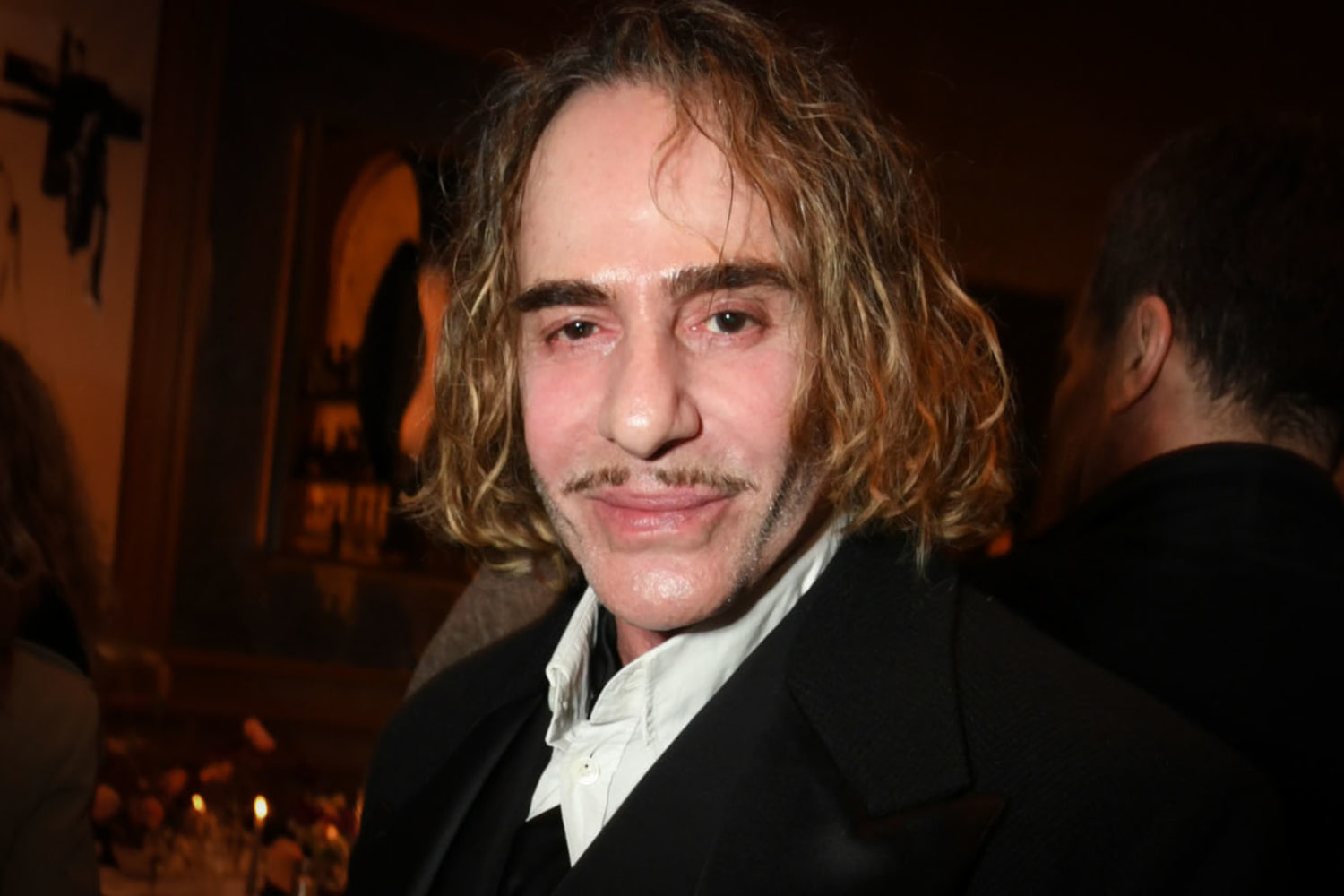
The cancellation of the Metropolitan Museum of Art retrospective dedicated to John Galliano exposes the hard limits of institutional rehabilitation strategies when confronted with stakeholder capital withdrawal and calendar-based friction. Cultural organizations operating at scale must balance artistic merit against reputational liabilities, yet the failure of the planned 2027 exhibition reveals structural miscalculations in stakeholder management, timeline alignment, and risk forecasting. Deconstructing the mechanics behind this cancellation provides a diagnostic blueprint for how elite institutions evaluate historical curation, donor pressure, and public trust.
The initial decision by the Costume Institute to mount the exhibition, titled John Galliano Horizons, relied on a flawed assumption regarding the statute of limitations on hate speech convictions. The curatorial strategy attempted to compartmentalize Galliano's 2011 French court conviction for public antisemitic insults from his technical genius by explicitly promising to address his misconduct within the gallery walls. This approach misread the tolerance threshold of the donor base and civic leadership. Institutional prestige functions on shared alignment between trustees, major financial contributors, and municipal stakeholders. When the proposed exhibition timeline intersected directly with Yom HaShoah, the operational friction escalated from abstract curatorial debate to concrete calendar incompatibility. Recently making waves recently: The Real Reason Trade Wars are Coming For Your Bathroom and Your Social Life.
The economic model of major museums relies heavily on philanthropic stability. As opposition mounted, the primary vector of pressure was not public petitioning on social media platforms, but private capital withdrawal threats from institutional trustees and major donors. In high-end cultural governance, revenue protection supersedes creative risk-taking. The financial equation is straightforward: honoring a designer with a criminal record for hate speech created an unquantifiable downside risk to future endowments and board participation. When key civic figures, such as New York City Council Speaker Julie Menin, formally intervened, the cost function shifted instantly. The potential loss of municipal goodwill and donor capital outweighed the anticipated box office and cultural discourse yield of the retrospective.
Curators frequently invoke the concept of institutional responsibility to examine difficult histories with candor. However, applying this framework to a living creator while they are still a primary beneficiary of commercial and cultural re-entry creates a conflict of interest. Galliano’s decade-long tenure at Maison Margiela and his embrace by industry leaders demonstrated that market rehabilitation had already occurred within the fashion vertical. Moving from commercial reinvention to museum canonization requires a different tier of societal consensus. The museum mistook sector-specific forgiveness within luxury fashion for universal public absolution. Further insights regarding the matter are covered by Bloomberg.
The structural failure also highlights deficiencies in early-stage stakeholder mapping. Prior to greenlighting a major retrospective tied to the Met Gala—the most visible fundraising machine in the global style economy—executives failed to stress-test the calendar against sacred historical dates or gauge the baseline tolerance of intersecting cultural communities. Effective risk mitigation requires mapping out worst-case reception scenarios across distinct demographic segments long before public announcements are locked in. By failing to anticipate the convergence of the event date with Holocaust Remembrance Day, the institution exposed itself to predictable friction that could have been identified through basic compliance and cultural auditing.
Cultural institutions navigating future retrospectives must decouple artistic contributions from institutional validation when the subject's history involves un-redressed criminal hate speech. The pathway forward requires establishing transparent vetting committees that include external stakeholders from impacted communities before exhibition concepts are approved, thereby internalizing reputational costs at the inception phase rather than reacting to external pressure after capital has been committed.


