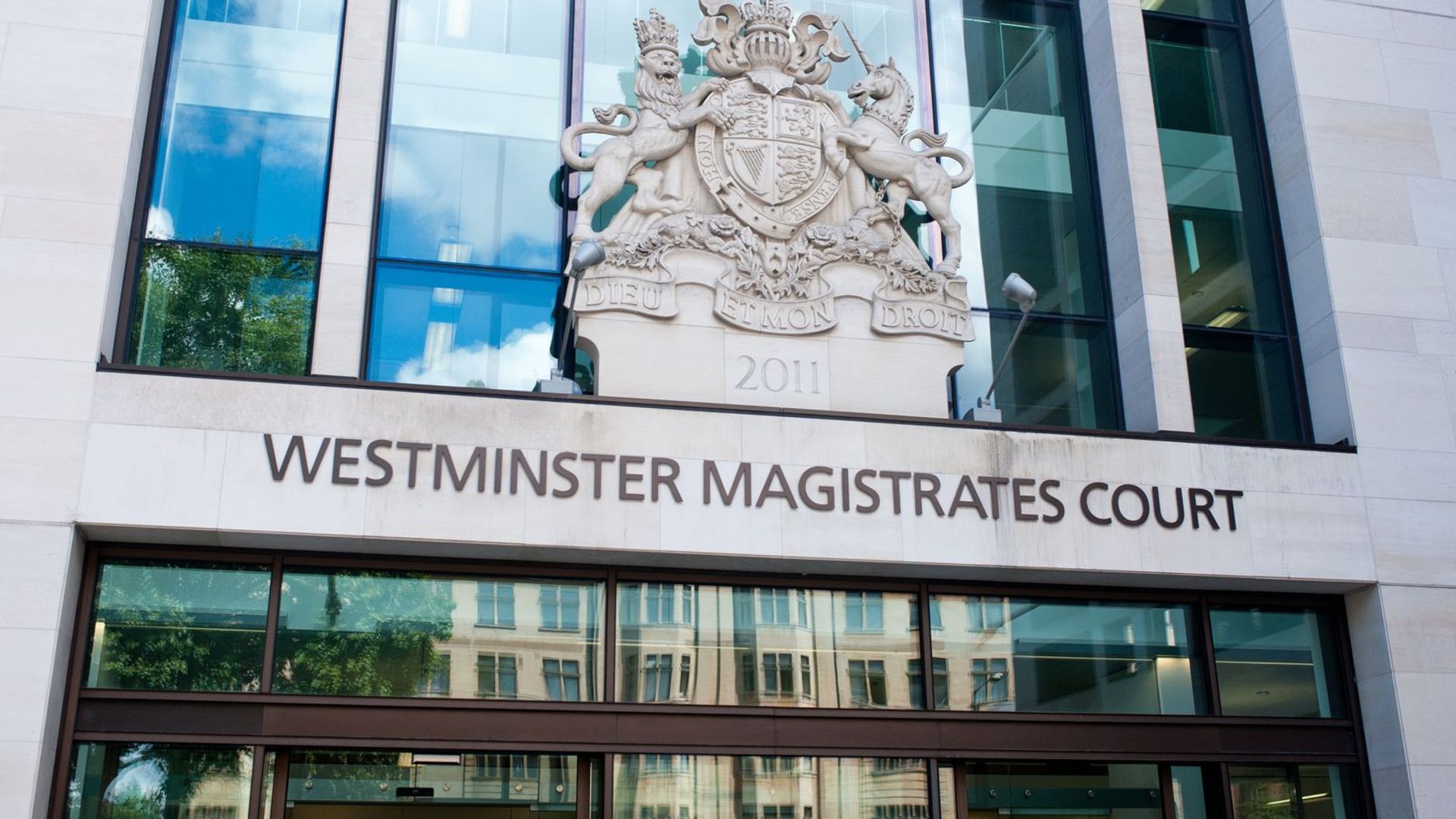
The containment of high-profile, violent offenders within state-managed correctional facilities exposes a fundamental friction point between humanitarian standardization and operational risk mitigation. When an individual accused of mass murder—such as the Southport attacker, Axel Rudakubana—allegedly manufactures and deploys a chemical-thermal weapon against a prison officer using commissary items, the incident transcends a localized disciplinary infraction. It serves as a diagnostic stress-test of the entire custodial architecture. The deployment of boiling water combined with sugar is not a spontaneous act of crude violence; it represents an asymmetric tactical maneuver designed to exploit predictable institutional vulnerabilities, circumvent physical barriers, and inflict maximum physiological damage with zero capital equipment.
To understand the structural breakdown that permits such assaults, one must first deconstruct the material economics of the prison environment. In a high-security institution, conventional weaponry is heavily restricted. Blade access, firearms, and heavy bludgeoning instruments are subject to rigorous perimeter controls, electronic screening, and frequent cell extractions. Consequently, offenders operating within a constrained physical space engage in material substitution. They identify ubiquitous, legally acquired items that can be repurposed into high-yield threat vectors.
The combination of boiling water and sucrose is a classic example of this substitution logic. Water heated to one hundred degrees Celsius possesses high thermal energy transfer capacity. When unrefined or refined sugar is dissolved into the liquid, the physical properties of the solution change fundamentally. The addition of sugar elevates the boiling point of the solution and, more critically, increases its viscosity. Pure boiling water causes severe thermal trauma, but it also runs off the skin rapidly, limiting the duration of contact and allowing partial thermal dissipation. A sugar-water mixture—often referred to in carceral vernacular as napalm—adheres to cutaneous tissue upon impact. The viscous syrup acts as a thermal retention agent, prolonging the duration of contact between the heat source and the victim's epidermis, thereby compounding second and third-degree burn depths. The perpetrator leverages basic chemical principles to bypass the absence of traditional kinetic weapons.
This tactical execution highlights a structural failure in how correctional institutions evaluate threat levels for high-visibility detainees. Risk management models in modern corrections rely heavily on classification matrices that assess escape risk, gang affiliations, and historical disciplinary infractions. However, these matrices frequently fail to account for the psychological profile of isolated, high-profile defendants awaiting trial or serving life sentences. For such individuals, the marginal cost of additional disciplinary charges is effectively zero. When an offender faces an indefinite period of extreme confinement or a terminal judicial outcome, the deterrent effect of administrative sanctions evaporates. Traditional disciplinary frameworks—loss of phone privileges, commissary restrictions, or placement in restricted housing units—assume the subject values future institutional quality of life. For defendants facing catastrophic legal gravity, this assumption is structurally flawed.
The operational pipeline leading to the incident reveals systemic blind spots in resource control. Commissary systems permit the purchase of bulk carbohydrates, including sugar, honey, and oils, under the guise of nutritional supplementation and morale maintenance. While restricting these items universally creates administrative friction and potential unrest among the general population, failing to restrict them for high-risk or high-profile detainees creates an unacceptable hazard. The facility managers face a difficult optimization problem: balance the systemic risk of inmate radicalization and grievance against the localized risk of weapon manufacturing. In practice, institutions often default to bureaucratic inertia, maintaining standardized commissary access until an asymmetric assault forces a reactive policy shift.
Equally critical is the infrastructural vulnerability regarding thermal access. Providing inmates with personal hot water pots or unmonitored access to boiling water dispensers introduces an inherent hazard into living quarters designed for containment. The institutional rationale relies on the normalcy principle—the idea that normalizing certain living conditions reduces institutional tension. Yet, when applied to high-security or psychologically volatile individuals, the normalcy principle collapses. Access to thermal generation equipment ceases to be a humane accommodation and becomes a force multiplier for targeted violence.
The mechanics of the assault itself expose the tactical limitations of standard correctional staffing models. Officers operating within housing units are frequently outnumbered, positioned behind physical barriers that prioritize observation over active intervention, or engaged in routine administrative tasks that degrade situational awareness. When an offender utilizes a liquid projectile, the vector of attack bypasses static security barriers like bars or mesh screens if delivery points—such as meal slots, door hinges, or observation flaps—are improperly secured or poorly monitored. The response time required to neutralize a thermal liquid attack is measured in fractions of a second, whereas the human reaction time to an unexpected projectile is inherently delayed. By the time the officer registers the kinetic movement of the throw, the thermal transfer has already occurred.
Analyzing the aftermath of such an event exposes the institutional friction between penal reform and security hardening. Advocacy groups frequently lobby against the expansion of solitary confinement or strict administrative segregation, citing psychological deterioration and human rights concerns. Conversely, security personnel demand absolute isolation for high-risk individuals to prevent violence against staff and other inmates. This tension creates a regulatory pendulum. Institutions oscillate between overly permissive environments that invite violence and draconian isolation that triggers legal challenges and psychological crises.
A rigorous analysis of this dynamic suggests that neither extreme represents a viable long-term equilibrium. Complete isolation is unsustainable and legally precarious, while open-population integration for high-profile, violent offenders is operationally reckless. The missing middle ground lies in specialized containment frameworks: high-supervision, low-contact housing units specifically engineered for high-profile defendants whose threat profile exceeds standard maximum-security protocols. These units must decouple threat mitigation from punitive isolation by utilizing advanced environmental controls rather than sensory deprivation.
Environmental hardening in this context requires a fundamental redesign of cell architecture. Water temperature delivery mechanisms must be centralized and regulated, eliminating individual boiling vessels and high-temperature taps within cells housing high-risk classifications. Meal delivery and mail processing must be conducted through automated, interlocked secure hatches that prevent physical interaction or projectile deployment during routine interactions. Furthermore, staff positioning must be re-engineered, shifting from static floor supervision to remote camera monitoring paired with rapid-response tactical teams equipped with non-lethal neutralization gear.
The financial cost of these infrastructural upgrades is substantial, leading cash-strapped corrections departments to defer investment until a catastrophic event forces executive action. This reactive budgeting cycle guarantees that security protocols remain perpetually trailing behind offender innovation. Inmates operating within a closed ecosystem have ample time to observe procedural routines, identify staff blind spots, and experiment with makeshift weaponry. The asymmetry heavily favors the aggressor, who can choose the precise moment of execution while the defender must maintain perfect vigilance indefinitely.
Addressing this vulnerability requires dismantling the illusion that standard maximum-security protocols are sufficient for unprecedented high-profile offenders. The modern carceral landscape deals with a class of offenders whose motivations and psychological profiles do not conform to traditional gang-related or economic crime paradigms. When an individual is thrust into the global spotlight for an atrocity of massive scale, their internal calculus regarding institutional behavior changes. Status within the carceral hierarchy can be achieved through high-impact violence against authority figures, offering a perverse form of notoriety within the prison subculture.
Management strategies must adapt by implementing predictive behavioral surveillance. Correctional intelligence units should monitor shifts in inmate interactions, commissary accumulation patterns, and expressions of grievance not merely for escape plots, but for micro-indicators of asymmetric weapon preparation. The accumulation of specific canteen items—such as high volumes of sugar or oils—should trigger automated flags within the commissary database, prompting targeted cell searches before weapons can be manufactured and deployed.
The policy implications extend beyond a single facility or a single headline. They force a reckoning across the entire corrections sector regarding the balance between staff safety and inmate rights. When an officer is severely burned by a chemically modified liquid weapon, the psychological impact ripples through the workforce, leading to elevated absenteeism, staff turnover, and a culture of defensive compliance where officers avoid proactive engagement to minimize personal risk. A demoralized and fearful staff is inherently more vulnerable, creating a compounding security deficit.
The strategic imperative moving forward is clear. Correctional authorities must abandon generalized security classifications for high-profile violent offenders and transition to bespoke, threat-specific containment protocols. Commissary privileges, thermal access, and spatial movement must be treated as variable privileges dictated by real-time behavioral telemetry rather than static administrative categorization.
Implement automated, centralized thermal restriction systems across all high-risk housing tiers to eliminate personal boiling water generation. Restrict commissary access for high-profile violent offenders regarding bulk carbohydrates and adhesion-enhancing substances. Redesign cell door aperture mechanisms with double-interlock slide systems to eliminate direct line-of-sight projectile delivery vectors during routine interactions. Establish dedicated, specialized high-supervision units that utilize remote monitoring and rapid-response tactical suppression teams to manage high-threat defendants without relying on traditional punitive isolation.


