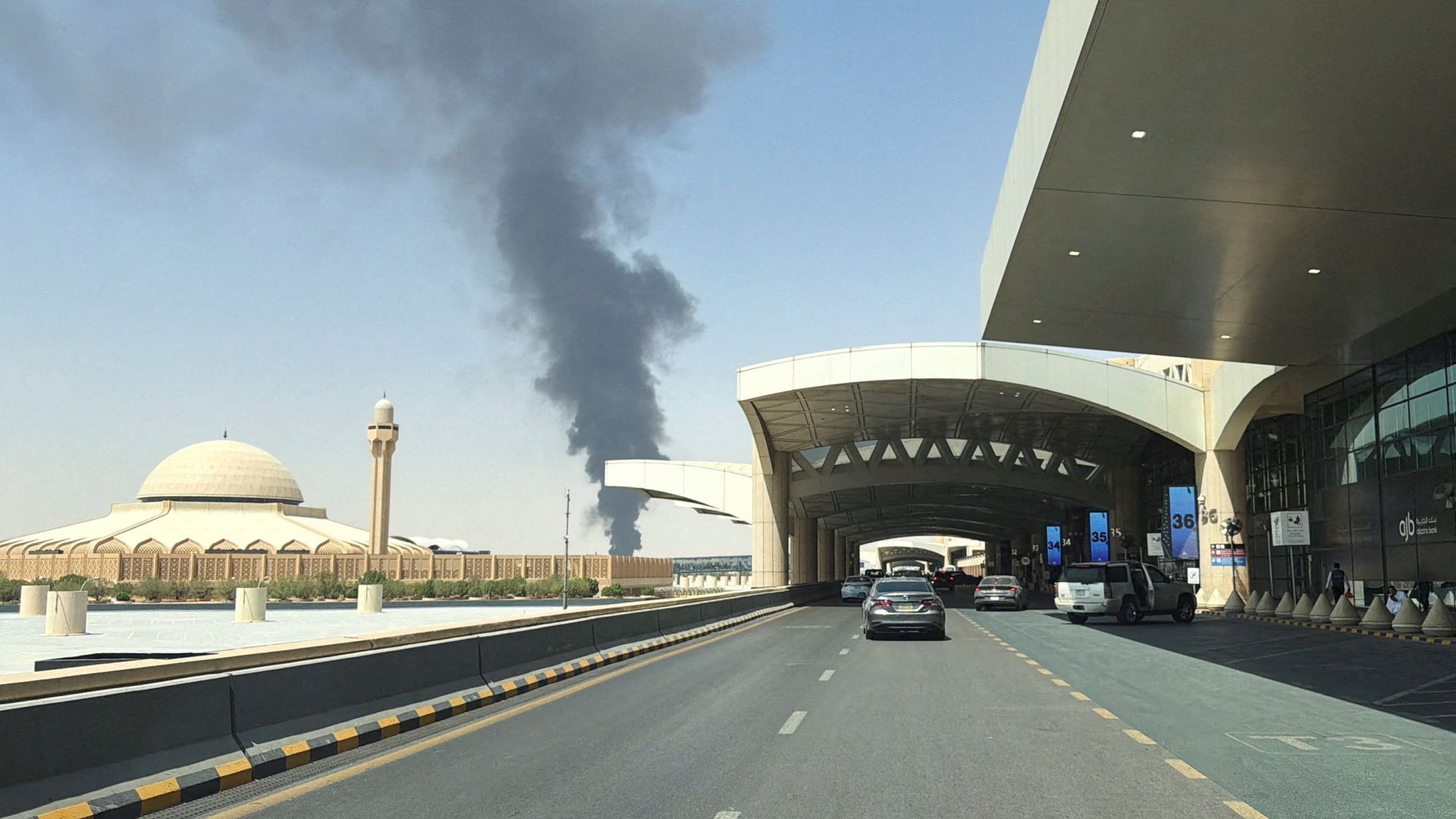
The operational reality of modern asymmetric conflict is defined less by territorial conquest and more by cost-asymmetry. When a state capital faces long-range ordnance, the resulting security crisis is fundamentally an economic and logistical stress test. Strategic analysis of such events requires stripping away geopolitical rhetoric to examine the kinetic mechanics, fiscal cost functions, and deterrence thresholds governing modern missile defense systems.
The Economic Asymmetry of Interception
The financial mechanics governing surface-to-air missile batteries create a severe structural disadvantage for the defending state. Advanced interceptor platforms, such as the Patriot PAC-3 or the Terminal High Altitude Area Defense system, involve complex guidance packages, solid-rocket propulsion, and precision-manufacturing requirements that run into millions of dollars per unit. Conversely, the incoming ordnance—frequently modified Scud variants, liquid-fueled ballistic missiles, or delta-wing loitering munitions—relies on legacy or commercial-off-the-shelf components that require minimal capital expenditure to manufacture.
This disparity creates a classic attrition vulnerability. If a defender must expend multiple high-cost interceptors to ensure a high probability of kill against a saturated volley, the expenditure rate rapidly outpaces industrial replenishment capacity. The economic equation incentivizes the aggressor: low-cost saturation tactics can deplete strategic stockpiles, forcing the defender to ration interceptors or accept critical infrastructure exposure.
Furthermore, the secondary economic impact extends far beyond the direct cost of the ordnance exchange. Capital markets react immediately to perceived vulnerabilities in primary financial and administrative centers. Insurance premiums for regional shipping, aviation rerouting costs, and foreign direct investment recalibration all introduce friction into the national economy, compounding the financial leverage gained by the initiating actor.
Kinetic Mechanics and Trajectory Optimization
Evaluating an aerial threat against a heavily defended urban center like Riyadh requires analyzing the flight profile across three distinct phases: boost, midcourse, and terminal.
During the boost phase, the missile's thermal signature makes it vulnerable to space-based infrared early-warning constellations, though geographical distance often precludes immediate kinetic intervention from surface assets. The midcourse phase represents the longest duration of flight, characterized by ballistic arcs operating in the upper atmosphere or near-space. Interception during this phase demands extreme velocity, precise radar tracking, and sophisticated predictive algorithms to account for countermeasures, decoys, or minor aerodynamic anomalies.
The terminal phase presents the narrowest reaction window. Descending at high Mach numbers, the warhead compresses the engagement timeline to mere seconds. Radar horizons, ground clutter, and urban radar interference complicate target acquisition and discrimination. If the incoming platform employs simple separating warheads or chaff, the fire-control computer must calculate intercept vectors under severe time compression. The physical laws governing these trajectories dictate that a successful defense requires overlapping sensor grids and multi-tiered battery placement, ensuring that a failure in the upper tier can be mitigated by point-defense systems closer to high-value assets.
The Calculus of Deterrence and Escalation Thresholds
Interception events rarely occur in a vacuum; they function as signaling mechanisms within a broader strategic bargaining framework. When defensive batteries engage incoming threats over a capital city, the action communicates technical capability and political resolve, but it also signals defensive strain.
Escalation dominance in this context depends on the attribution of the capability and the political cost of retaliation. Striking launch sites involves navigating complex cross-border logistics, rules of engagement, and the risk of widening the theater of conflict. When counter-strike options are constrained by diplomatic or operational factors, the defending nation is forced into a purely reactive posture. This reactive cycle erodes the psychological pillar of deterrence, as the population perceives a permanent state of siege rather than a posture of strategic dominance.
To alter this equilibrium, defense planners must shift focus from purely kinetic defeat at the terminal end to proactive disruption upstream. This involves neutralizing supply chains, intercepting transshipment vectors of component parts, and executing electronic warfare initiatives designed to disrupt command-and-control links before launch execution.
Strategic Vulnerability Reduction
Mitigating urban vulnerability against long-range ballistic and cruise missile incursions demands a multi-layered architectural overhaul that transcends hardware upgrades.
First, sensor fusion must be decentralized. Relying solely on large, fixed ground-based radar installations creates high-value nodes vulnerable to anti-radiation missiles or saturation attacks. Integrating airborne early-warning platforms with distributed, mobile sensor networks enhances resilience against electronic countermeasures and terrain masking.
Second, civil-industrial redundancy must be factored into national planning. Concentrating critical command nodes, desalination capacity, and financial infrastructure within a narrow geographic footprint amplifies the systemic damage of a successful penetration. Distributing critical nodes and hardening vital facilities against blast overpressure reduces the systemic utility of long-range strikes.
The ultimate objective of capital defense is not the unsustainable aspiration of a zero-leakage shield, but the systematic degradation of the aggressor's operational return on investment. By optimizing sensor-to-shooter loops, expanding industrial capacity for lower-cost interception alternatives, and coupling kinetic defense with aggressive electronic disruption, a state can re-establish the prohibitive costs required to deter asymmetric aerial aggression.