You can hear the pulse of the financial district before you ever set foot on a trading floor. It lives in the low, mechanical drone of air conditioning units humming against the sticky subtropical heat, and the sharp, rhythmic snap of taxi doors opening and closing along Des Voeux Road. For decades, the soundtrack of Hong Kong has been underscored by absolute certainty.
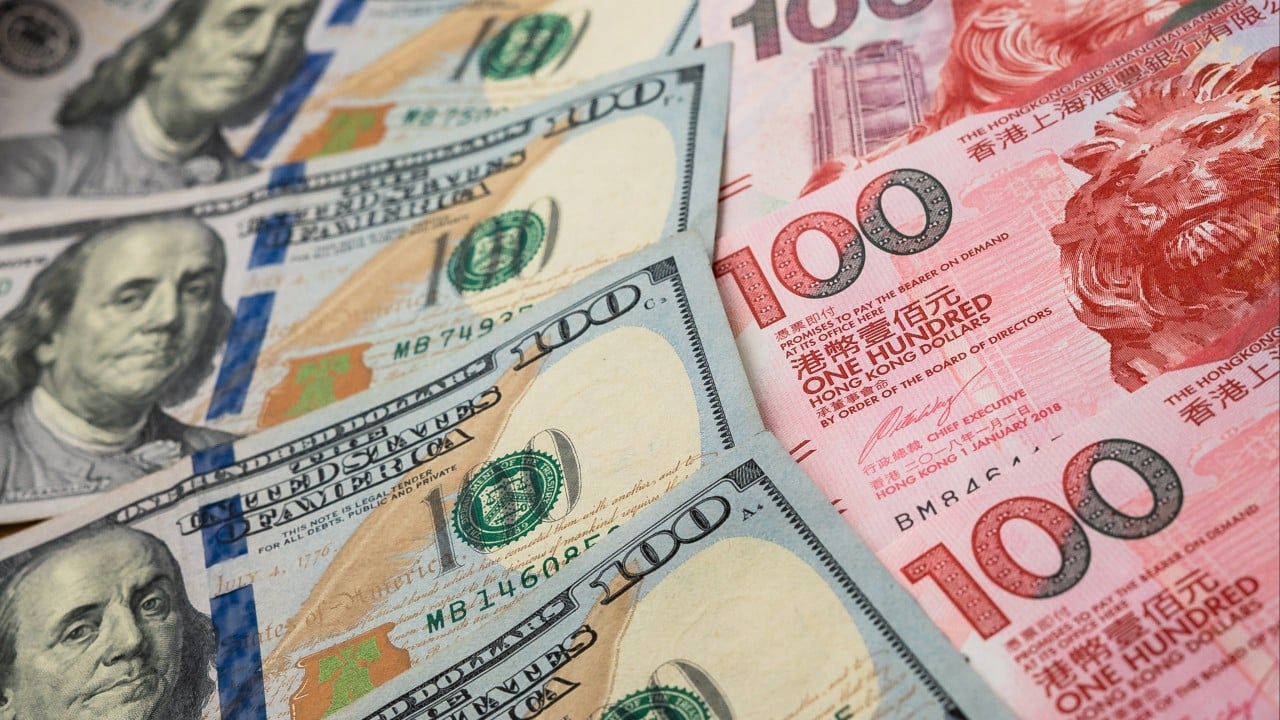
Walk into a noodle shop in Sheung Wan, slide a crisp polymer note across the counter, and you know precisely what that paper buys. It buys fuel, rent, a future. It buys that certainty.
That certainty has a name, though few people on the street spend their mornings pondering its mechanics. It is the United States dollar peg. Since 1983, the Hong Kong Monetary Authority has bound the local currency to the greenback, locking the exchange rate in a tight, unyielding corridor between 7.75 and 7.85.
Imagine walking a tightrope where the safety net was installed forty years ago and never once inspected for rust.
Critics have begun shouting from the sidelines again. They point to shifting global tides, the rise of alternative economic powerhouses, and the sheer cost of maintaining a financial firewall in a fractured world. They ask whether the peg is still feasible. They wonder aloud if the anchor has finally become an anchor weight, dragging down a territory that must constantly reinvent itself to survive.
To understand why this debate matters—why it makes seasoned traders sweat into their morning coffee and keeps bureaucrats awake past midnight—you have to look past the spreadsheets. You have to look at the human cost of stability.
Consider David. He is a hypothetical logistics manager whose family has operated a modest shipping warehouse near Kwai Tsing Container Terminals for three generations. David does not trade derivatives. He does not care about macroeconomic theory. He cares about the price of corrugated cardboard, fuel surcharges, and whether his international clients can pay their invoices without losing five percent to currency volatility overnight.
For David, the peg is the invisible floor beneath his boots. It is the reason he can sign a contract with a supplier in Ohio or Frankfurt without having to become a fortune teller. When global inflation spiked in recent years, and central banks across the globe scrambled to retool their monetary engines, Hong Kong had no independent steering wheel. Because the Hong Kong dollar is tethered to the US dollar, local interest rates had to march in lockstep with the Federal Reserve.
When Washington hiked rates to cool an overheated American economy, the shockwave rippled straight through the concrete canyons of Central. Mortgages in Hong Kong climbed. Small business loans tightened. David felt the squeeze in his warehouse ledger, not because his local business was failing, but because an ocean away, policymakers in Washington were fighting a completely different war.
That is the hidden price of imported monetary policy. You get the shield, but you also wear the armor of someone else’s battles.
Yet, abandoning the peg is not like changing the route of a morning bus. It is open-heart surgery performed while the patient is running a marathon.
The mechanics of the Linked Exchange Rate System are deceptively simple in theory, yet brutal in execution. To defend the band, the Hong Kong Monetary Authority must maintain massive foreign exchange reserves, buying and selling local currency to keep the price within bounds. It is a system built on total credibility. The moment the market suspects the authorities lack the resolve—or the war chest—to defend the line, the speculative wolves begin to circle.
We saw a glimpse of this pressure during previous global liquidity crunches, when short-sellers tested the walls, betting that the cost of defending the peg would eventually break the city's spirit. Each time, the reserves held. The system absorbed the blow. But the world is changing faster now than it did in 1983, or even in 1998 during the Asian Financial Crisis.
The geopolitical landscape has shifted beneath our feet. As trade corridors fracture and financial sanctions become the preferred tool of statecraft, Hong Kong finds itself uniquely positioned at the crossroads of East and West. The city serves as a financial super-connector, bridging mainland China’s vast economy with global capital markets.
This duality creates a fascinating tension. On one side stands the massive gravitational pull of the renminbi, a currency growing in global stature and regional dominance. On the other stands the entrenched dominance of the US dollar, still the undisputed king of international trade and debt settlement.
If you talk to veteran bankers who survived the handover of 1997 and every market tremor since, they will tell you that the peg is more than an economic policy. It is a psychological pact. It is a declaration to the world that Hong Kong remains an open, predictable haven for global capital. Touch the peg, they warn, and you risk unraveling the very foundation of investor confidence. Capital flight is not a gentle leak; it is a dam bursting.
And yet, the voices calling for a review refuse to quiet down. Economists argue that a rigid exchange rate forces the domestic economy to absorb shocks through painful adjustments in asset prices and wages rather than currency depreciation. When external conditions demand one path and local conditions demand another, something has to give. Sometimes, that something is the dreams of a young couple trying to break into one of the most expensive housing markets on the planet.
So, is change feasible? Technically, anything is possible. A transition could theoretically involve a peg to a basket of currencies, similar to Singapore’s managed float, or a gradual drift toward closer integration with the renminbi.
But feasibility is rarely just a technical question. It is a question of political will, social endurance, and timing.
Back at the warehouse in Kwai Tsing, David looks out over the harbor through a haze of summer humidity. Cranes lift towering metal boxes onto mega-ships bound for Los Angeles, Rotterdam, and Dubai. The cargo moves with ruthless efficiency, driven by the eternal human impulse to trade, to connect, to survive against the odds.
The currency in his pocket remains stable. For today, the math works. The anchor holds. But as the wind shifts across the South China Sea, the harbor waters churn, and the invisible tension between old certainties and a rapidly evolving future remains etched into every transaction, waiting for the next storm to test its strength.