Maps do not show the weight of a handshake. Look closely at a globe and you see ink lines separating oceans, mountain ranges standing like frozen teeth, and borders drawn by men who lived centuries ago.
You do not see the electricity.
You do not see the quiet hum of fiber-optic cables humming beneath the Pacific floor, carrying data between servers in Mumbai and Oregon. You do not see the young engineers in Bengaluru sketching algorithms that will guide autonomous supply chains across the American Midwest before dawn breaks.
Yet, this is where the real map is drawn.
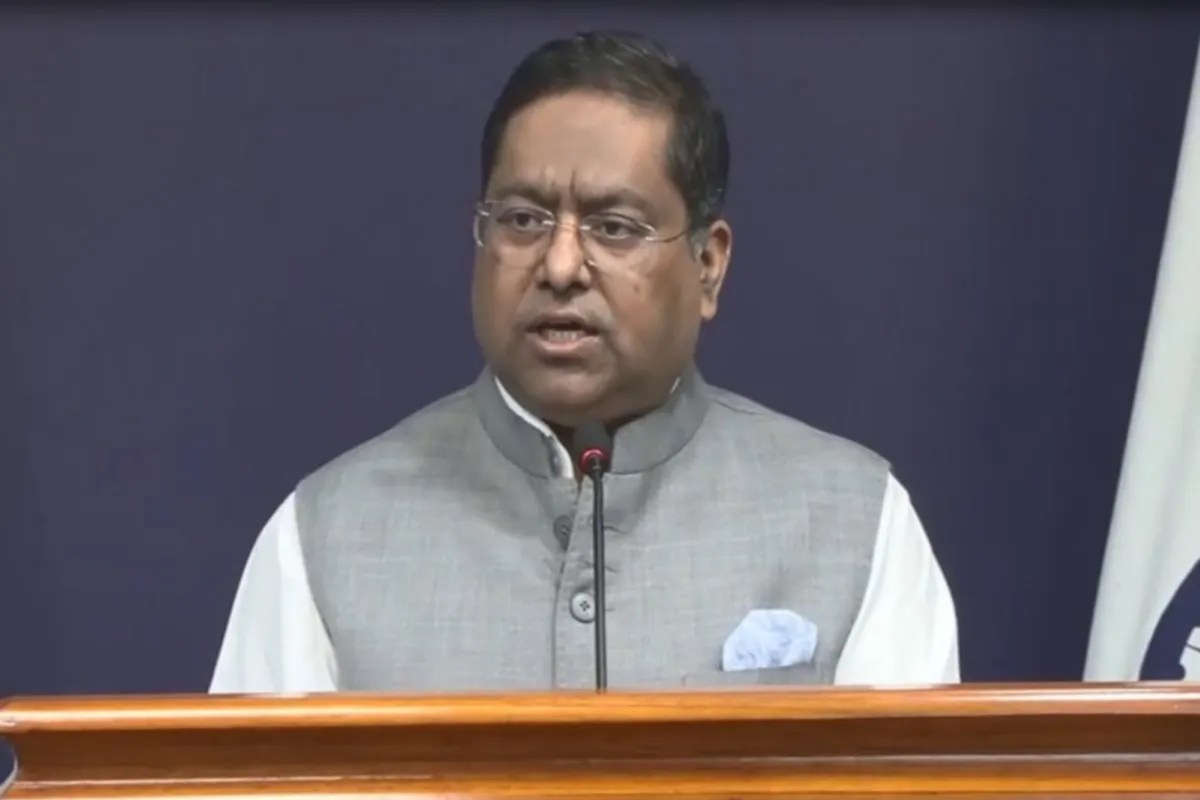
Donald Trump’s former National Security Advisor recently pointed toward a horizon that many political commentators miss in the daily scramble for clickbait headlines. Beneath the surface noise of trade disputes, tariff renegotiations, and diplomatic posturing lies a stark, enduring truth. The long-term future of India and the United States is not a fragile alliance built on convenience. It is an architectural necessity.
Consider what happens next.
Two massive democracies, shaped by entirely different histories, are stumbling toward a shared destiny. It is messy. It is loud. It involves difficult negotiations behind closed doors in Washington and New Delhi. But it is happening.
To understand why this matters, you have to step away from the podiums and look at the streets.
Walk through a university campus in Hyderabad on a humid Tuesday afternoon. The air smells of dust, rain, and diesel exhaust. Students crowd around a cafeteria table, laptops open, arguing about quantum computing and semiconductor fabrication plants. They are not talking about Cold War alliances or ancient non-aligned movements. They are talking about startups, venture capital funding rounds, and research grants that span two continents.
Now, fly twelve thousand miles west. Walk into a research laboratory in Austin, Texas. A team of scientists, some born in Ohio and others who celebrated Diwali in Chennai just months ago, are staring at a microscopic silicon wafer. They are trying to solve a problem that neither country could conquer alone: how to build computing hardware that is secure, resilient, and independent of fragile global choke points.
This is the human element.
Grand strategies are written by generals and diplomats, but they are sustained by ordinary people doing extraordinary work across time zones.
For decades, the relationship between Washington and New Delhi was plagued by hesitation. There was a lingering coldness, a relic of past mistrust where neither capital trusted the intentions of the other. India wanted strategic autonomy—the sacred right to chart its own course without bowing to foreign pressure. The United States wanted reliable allies who fit neatly into predictable diplomatic boxes.
Neither fit the box.
And that is precisely why the modern partnership works.
Change arrived slowly, then all at once. The rise of new global powers shifted the gravitational pull of the planet. Suddenly, strategic independence did not mean isolation. It meant finding partners who shared a fundamental belief in open societies, rule of law, and technological innovation.
When former national security officials speak about the long-term future, they are translating a complex web of defense pacts, technological sharing agreements, and intelligence-sharing initiatives into a simple premise. Neither nation can afford to stand alone in the century ahead.
Space is no longer an empty frontier; it is a congested highway of satellites, communication relays, and orbital stations. Cybersecurity is no longer an IT department problem; it is the frontline of national sovereignty. Supply chains are no longer logistics spreadsheets; they are matters of economic life and death.
When supply chains snap, store shelves empty. When critical technologies are monopolized by a single authoritarian state, freedom shrinks.
This is the invisible stake.
Every time an American tech giant establishes a massive engineering hub in Pune or Gurugram, something shifts. Every time an Indian defense manufacturer collaborates with an American aerospace firm to build jet engines locally, the map changes.
Skeptics will point to the friction points. There are trade disagreements. There are divergent stances on international conflicts. There are moments when protectionist impulses in both capitals threaten to derail progress.
Friction is real. But friction is not failure. It is the heat generated by two massive economies rubbing against each other as they align.
Think of an old weaver’s loom. The threads are pulled taut, stretched to their limits, and occasionally frayed. But out of that tension comes a fabric far stronger than any single strand could ever be.
The security architecture being built today is designed to outlast political cycles. Administrations change in Washington every four or eight years. Coalitions shift in New Delhi. Prime ministers and presidents come and go, stepping onto the world stage, delivering their speeches, and retiring to the history books.
The machinery of cooperation keeps turning.
It turns because the shared interests are too deep to ignore. It turns because millions of families have built lives bridging both worlds—sending money home, studying abroad, returning to lead corporations, and shaping policy from the inside.
We are watching the birth of a new kind of partnership. It is not a traditional military treaty where one nation promises to die for another. It is an interdependence of minds, markets, and mutual respect.
The future belongs to those who build it together.
The ink on the old maps is fading. Listen closely, and you can hear the sound of the new one being drawn.