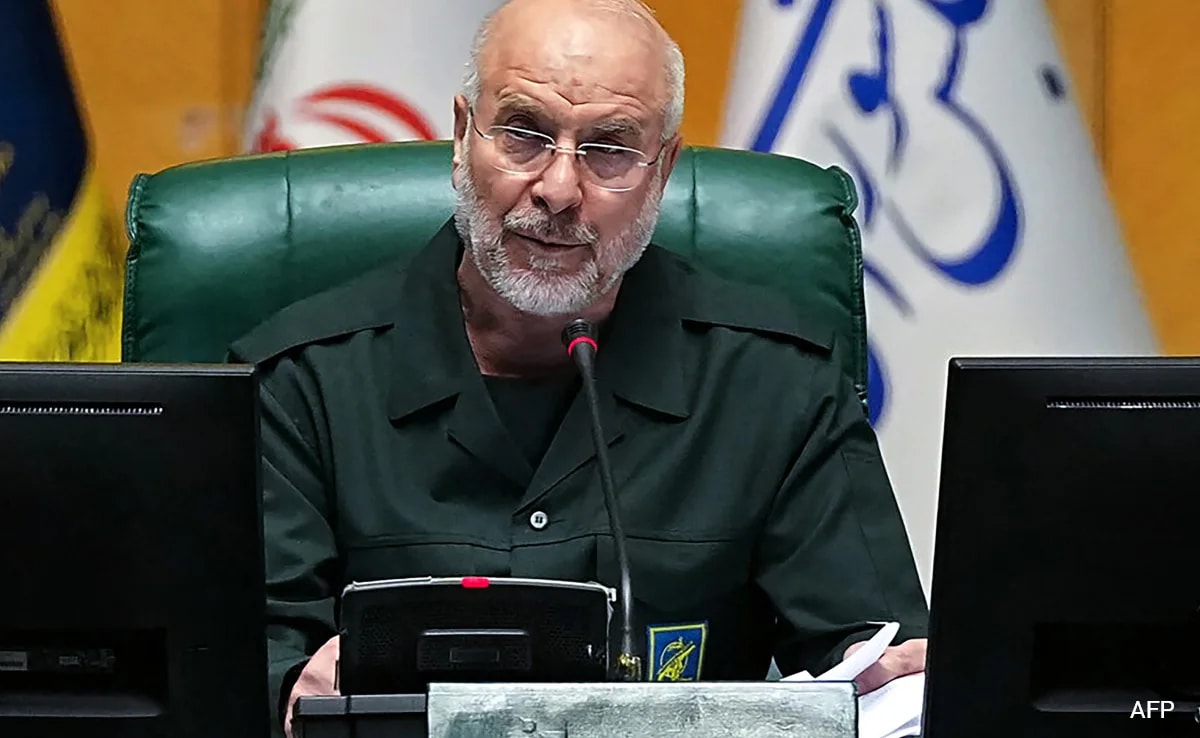
The air in the Situation Room doesn't smell like history. It smells like stale coffee and the low-hum ozone of high-end servers. Somewhere across the world, in a reinforced bunker beneath the Alborz Mountains, the air likely smells much the same. Two rooms, separated by thousands of miles and a chasm of ideology, are currently locked in a silent staring contest where the stakes are measured in human lives and the price of a gallon of gas.
The news cycle calls it a warning. They use words like "escalation" and "deterrence." But if you look past the teleprompters, what we are witnessing is the terrifying evolution of a poker game where the cards are no longer made of paper. Iran’s latest message to Washington isn’t just a verbal threat; it is a declaration that the deck has been swapped.
If war resumes, they say, "new cards" will appear on the battlefield.
To understand what that means, you have to stop thinking about tanks and planes. Those are the old cards. They are loud, heavy, and expensive. The new cards are silent. They are lines of code that can darken a city’s power grid before a single boot touches the ground. They are swarms of drones, small enough to be built in a garage but smart enough to find a specific air intake on a multi-billion-dollar destroyer.
The Architect in the Basement
Consider a hypothetical engineer in Isfahan. We will call him Hamid. Hamid doesn't wear a uniform. He wears a faded hoodie and glasses thick from years of staring at blue-light monitors. He isn't interested in the grand speeches given by clerics or presidents. He is interested in the vulnerabilities of the Global Positioning System.
Hamid represents the "new cards." For decades, the West relied on a massive technological advantage. We had the better satellites, the faster jets, the more precise missiles. But technology is a great equalizer. The barrier to entry has crumbled. A thousand "Hamids" working in distributed cells can do more damage to a modern economy than a carrier strike group can do to a mountain range.
When Iran warns of new cards, they are talking about asymmetric misery. They are signaling that the traditional rules of engagement—where the bigger military wins—are dead. In this new era, the winner is the one who can make the other side’s daily life the most unbearable.
The Geometry of a Narrow Sea
The Strait of Hormuz is a narrow throat of water through which the lifeblood of the global economy flows. It is twenty-one miles wide at its narrowest point. That is nothing. It is a stone's throw in the world of modern ballistics.
For years, the threat was simple: Iran would sink a tanker, or mine the waters. The U.S. Navy would sweep the mines and sink the Iranian navy. A tragic, violent, but predictable exchange.
The "new cards" change the geometry of that conflict. Imagine not a fleet of ships, but a cloud of "suicide" drones. These aren't the Predators you see in movies. These are loitering munitions. They are patient. They can sit in the air for hours, waiting for a specific thermal signature. If you fire a million-dollar interceptor missile at a drone that costs five thousand dollars, you are losing the war of attrition before the first shot even connects.
This isn't theory. We saw the precursor in the Red Sea. We see it in the scorched fields of Eastern Europe. The battlefield has become a laboratory where the cheap and the plentiful are systematically dismantling the expensive and the rare.
The Psychology of the Shadow
War is rarely about the total destruction of an enemy. It is about the destruction of their will to continue.
The Iranian warning is a psychological play. It targets the American public's fatigue. After twenty years of conflict in the Middle East, the appetite for another "forever war" is non-existent. By hinting at unknown capabilities, Tehran is betting on the fear of the dark.
What are the cards?
- Hypersonic missiles that move too fast for current radar to track.
- Subsurface autonomous vehicles that can wait on the ocean floor for months.
- Cyber-payloads nestled inside Western infrastructure, dormant, waiting for a "wake-up" signal.
The uncertainty is the point. If I tell you I have a gun, you know how to react. If I tell you I have something you’ve never seen before, and that it’s already in your house, your heart rate changes. You start looking at your thermostat differently. You wonder if the "glitch" in your banking app this morning was really just a server update.
The Ghost of 1988
To understand why this rhetoric carries so much weight in Tehran, you have to look at Operation Praying Mantis. In 1988, the U.S. Navy destroyed half of Iran's operational fleet in a single day. It was a humiliating, lopsided defeat.
For the Iranian military command, that day became a permanent scar. They realized they could never win a conventional fight against a superpower. So, they stopped trying. They spent the next thirty-five years investing in the unconventional. They invested in the "new cards."
This isn't a sudden surge of aggression; it is the culmination of three decades of redirected spite. They have built a military designed specifically to be the "anti-" to everything the West excels at. You have stealth? They have passive sensors. You have massive bases? They have mobile, underground cities.
The Human Cost of High-Stakes Bluffs
Behind every headline about "war warnings," there are people who just want to go to work. There is a father in San Diego kissing his daughter goodbye before boarding a destroyer. There is a mother in Tehran standing in a long line for subsidized bread, wondering if the sky will stay quiet tonight.
The tragedy of the "new cards" is that they are designed to bypass the military and hit the civilian. When you target a power grid, you aren't fighting a general. You are fighting a surgeon in a darkened operating room. You are fighting an elderly man whose oxygen concentrator just stopped working.
The masters of the game—the politicians and the high-ranking officials—rarely feel the sting of the cards they play. They sit in the climate-controlled rooms. They look at the digital maps. To them, a "new card" is a strategic asset. To the rest of the world, it is the shadow of a coming winter.
The Table is Set
We are currently in the "pre-game." Both sides are checking their chips. The U.S. has moved assets into the region, a physical manifestation of "Old Guard" power. Iran has issued its verbal warning, a manifestation of the "New Guard" threat.
But the danger of this specific game is that there is no "fold" button. Once the first new card is played, the game takes on a life of its own. Escalation isn't a ladder; it’s a grease-slicked slide. You don't move up it one step at a time. You fall.
The warning issued by Tehran isn't just about what they might do to an aircraft carrier. It is a reminder that the world is more fragile than we like to admit. Our total reliance on interconnected systems—the very things that make our lives convenient and prosperous—are the exact vulnerabilities these new cards are designed to exploit.
We are living in the pause between the breath and the scream. The cards are on the table, face down, and the dealer's hand is shaking.
One card flips. Then another. And suddenly, the lights go out.

:strip_icc()/pic2513216.jpg)