The pre-dawn light in a suburban garage feels different when the world’s energy balance is shifting. You don’t see the spreadsheets or the diplomatic cables. You see the digital numbers on a gas station sign flickering as they climb by three cents, then five. It feels like a personal tax on your commute, a quiet theft from your grocery budget. But that number isn’t born in your neighborhood. It is whispered into existence in wood-paneled rooms in Vienna and shouted over the roar of engines in the Persian Gulf.
Consider a man named Elias. He is a fictional composite of the thousands of tanker captains navigating the world’s most precarious nautical shortcut. Right now, Elias is standing on the bridge of a massive crude carrier. Beneath his feet are two million barrels of oil. Ahead of him lies the Strait of Hormuz. At its narrowest point, the shipping lanes are only two miles wide. It is a throat, and right now, the world is breathing through it.
To his left is the coast of Iran. To his right, the United Arab Emirates and Oman. If that throat constricts, the pulse of global commerce skips a beat. This isn't just about geopolitics; it’s about the heat in your home and the cost of the plastic toys in your child’s bedroom.
The Consensus of the Few
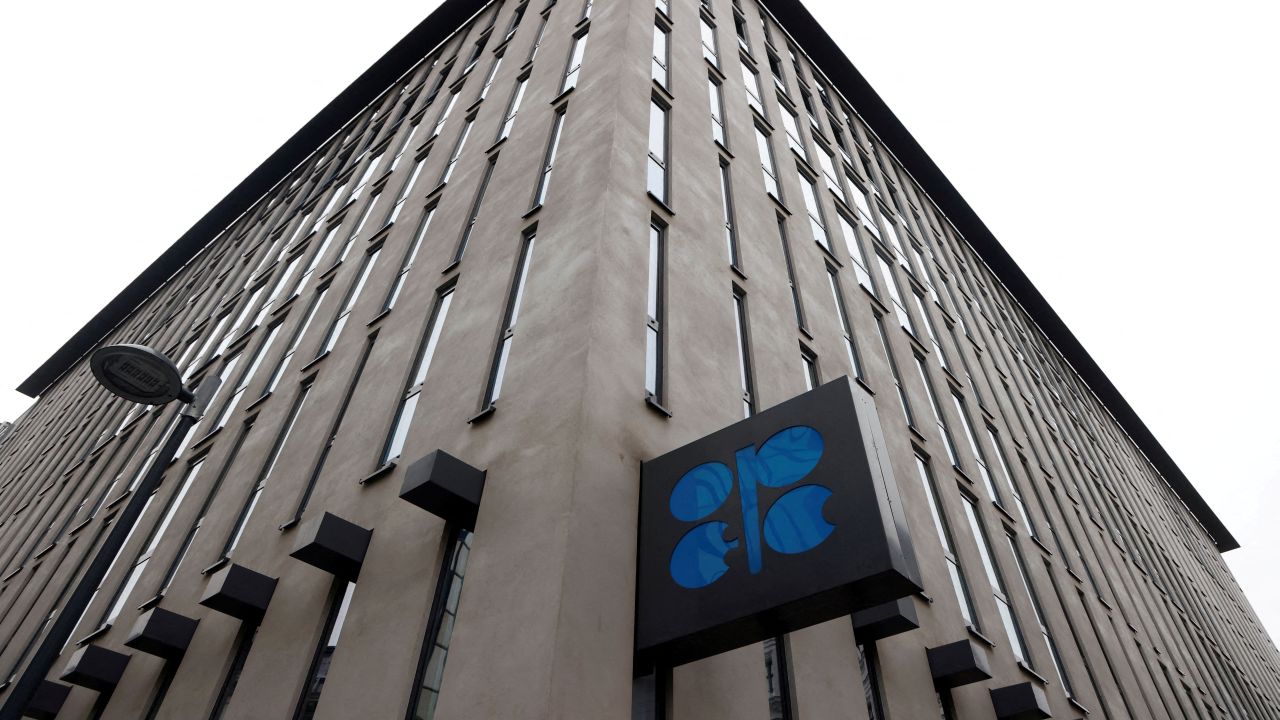
Recently, the group known as OPEC+ met to decide how much of the world's lifeblood they would allow to flow. This alliance, led by Saudi Arabia and Russia, controls the majority of the planet's exportable oil. Their task is a delicate, often desperate, act of calibration. If they pump too much, the price crashes, and their national budgets—which fund everything from hospitals to futuristic desert cities—collapse. If they pump too little, the global economy overheats, and their customers begin a frantic, permanent shift toward renewables.
They settled on a modest increase. It was a compromise, a small turn of the valve designed to signal stability without spooking the markets. They agreed to add roughly 100,000 barrels a day back into the system. In the grand scheme of a world that consumes nearly 100 million barrels every single day, this is a drop of rain in a swimming pool. It is a gesture, not a solution.
But why be so stingy? Why not flood the market and ease the pressure on people like you?
The answer lies in the empty space on the balance sheet. Many of these nations are already running at their limit. They talk about "spare capacity," which is the industry’s way of saying "emergency reserves." But layers of underinvestment and aging infrastructure mean that for many members, the ability to turn the tap further simply doesn't exist. They are promising a feast while their larders are nearly bare.
The Chokehold
While the diplomats in Vienna were adjusting their ties, the real drama was unfolding thousands of miles away in that narrow stretch of water Elias is currently navigating. Iran sits on the northern edge of the Strait of Hormuz. For decades, they have understood that this twenty-one-mile-wide strip of ocean is their greatest piece of leverage.
Approximately one-fifth of the world’s total oil consumption passes through this single point. Imagine a highway where twenty percent of all the world's trucks must pass through one specific toll booth. Now imagine that the person operating the toll booth is currently locked in a bitter, high-stakes standoff with the rest of the world.
When Iran feels the squeeze of international sanctions, they remind the world they can close the throat. They don't even have to do it physically. A single reported incident—a limpet mine attached to a hull, a seized tanker, or a drone sighting—is enough to send insurance premiums for ships like Elias's into the stratosphere.
When it becomes more expensive to insure the oil, it becomes more expensive to buy the oil. You feel the ripples of a Persian Gulf skirmish when you’re standing at a pump in Ohio or a terminal in Berlin. The friction of the Strait is a hidden tax on every human being who relies on modern transport.
The Ghost of Underinvestment
We often treat oil like a utility, something that should just be there, like water from a faucet. We forget that it requires a staggering amount of human ingenuity and constant, aggressive reinvestment.
Think of an oil well like a high-performance athlete. Without constant training, specialized nutrition, and medical care, their performance doesn't just plateau—it falls off a cliff. For the last several years, the global energy industry has been hesitant. Burned by previous price crashes and pressured by the necessary shift toward green energy, companies and nations stopped putting enough money back into the ground.
Now, we are seeing the ghost of that missing money.
The OPEC+ "modest rise" is less a choice and more a reflection of reality. They can’t give what they don't have. Nigeria and Angola, for example, have consistently struggled to meet their existing quotas. Their fields are tired. The technology is aging. The human expertise is stretched thin.
This creates a terrifying paradox. We are demanding more energy while simultaneously trying to exit the age of fossil fuels. We are caught in the "in-between." We have one foot on a sinking boat and the other on a dock that isn't fully built yet.
The Human Toll of the Invisible
Back on the bridge of his tanker, Elias watches the radar. He sees the silhouettes of Iranian patrol boats. They are small, fast, and nimble—wasps circling a slow-moving bull. He knows that his ship is a pawn in a game played by people who will never meet him.
But there is another human element we rarely discuss: the people in developing nations for whom a ten percent rise in fuel costs isn't an inconvenience, but a catastrophe. In places where the margin for survival is razor-thin, the price of diesel determines the price of bread. When the trucks can't afford to move the grain, the village goes hungry.
The "modest rise" announced in the comfort of a European capital sounds like a technical adjustment. To a farmer in the Global South, it is a signal that the struggle for basic resources is only going to get harder. The invisible stakes of these oil meetings are measured in heartbeats and empty plates.
The Fragile Balance
The world wants a simple narrative. We want to believe there is a "good guy" and a "bad guy" in the energy markets. We want to believe that someone, somewhere, can just press a button and make the prices go down.
The reality is far more chaotic. It is a web of aging pipes, nervous captains, desperate politicians, and a narrow strait of blue water that could turn into a flashpoint at any moment.
OPEC+ is trying to manage a decline while pretending they are still in total control. Iran is using the geography of the earth as a shield and a sword. And the rest of us? We are passengers on Elias's ship, hoping the transit is smooth, even as we feel the engine beginning to strain.
The ship moves forward. The Strait narrows. The world waits to see if the throat stays open or if the breath of the global economy will be cut short by a hand we cannot see.
The digital numbers on the gas station sign continue their slow, rhythmic climb. One cent. Two cents. The shadow of a tanker in the Persian Gulf stretches all the way to your driveway, long and cold.