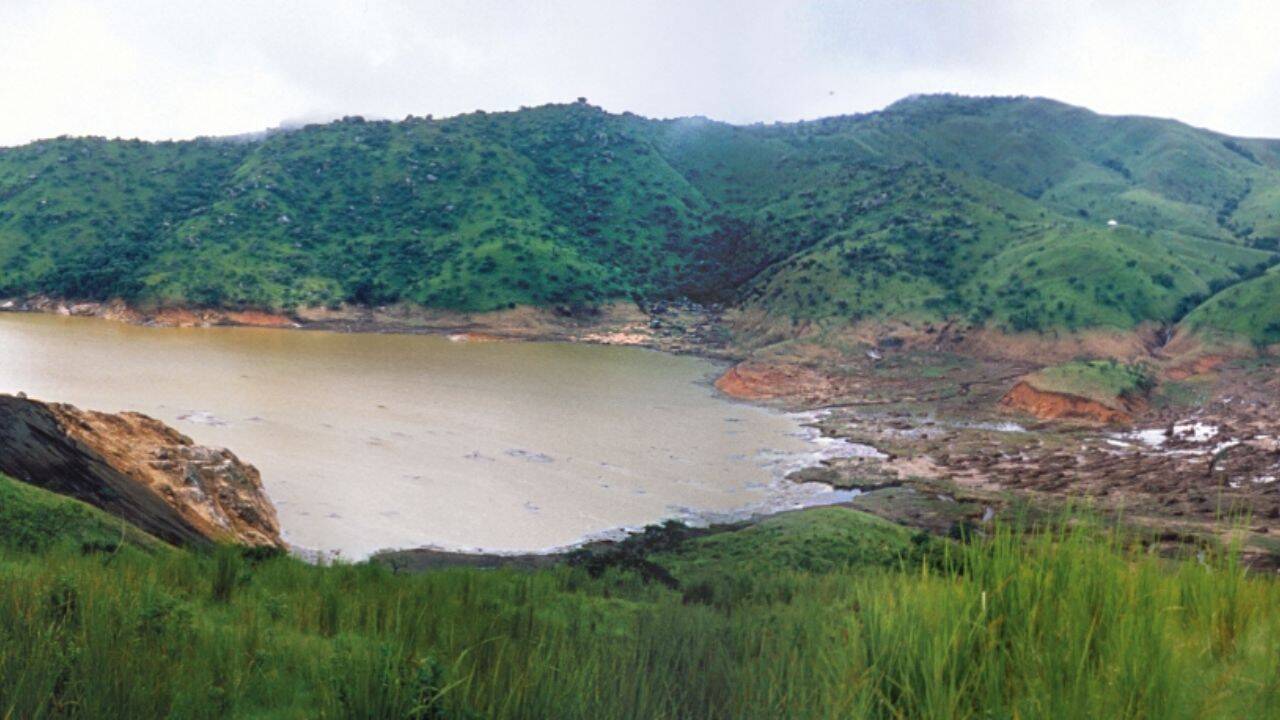
On August 21, 1986, a silent vapor rose from the dark waters of a remote volcanic crater lake in Cameroon and extinguished 1,746 human lives in a single night. Livestock dropped dead in their tracks. Birds fell out of the sky. Entire villages vanished under an invisible shroud of carbon dioxide.
This catastrophic limnic eruption remains one of the strangest mass-casualty natural disasters in recorded history. For decades, the narrative focused on how scientists rushed to neutralize the lake by installing high-tech degassing pipes to vent the toxic abyss. Yet the true story goes much deeper. The hidden threat never actually disappeared. Recent geological monitoring proves that dissolved carbon dioxide continues to accumulate in nearby water bodies at alarming rates. The engineering solution that saved one community is not a permanent fix for the entire region. The danger simply shifted from an active crisis to a permanent, slow-motion management challenge.
Understanding how a body of water can suddenly transform into a chemical weapon requires looking beneath the surface. Lake Nyos sits inside a volcanic vent in the Oku volcanic field. Magma chambers deep underneath the earth constantly leak carbon dioxide gas. This gas rises through the crust, dissolves into the cold groundwaters feeding the bottom of the lake, and gets trapped under immense water pressure.
Think of Lake Nyos like an industrial-sized bottle of carbonated soda. When the bottle sits unopened on a shelf, the gas stays dissolved in the liquid because of the pressure inside the sealed container. Twist the cap off, and the sudden drop in pressure causes the gas to instantly rush out in a violent froth.
That is precisely what happened in 1986, though scientists still debate the exact trigger. A landslide, a volcanic tremor, or even heavy rainfall cooling the surface water could have destabilized the thermal stratification of the lake. Once the cold, dense, gas-rich water at the bottom was pushed upward toward the low-pressure surface, the dissolved carbon dioxide flash-evaporated.
Carbon dioxide is heavier than air. As millions of cubic meters of the gas rushed out of Lake Nyos, it did not disperse harmlessly into the atmosphere. Instead, it formed a dense, suffocating blanket hugging the ground. Flowing down neighboring valleys like an invisible river of death, the gas displaced all breathable oxygen. People sleeping in their homes suffocated in their beds before they even realized what was happening.
The immediate international response was a race against time and physics. Volcanologists and engineers realized that waiting for another natural eruption was a death sentence for the surviving populations returning to the fertile agricultural valleys.
The fix seemed deceptively simple on paper. Scientists designed a massive engineering project to siphon the gas directly from the bottom of the lake. They installed a vertical pipe stretching nearly two hundred meters down into the toxic depths, anchored by a series of floating high-density polyethylene pontoons.
Once the water is drawn up the pipe from the high-pressure depths, the ambient pressure drops. The dissolved gas begins to bubble out naturally inside the pipe. By the time the water reaches the surface, the buoyancy of the expanding bubbles creates a self-sustaining fountain. The system operates like a giant natural pump, continuously spraying degassed water into the air while venting the carbon dioxide safely into the atmosphere.
It worked. The levels of dissolved carbon dioxide in Lake Nyos plummeted. Communities resettled the surrounding hillsides. Local agriculture resumed. The engineering community declared a massive victory over a terrifying natural hazard.
That early triumph created a dangerous illusion of permanence.
Geologists tracking the region's broader volcanic network soon realized that Lake Nyos was not an isolated anomaly. Just down the road, Lake Monoun had experienced its own deadly limnic eruption in 1984, killing 37 people. Furthermore, other crater lakes in the region were quietly brewing identical chemical cocktails, completely unnoticed by the international press.
Lake Kivu, located thousands of miles away on the border between Rwanda and the Democratic Republic of Congo, presents an even more terrifying scale of risk. Containing roughly two hundred and fifty cubic kilometers of dissolved carbon dioxide, alongside massive reserves of dissolved methane gas, Lake Kivu is a ticking geological time bomb. More than two million people live along its shores. A limnic eruption or a methane ignition there would dwarf the catastrophe of Lake Nyos by orders of magnitude.
Scientists monitoring these systems face a grim reality. Degassing pipes require continuous funding, heavy industrial maintenance, and constant political stability in regions prone to volatility. Polyethylene pipes corrode. Solar-powered monitoring equipment fails. Local governments facing immediate economic crises struggle to prioritize maintenance on invisible hazards that have not erupted recently.
The engineering intervention at Lake Nyos bought decades of time, but it did not rewrite the laws of geology. Magma continues to outgas beneath the African continent. Carbon dioxide continues to trickle upward into subterranean aquifers. The lakes continue to fill.
Preventing another disaster requires acknowledging that natural hazards cannot always be conquered once and for all. They must be managed indefinitely. Until permanent, self-sustaining regional monitoring frameworks receive the unwavering financial commitment they demand, the quiet waters sitting in volcanic craters across the globe remain suspended in a delicate, volatile balance between life and sudden death.
:max_bytes(150000):strip_icc()/ar-American-Cheese-taste-test-horizon-4x3-54cc339550cd44b9a818c17bdfd5428d.jpg)