The Price of a Horizon
A departure board in an airport terminal is a quiet theater of human desire. Destinations flash in yellow LEDs: Tokyo, London, Sydney, New York. Each line item represents a promised reunion, a long-sought deal, or a escape from the mundane. But behind those ticking city names sits a volatile, unseen equation—one that connects the quiet sky above the Strait of Hormuz to the balance on your credit card statement.
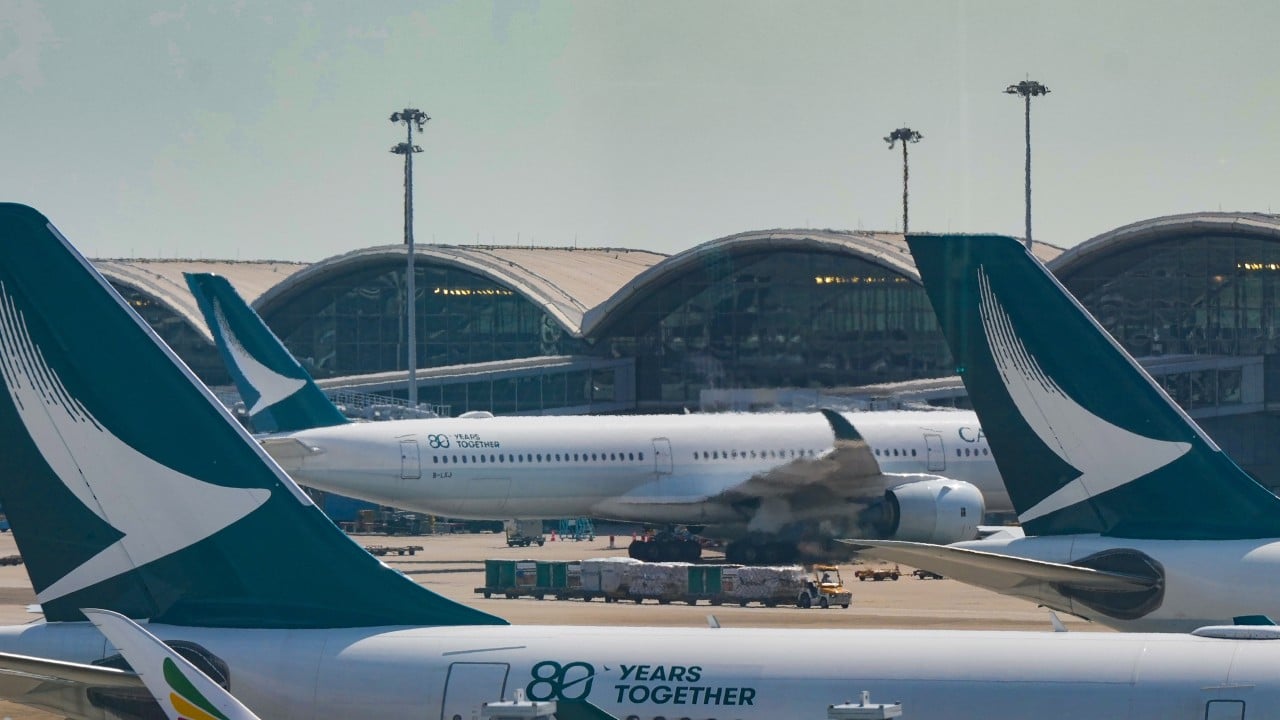
When Cathay Pacific quietly rolled out fuel surcharge increases of up to 41% across its passenger routes, the headlines framed it as a standard corporate adjustment. Tensions in the Middle East had pushed crude prices higher, supply routes bent under geopolitical pressure, and the airline adjusted its price tickets accordingly. Cold. Efficient. Logical.
Except travel is rarely logical to the person buying the ticket.
Consider a hypothetical traveler named Sarah. She isn't an executive with an expense account that absorbs price spikes without a blink. She is a graphic designer in Hong Kong saving for eight months to visit her elderly parents in Manchester. When she opened her booking app on a Tuesday evening, the baseline fare remained roughly what she had calculated weeks prior. But the final line item—the ancillary fees, the fuel surcharge—had quietly expanded. The extra cost wasn't enough to ground her entirely, but it was enough to shift her itinerary, force a longer layover, or cancel a modest weekend trip later in the year.
Her extra outlay did not buy a better seat. It did not purchase a warmer meal or extra legroom. It simply bought the right to burn kerosene thousands of feet above the earth.
The Volatility Above the Clouds
To understand why a regional conflict thousands of miles away suddenly costs an economy passenger nearly half as much again in surcharge fees, you have to look at the anatomy of an airline's balance sheet. Jet fuel is not merely an operational expense. It is a hyper-sensitive barometer of global anxiety.
For an international carrier operating long-haul routes out of major hubs, jet fuel typically accounts for anywhere between 30% to 40% of total operating costs. Unlike land-bound businesses that can buffer price shocks through slow-moving inventories, airlines consume fuel in massive, immediate bursts. A Boeing 777-300ER burns roughly 2,400 gallons of fuel every single hour it remains airborne.
When political instability threatens key shipping lanes or oil-producing regions in the Middle East, global crude markets don't wait for actual shortages to occur. They react to fear. The price of jet fuel—which trades at a premium above standard crude due to refined quality specifications—spikes instantly.
Airlines face two immediate choices when crude surges. They can swallow the loss, which rapidly drains liquidity, or they can pass the cost directly to the consumer through floating surcharges. Cathay's choice to adjust those fees upward by double-digit percentages was not an anomaly; it was a reflex.
+-------------------------------------------------------+
|                THE RIPPLE EFFECT                      |
|                                                       |
|  Geopolitical Shock in the Middle East                |
|         │                                             |
|         ▼                                             |
|  Oil Supply Fears & Jet Fuel Price Spikes             |
|         │                                             |
|         ▼                                             |
|  Airlines Raise Fuel Surcharges (Up to 41%)          |
|         │                                             |
|         ▼                                             |
|  Higher Ticket Prices for Everyday Travelers          |
+-------------------------------------------------------+
The Illusion of the Base Fare
There is a subtle psychological machinery at work in modern aviation pricing.
Decades ago, a flight ticket was a singular, all-inclusive price. You paid for the journey. Today, the fare structure has been meticulously deconstructed. Base fares often appear artificially low, anchoring our expectations to a reasonable baseline. The true cost reveals itself later in the booking process, layered beneath government taxes, airport construction fees, and the floating fuel surcharge.
By isolating the fuel surcharge as an independent variable, carriers maintain flexibility. Base fares require complex regulatory reviews or deliberate marketing shifts to change. Surcharges, however, act as an emergency valve. They can be ratcheted up rapidly when crude spikes, and theoretically, lowered when the market settles.
But the reality for the traveler is singular: the total price goes up.
When you sit in seat 32A, watching the wing tip flex against the turbulence, you are feeling the physical manifestation of energy being consumed. The air moving over that wing requires thousands of pounds of thrust per second. When global oil markets panic, the price of that physical reality cascades down directly to the individual buckled into that seat.
The Human Radius Shuts Down
The true impact of a 41% surcharge spike does not show up on a corporate earnings call. It shows up in small, unscripted domestic moments.
It shows up when a small business owner decides against attending an international trade fair, choosing instead a grainy video call that misses the subtle handshakes and casual dinners where real trust is built. It shows up when a student studying abroad extends their time away from home by another six months because the shoulder-season flight home is no longer affordable.
Every percentage point added to a ticket shrinks the geographic radius of ordinary people. It makes the world just a little bit larger, just a little harder to cross.
We tend to think of global aviation as a seamless network of physical nodes—airports connected by invisible highways in the sky. But that network is fundamentally held together by consumer confidence and disposable income. When fuel volatility forces carriers to raise the price of entry, those invisible highways become narrower.
An Engine Powered by Anxiety
Air travel remains one of humanity's most extraordinary achievements: placing a human being in a pressurized aluminum tube, lifting them eight miles into the stratosphere, and depositing them on the opposite side of the planet within a day.
Yet for all its engineering genius, the system remains strikingly fragile. It is tethered directly to the soil, to pipelines, to political shifts, and to crude oil pumped from beneath the earth's crust. When those subterranean forces shift, the impact travels at the speed of light through financial algorithms, landing squarely on the shoulders of the person standing at the gate with a boarding pass in hand.
The next time you check the price of a flight and see that separate, swelling surcharge line, look past the numbers. You are looking at a real-time price tag on global instability—a tiny, measurable toll paid for the privilege of moving through the sky.


