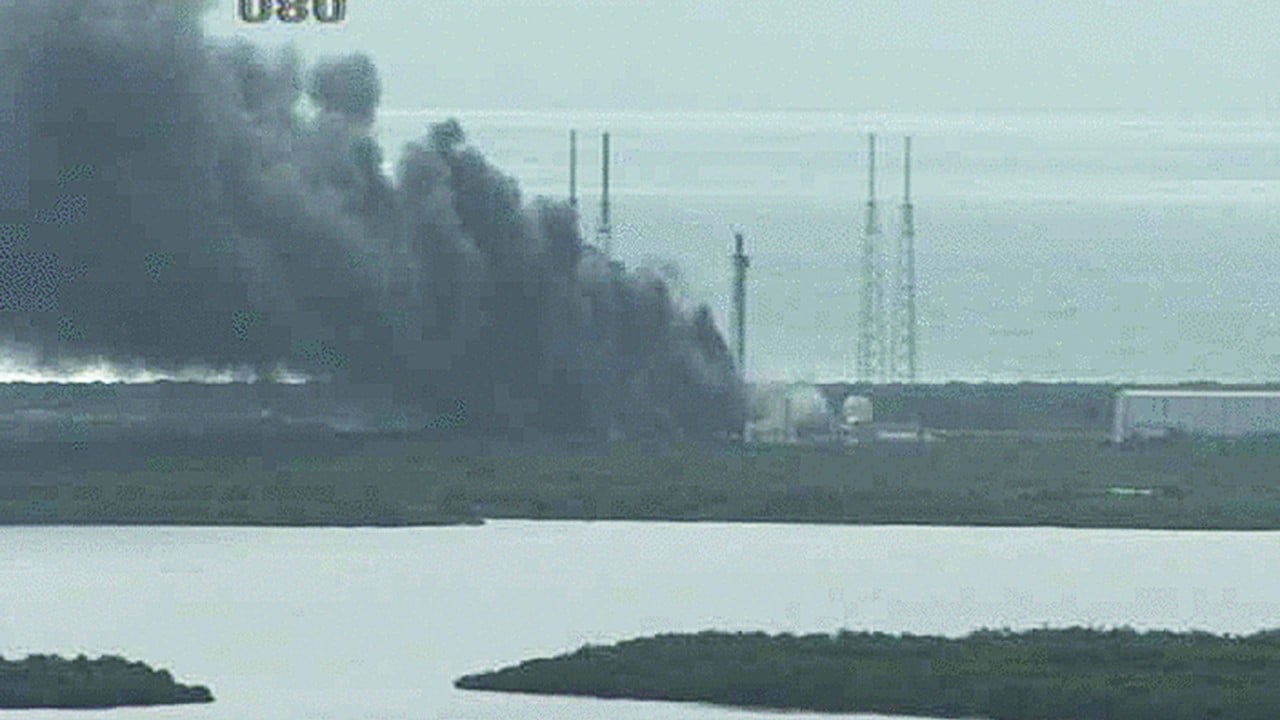
The smell of scorched RP-1 kerosene and vaporized metal doesn't travel through a television screen. When an orbital rocket explodes on a launchpad, the public sees a spectacular, horrifying plume of orange fire. The spectators gasp. The livestream cuts to a stunned anchor. Social media lights up with millions of views. But in the quiet backrooms of global finance, nobody is watching the fire. They are watching the ledger.
A single launch failure can instantly evaporate two hundred million dollars. That is not just a loss for the engineers who spent five years welding the aluminum-lithium tanks. It is a catastrophic financial crater for the satellite companies, the telecom giants, and the research universities whose futures were strapped to the top of that pillar of controlled fire.
Building a rocket company is a brutal game of Russian roulette where each bullet costs nine figures. If you pull the trigger and the chamber is empty, you reach orbit and become a billionaire. If the chamber is full, you go bankrupt. Unless, of course, someone else agrees to hold the financial smoking gun.
Right now, a silent, geopolitical war is being fought over who holds that gun. As American entities dominate the actual hardware of space, an unexpected player has quietly stepped up to underwrite the immense risk of the global space race.
China is insuring the rivals of the United States.
The Audacity of the Underwriter
To understand how a rocket launch actually happens, you have to leave the coastal launchpads of Cape Canaveral and enter the wood-paneled boardrooms of the global insurance elite.
Imagine a hypothetical satellite executive named Sarah. She has spent the last four years managing the construction of a next-generation environmental monitoring satellite. It weighs six tons. It costs $150 million. Her company’s entire stock price hinges on this single piece of hardware reaching a precise geostationary orbit.
Sarah has a terrifying choice to make. She can book a flight on an American launch vehicle, or she can look abroad. But before a single bolt is turned, her chief financial officer delivers an ultimatum: We do not launch without a zero-risk policy. This is where the math of space exploration turns cruel. The traditional Western insurance markets—predominantly centered around Lloyd's of London and various European syndicates—have taken a beating over the last decade. A string of high-profile launch failures and stranded satellites left Western underwriters bleeding cash. In response, they did what any rational financial institution does when the house is losing. They hiked premiums. They tightened restrictions. They made it incredibly expensive to fail.
For a struggling mid-tier rocket company trying to compete with giants, these skyrocketing insurance premiums are a death sentence. If a launch provider cannot secure affordable insurance for its customers, it cannot secure customers. It is a invisible chokehold on innovation.
Then came the pivot.
While Western insurers pulled back, state-backed Chinese insurance consortiums quietly opened their vaults. They began offering massive, highly competitive insurance policies to international satellite operators using non-American rockets.
It was a masterstroke of economic warfare. China did not need to convince the world to buy Chinese rockets. They simply needed to make it financially viable for the rest of the world to fly on any rocket that competed with the American monopoly.
The Gravity of the Monopoly
We live in an era where one company dominates the celestial highway. SpaceX has achieved a launch cadence that feels less like pioneering exploration and more like a metropolitan bus schedule. They launch every few days. Their reliability is staggering.
But monopolies are inherently dangerous ecosystems. If a single flaw is discovered in a dominant rocket’s Merlin engine, the entire global pipeline of satellite deployment grinds to a screeching halt. The world desperately needs alternatives. Europe has struggled with the delays of its Ariane program. Small-satellite launchers face brutal technical hurdles. New entrants are desperate for a slice of the orbit.
But the newcomers fail. They fail often. It is the nature of the beast.
When an experimental rocket from a Western startup wobbles off course and has to be intentionally destroyed by the range safety officer, the Western financial markets flinch. They see a bad bet.
The Chinese state-backed insurers see an opportunity. By underwriting the risk of European, Asian, and South American satellite operators who choose alternative launch vehicles, China is effectively subsidizing the survival of a fragmented marketplace. They are keeping the American giants on their toes not through superior engineering, but through superior financial stamina.
Consider the mechanics of a state-backed insurance policy. A private Western underwriter must answer to shareholders. If they insure a risky new rocket and it blows up, heads roll on the trading floor. But a state-backed entity operates on a completely different timeline. Their return on investment is measured not in quarterly dividends, but in decades of geopolitical leverage.
If China insures an international satellite launch at a loss, they haven't lost money. They have bought influence. They have ensured that an international satellite company is now financially tethered to Beijing. They have kept an American rival from capturing 100% of the market share.
The Friction of the Microscopic
The true complexity of this arrangement lies in the fine print of international law. The United States maintains incredibly strict regulations known as ITAR—International Traffic in Arms Regulations. Under these rules, American satellite technology is treated with the same level of secrecy as a nuclear warhead. You cannot simply put an American-made component onto a foreign rocket without triggering a bureaucratic nightmare.
This created a massive wall. If a satellite has even a single American microchip, it essentially cannot be launched on a Chinese rocket.
So, how does China participate in the space race if they cannot launch the hardware?
They shift the battlefield from the launchpad to the insurance policy. By providing the financial safety net for foreign satellite operators using non-American, ITAR-free rockets, China bypasses the technological blockades entirely. They do not need to touch the satellite. They do not need to see the blueprints. They just need to cash the check when it works, and pay out the claim when it burns.
It is a strange, paradoxical dance. A European satellite, built with zero American parts to avoid US export controls, launches on an Indian or European rocket, protected by Chinese capital. The physical object rises from the Earth, but the financial gravity pulling it into position originates in Beijing.
This reality makes many Western defense analysts deeply uncomfortable. They look at the numbers and see a trap. They worry that by allowing foreign space infrastructure to become dependent on Chinese financial backing, the West is conceding the invisible infrastructure of the next century.
The Cold Equations of the Human Element
It is easy to get lost in the macroeconomics of it all, to view this purely as a game of risk management and treaty manipulation. But let us return to Sarah, our hypothetical satellite executive.
Her rocket is sitting on the pad. The countdown is at T-minus ten minutes. She is sitting in the VIP viewing gallery, her hands shaking as she sips lukewarm coffee. She knows that if the vehicle undergoes a "catastrophic anomaly"—the clinical term engineers use to avoid saying exploded into a million pieces—her career is altered forever.
She is not thinking about the geopolitical chess match between Washington and Beijing. She is not thinking about the ideological purity of the supply chain. She is thinking about survival. She is thinking about the fact that because a Chinese consortium offered a premium that was 4% lower than London's offer, her company survived to see this launch day.
That is the emotional core of this economic cold war. Capital has no nationality when a business is facing extinction. The desperation of innovators will always drive them to whoever is willing to bear the scars of their failures.
We like to think of the space race as a battle of steel, fire, and brilliant minds staring at computer screens in mission control. We romanticize the roar of the engines and the triumph of the human spirit breaking free of Earth's gravity.
But the real orbit is determined by the people who calculate the probability of disaster. The next era of human spaceflight will not just be won by the nation with the best engineers. It will be won by the nation with the deepest pockets, the highest tolerance for catastrophe, and the willingness to pay the bill when everything goes wrong.
The rocket clears the tower. The vibration rattles the windows of the viewing room, a deep, rhythmic thrumming that shakes the bone. The white column of light ascends into the cloud deck, turning the grey sky into a brilliant, blinding sheets of gold. Sarah lets out a breath she feels like she has been holding for half a decade.
The vehicle disappears into the blue. It is safe. For now.
Far away, across an ocean, a line item on a ledger updates in silence. The risk has expired. The profit is recorded. And the invisible net tightens just a little bit more.