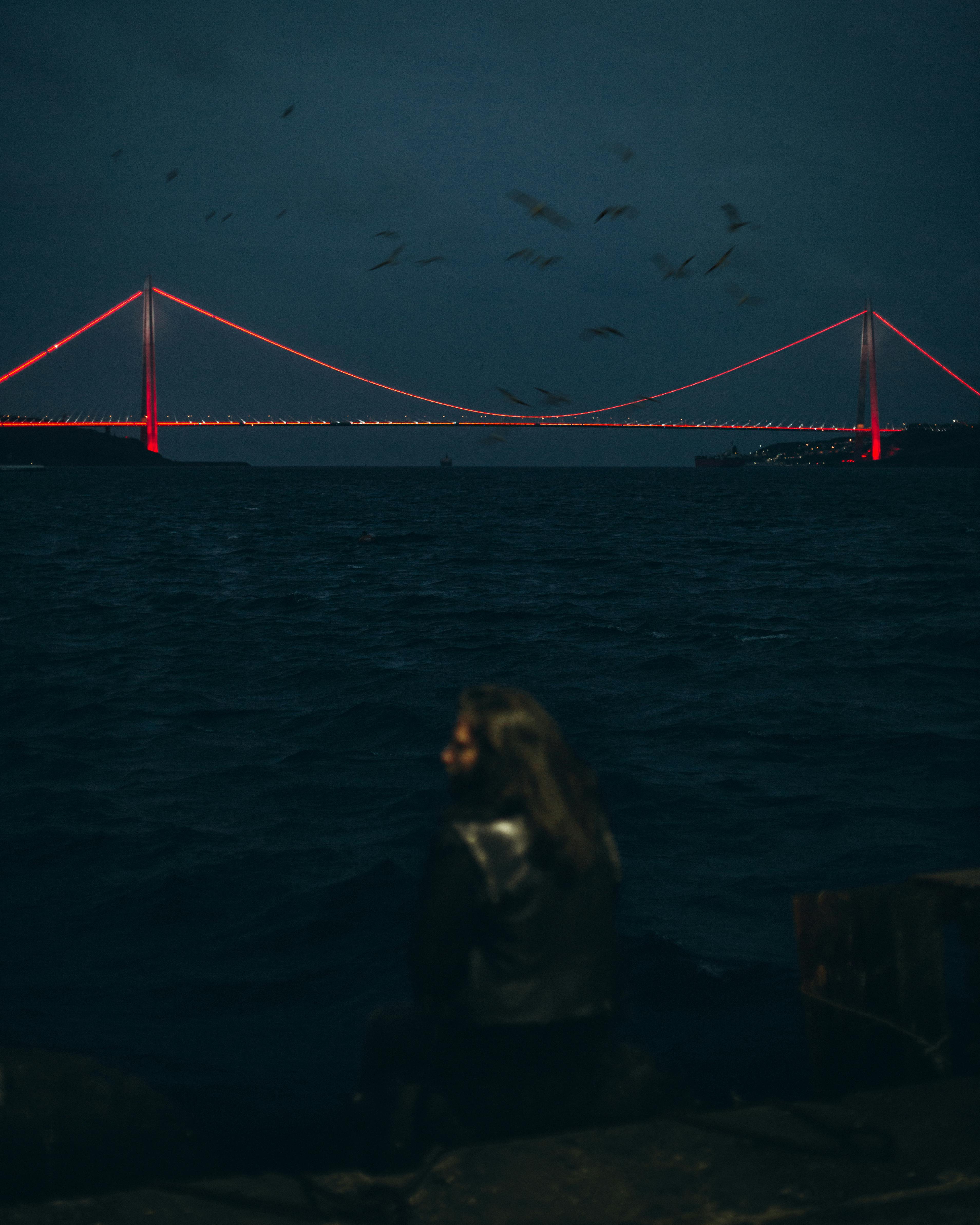
A master mariner once told me that the ocean doesn’t have a memory, but the men who sail it certainly do. He spoke of the Strait of Hormuz not as a geographic coordinate, but as a choke point—a literal throat. When that throat constricts, the rest of the world begins to gasp for air, though most people never realize why their chest feels tight.
Deep in the halls of Westminster, UK Home Secretary Yvette Cooper isn't thinking about the romance of the high seas. She is looking at a map of a narrow strip of water, twenty-one miles wide at its tightest, where the pulse of global energy beats. Her recent call for a full, unhindered resumption of shipping through this corridor isn't just a matter of diplomatic protocol. It is an act of economic self-defense.
To understand why a British official is fixated on a Persian waterway, you have to look past the spreadsheets. You have to look at the lights in a small flat in Leeds, the price of a loaf of bread in a London bodega, and the sheer, terrifying fragility of the "just-in-time" world we have built.
The Twenty-One Mile Tightrope
The Strait of Hormuz is a geographic fluke that dictates the fate of nations. Through this passage flows roughly a fifth of the world’s total oil consumption and a massive portion of the liquefied natural gas (LNG) that keeps Europe from freezing during the winter. It is the most sensitive artery in the global body.
Imagine a hypothetical captain named Elias. He is standing on the bridge of a Very Large Crude Carrier (VLCC). Under his feet are two million barrels of oil. Behind him lies the Gulf; ahead, the open Arabian Sea. Between him and the open water is a gauntlet of geopolitical tension. For Elias, the "Strait" isn't a line on a map. It’s the constant ping of the radar and the knowledge that a single miscalculation by a regional navy or a stray drone could turn his vessel into a multi-billion-dollar liability.
When shipping slows here, the ripples move at the speed of light. Traders in Chicago and London react to rumors before the first shot is even fired. The price of Brent crude spikes. Insurance premiums for tankers—the hidden tax on everything we consume—skyrocket.
The Cost of a Closed Door
The British government’s stance is rooted in a grim reality: the UK, like much of the West, has spent decades moving away from domestic coal and toward a reliance on imported gas. While the North Sea provides a buffer, the global market is interconnected. If the Strait closes, or even if it becomes too dangerous for commercial vessels to pass without military escort, the supply drops.
Prices do not just rise; they explode.
Cooper’s urgency stems from the fact that the UK cannot afford another inflationary shock. The British public is already weary. They have lived through energy price caps that felt like jokes and heating bills that looked like mortgage payments. To keep the Strait open is to keep the social fabric from fraying. It is about more than trade; it is about the quiet maintenance of civil order.
Security in the Strait is currently a patchwork of international efforts. Operation Kipion, the UK's long-standing maritime presence in the Gulf, is a testament to how much effort is required to keep a "free" trade route actually free. But military presence is a bandage, not a cure. Cooper is pushing for a return to a status quo where the sheer threat of force isn't the only thing keeping the tankers moving.
The Human Element in the Hull
We often talk about "shipping" as if it were an automated process of shifting blocks from point A to point B. It isn't. It is an industry built on the backs of thousands of sailors, many of them from the Philippines, India, and Ukraine, who spend months away from their families.
When tensions rise in the Strait, these sailors become the collateral. They are the ones who have to scan the horizon for fast-attack craft. They are the ones who stay awake in the engine room, knowing that their ship is a slow-moving target in a high-speed conflict. Cooper’s demand for a "full resumption" is, in a very real sense, a demand for the safety of these invisible workers.
Consider the psychological toll. A ship is a private world. When that world enters a high-risk zone, the atmosphere changes. The hum of the engines feels heavier. The crew's jokes become sparser. They know that they are the pawns in a game of regional brinkmanship that they didn't start and cannot end.
Why Diplomacy is the Only Compass
There is a temptation to think that a larger naval presence is the answer. More destroyers. More patrols. More steel.
But history suggests otherwise. The "Tanker War" of the 1980s proved that you cannot simply shoot your way to a stable oil market. The more hardware you put into a narrow space, the higher the chance of a "Suez moment"—a crisis that shuts the door entirely.
Cooper’s rhetoric points toward a diplomatic necessity. The UK is signaling to regional powers—specifically Iran and its neighbors—that the Strait must remain a neutral utility. It is an appeal to the collective self-interest of the planet. Even the nations that use the Strait as a political lever eventually suffer when the global economy stalls. A choked Strait means less revenue for the exporters just as much as it means higher costs for the importers.
The complexity of the situation is dizzying. You have the UK’s commitment to international law, the shifting alliances of the Middle East, and the looming shadow of energy transition. It is a three-dimensional chess game where the board is made of water and the pieces are worth hundreds of millions of dollars.
The Silent Weight of the Ocean
We live in an era of digital dominance, where we think the most important things move through fiber-optic cables. We are wrong. The most important things still move in massive steel hulls through narrow stretches of salt water. Our entire civilization is a house of cards built on the assumption that a tanker can move from the Gulf to the Atlantic without being seized or shelled.
If you go to a port like Milford Haven or Immingham, you can see the scale of it. These ships are the size of skyscrapers, lying flat. They arrive with the silence of giants. They bring the heat for our homes and the fuel for the trucks that deliver our medicine.
When Yvette Cooper speaks about the Strait of Hormuz, she is speaking about the lifeline of those ports. She is speaking about the thin, fragile thread that connects a gas field in the Middle East to a kitchen stove in a suburb of Manchester.
The ocean doesn't care about politics. It doesn't care about inflation or cabinet meetings. But we have to care. We have to care because we have built a world where our survival depends on the ability to move through a twenty-one-mile gap at the edge of the world.
The call for a full resumption of shipping is a call for a return to a world where we don't have to think about the Strait. Because the moment we all start thinking about the Strait of Hormuz is the moment the world has already begun to break.
The water remains dark and deep. Somewhere out there, a captain is checking his watch, looking at the narrow horizon, and hoping that the words of politicians in distant cities are enough to keep the path clear. The lights in your house stay on because, for now, the throat is open.
But the grip is always there. Feeling for the pulse. Waiting for a reason to squeeze.