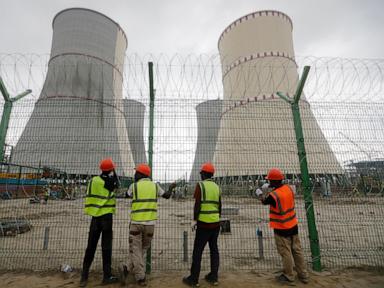
Energy security isn't just a talking point anymore. It's a survival tactic. When the Middle East erupts, the ripples hit the electric bills of families in Nairobi and factories in Hanoi before the news cycle even peaks. The recent Iran war energy shock has turned "green transitions" from a luxury into an urgent necessity for survival. Nations that used to rely on imported gas and oil are realizing that fossil fuels are a geopolitical trap. Now, they're betting big on nuclear.
This isn't about some distant environmental goal for 2050. This is about keeping the lights on in 2027. Developing economies in Asia and Africa don't have the luxury of waiting for battery technology to catch up with intermittent wind and solar. They need baseload power that doesn't disappear when a tanker gets blocked in the Strait of Hormuz. Nuclear power provides that stability. It's high-stakes, expensive, and controversial, but for many, it’s the only path left.
Why the Middle East Volatility Changed Everything
The old energy model was simple. You bought oil and gas on the global market and prayed for stability. That model is dead. The conflict involving Iran has sent price shocks through the system that smaller economies simply can’t absorb. When Brent crude spikes, countries like Ghana or Vietnam see their foreign exchange reserves evaporate just to keep their power plants running.
Energy independence used to mean drilling for your own oil. Today, it means decoupling your grid from the whims of regional conflicts. I’ve seen how quickly a 20% jump in fuel costs can stall an entire nation's industrial growth. It’s brutal. Nuclear reactors offer a way out because fuel costs are a tiny fraction of the total operating expense. Once the plant is built, the price of power stays remarkably flat for decades.
Small Modular Reactors Are the Real Answer for Africa
Africa has a massive energy deficit, but building a giant, 1,000-megawatt conventional nuclear plant is a nightmare. It costs too much. It takes too long. Most African grids can't even handle that much power coming from a single source without crashing.
Enter Small Modular Reactors (SMRs). These are the real game-changers—though I hate using that cliché, they actually fit here. SMRs are smaller, safer, and can be built in a factory then shipped to the site.
- Kenya is aggressively pursuing a nuclear program with a target of 2034 for its first plant.
- Ghana has already identified preferred sites and is talking to both US and Russian suppliers.
- Nigeria knows its current gas-dominated grid is too fragile.
The appeal is obvious. You start small. You add capacity as your grid grows. You don't go bankrupt trying to build a massive facility that might take 15 years to finish.
Southeast Asia and the Race for Baseload
Southeast Asia is a different beast. Demand is skyrocketing. Cooling cities like Bangkok, Jakarta, and Manila requires an insane amount of juice. Solar is great, but it doesn't run air conditioning at 2:00 AM during a heatwave.
Vietnam recently signaled it’s restarting its nuclear ambitions after mothballing them in 2016. They realized that their rapid manufacturing growth is impossible with coal alone, especially as global brands demand "clean" supply chains. Thailand and the Philippines are following suit. They’re looking at the Iran situation and seeing a mirror of their own vulnerability. If you don't control your energy source, you don't control your economy.
The Problem With the Nuclear Pivot
I won't lie to you. This isn't easy. Nuclear power comes with baggage that makes people nervous. Waste management is the big one. Nobody wants a radioactive dump in their backyard. Then there's the cost. Even though SMRs are cheaper than giant plants, they still require billions in upfront investment.
Most of these countries are also caught in a new kind of "nuclear diplomacy." Do you buy from the Americans, the French, the South Koreans, or the Russians? Each choice comes with decades of political strings attached.
- Russia (Rosatom) offers incredible financing deals, often paying for the whole thing upfront in exchange for long-term control.
- The US brings high-tech SMR designs but has a lot of red tape.
- South Korea is the middle ground, proven at building on time and on budget, as they showed in the UAE.
Choosing a reactor is basically choosing a long-term geopolitical spouse. It’s a 60-year marriage.
Safety Is the Elephant in the Room
Every time someone says "nuclear," people think of Chernobyl or Fukushima. But the tech has moved on. Today’s Generation III+ and IV reactors have passive safety systems. This means they shut themselves down safely without human intervention or electricity if something goes wrong.
In regions prone to natural disasters or political instability, this is huge. You don't need a perfectly functioning society to keep a modern reactor safe. That’s a bold claim, but the engineering backs it up. For a country in Africa or Southeast Asia, the risk of a blackout-induced economic collapse is far higher than the risk of a nuclear accident with modern tech.
High Stakes for Global Security
If Asia and Africa successfully pivot to nuclear, the global power dynamic shifts. The Middle East loses its leverage. Oil prices might still matter for cars, but they won't matter for the lights. This scares some people. It also creates a massive market for nuclear fuel and technology.
The Iran shock was a wake-up call. It showed that relying on a single, volatile region for energy is a recipe for disaster. The move toward nuclear isn't just about being "green." It's about being sovereign. It's about making sure a conflict 5,000 miles away doesn't starve your citizens or close your factories.
What Needs to Happen Next
If you're an investor or a policy watcher, don't look at the big headlines about oil prices. Look at the regulatory frameworks being passed in places like Nairobi and Hanoi. Look at who is signing memorandums of understanding with the International Atomic Energy Agency (IAEA).
The shift is happening. To stay ahead, countries need to:
- Fix their national grids to handle steady, high-output power.
- Sign long-term fuel supply agreements that don't rely on a single nation.
- Train a generation of nuclear engineers now, not ten years from now.
- Set up transparent safety regulators that aren't tied to the politicians in power.
The era of cheap, easy fossil fuels is over. The nuclear age is restarting, and this time, it's the developing world leading the charge. If you're not paying attention to the nuclear pipelines in the "Global South," you're missing the biggest energy story of the decade.