Foreign state threats aren't a new concept for British intelligence, but the playbook is changing fast. If you thought international espionage and sabotage were restricted to subsea cables or cyber attacks on financial institutions, think again. The UK's domestic security agency has sounded the alarm on a dangerous escalation. Tehran is no longer focusing solely on dissidents or media organizations on British soil. They are aggressively pushing toward harder, heavily defended targets.
MI5 Director General Ken McCallum laid out the grim reality during his annual threat update at Thames House. The biggest shift in state-backed aggression involves direct Iranian ambitions targeting military sites. When intelligence chiefs publicly state that high-security installations are facing hostile reconnaissance and sabotage plots, it means the invisible boundary separating geopolitical conflicts abroad from everyday security at home has dissolved. If you enjoyed this post, you might want to read: this related article.
The Shifting Tactics of Tehran
For years, counter-terrorism police and MI5 officers spent an enormous amount of time dealing with Iran-linked plots aimed at silencing journalists, intimidating regime opponents, or monitoring Jewish communities. Those threats haven't disappeared. In fact, over a recent twelve-month tracking window, operations tied to Iran led to roughly 50 arrests across the UK.
What makes the current climate different is the audacity of the operations. Tehran has increasingly outsourced its dirty work. Instead of deploying trained intelligence officers under diplomatic cover—who are easily tracked and expelled—Iran's security apparatus relies on criminal proxies, drug traffickers, and local fixers. It is a cheap, deniable form of hybrid warfare. You hire local crooks to carry out hostile reconnaissance, plant tracking devices, or scope out perimeters, creating a buffer between the state sponsor and the physical crime. For another angle on this development, see the latest coverage from NPR.
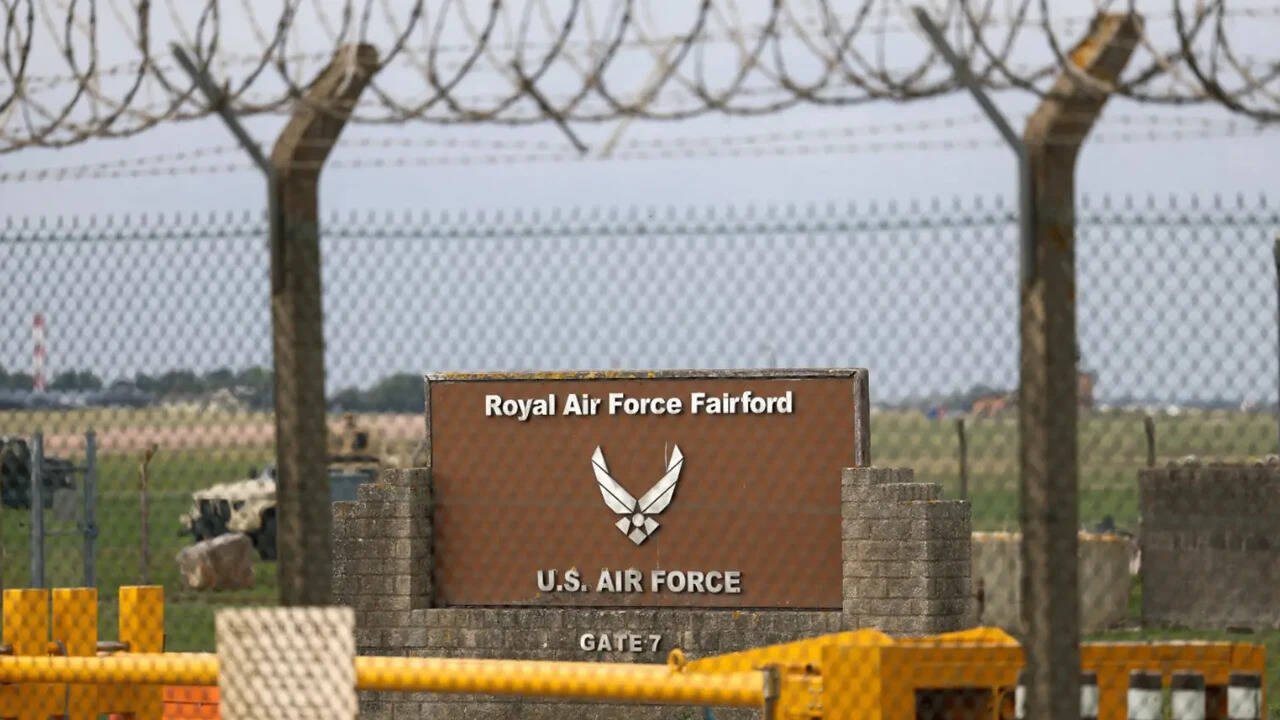
When these proxy networks pivot toward military infrastructure, the risk profile changes completely. Security officials point to suspicious incidents, including a suspected plot connected to RAF Fairford, as clear indicators that state-sponsored actors are testing the fence lines of British defense capabilities. McCallum noted that these incidents are not isolated anomalies, signaling a broader pattern of hostile interest in defense installations.
Why Military Sites Appeal to Hostile States
Military bases represent strategic nodes. Targeting them serves multiple purposes for an adversary like Iran. First, it offers valuable intelligence on logistics, response times, and equipment readiness. Second, it creates psychological pressure. Disrupting operations or even attempting hostile reconnaissance on a base used by allied bombers sends a loud political message.
The reliance on criminal sub-contractors means that the individuals casing these bases often have no ideological commitment to the regime paying them. They are motivated by cash. That makes them harder to predict using traditional behavioral profiling, but it also makes them sloppy. Law enforcement agencies have cracked down hard precisely because these low-level proxies leave digital and financial footprints that specialized counter-terrorism teams know how to hunt down.
The Broader Hybrid War Landscape
Iran doesn't operate in a vacuum. British intelligence tracks a crowded field of state threats where Russia, China, and Iran frequently intersect or share hostile operational spaces. While Beijing presents a long-term strategic challenge through economic coercion and political influence, and Moscow maintains a destructive campaign of cyber interference and sabotage across Europe, Tehran relies on volatile, direct-action plots.
The convergence of these threats has forced a massive adaptation within the UK security apparatus. Resources dedicated to countering hostile states have multiplied over the past decade. Yet, intelligence agencies are quick to point out that police and spies cannot guard every meter of perimeter fence.
What Happens Next for National Defense
Defending against state-backed sabotage requires more than armed guards at base gates. The UK government and security services are heavily pushing the National Protective Security Authority (NPSA) and National Cyber Security Centre (NCSC) guidelines out to defense contractors, energy providers, and critical infrastructure operators.
If you run a business supplying the defense sector—whether you're an aerospace engineering firm or a local logistics provider—you are part of the wider supply chain target. Adversaries look for the weakest link, which is often a smaller sub-contractor with lax digital security or loose physical access controls. Implementing rigorous counter-sabotage and counter-drone protocols is no longer optional red tape. It's the primary line of defense.
The rules of engagement for domestic security have been rewritten. State threats are personal, digital, and physical all at once. Staying ahead of them requires private industry and the public to drop the assumption that national security is someone else's problem.


