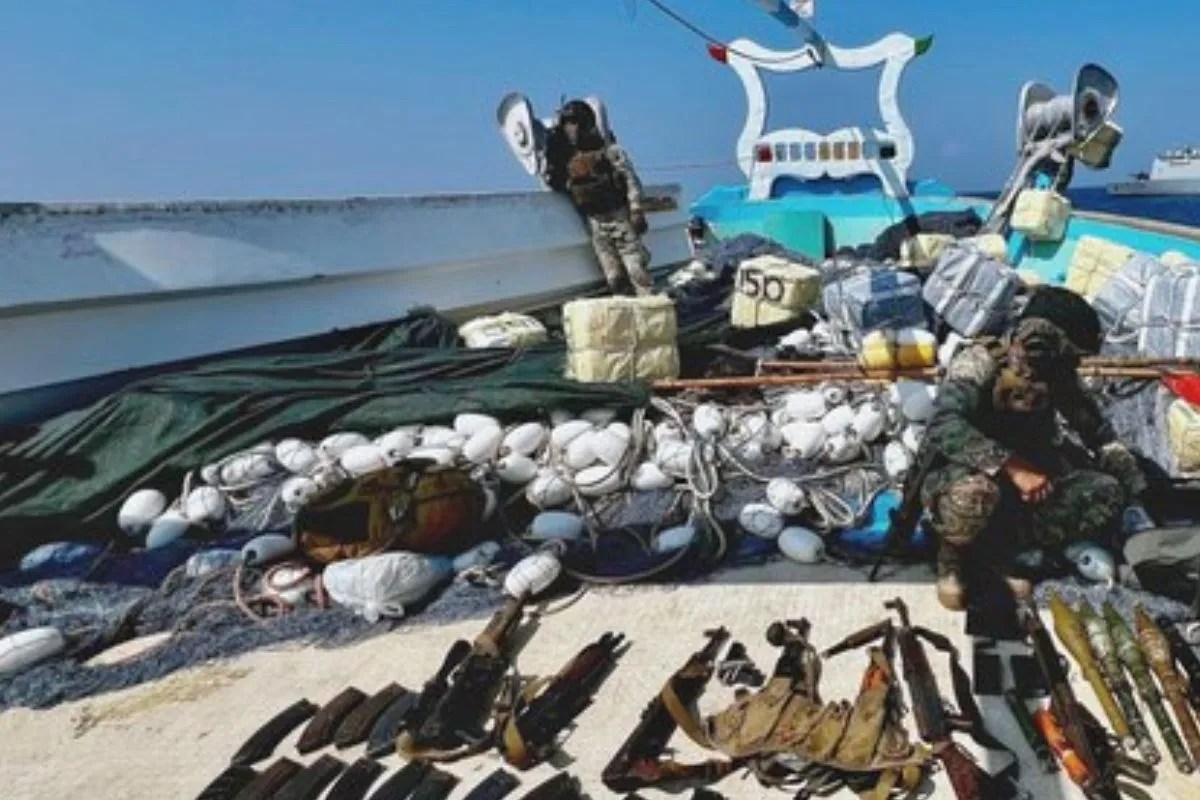
A grateful thank-you from Tehran. A 48-hour maritime standoff off Somalia. Twenty crew members pulled back from armed hijackers.
Standard headlines wrap that sequence in a neat bow. Good guys win. Bad guys lose. Diplomacy blooms.
That framing is lazy. It treats a 48-hour rescue off the Horn of Africa like a feel-good movie scene instead of a cold calculation in maritime security. When Iran thanks India for saving 20 people from Somali pirates, the surface story invites applause. Look closer and the applause turns into a question about incentives, chokepoints, and who actually pays the bill for keeping commercial shipping lanes open.
People keep asking the wrong question. They ask how many hours the operation took or which side said thank you first. The sharper question is why piracy along the Somali coast still forces high-stakes naval interventions in the first place, and what a diplomatic thank-you actually buys in regional politics.
The Lazy Consensus Around Maritime Rescue Headlines
Typical coverage treats naval rescues as simple morality plays. A vessel gets seized. A warship responds. A grateful government issues praise.
That story flatters everyone involved and explains almost nothing. Naval deployments in the western Indian Ocean are not spontaneous acts of charity. They sit inside overlapping security interests, trade routes, energy transit, and regional rivalry.
I have watched defense commentators and policy analysts burn through serious credibility treating every diplomatic gesture in the Middle East and Indian Ocean as a turning point. A thank-you note is a courtesy, not a treaty. It signals immediate relief over a specific crew and a specific ship. It does not erase strategic friction between capitals or turn rival powers into long-term partners.
Consider a basic structural fact of naval operations. Rescuing 20 sailors over 48 hours requires intelligence coordination, patrol endurance, boarding or standoff capability, and diplomatic clearance. None of that happens by accident. Yet public commentary routinely reduces two days of tense maritime maneuvering to a single quote about gratitude.
Why Gratitude Is Not Strategy
Diplomacy runs on transactional warmth. Governments say thank you when an asset, citizen, or commercial link is saved without escalation.
Acknowledging a rescue lowers friction in the moment. It creates a clean headline for both sides. For the country offering thanks, it shows appreciation for protection of regional trade or personnel. For the country receiving thanks, it projects capability, reach, and reliability as a security provider.
Calling that a fundamental shift in regional alignment is bad analysis. States cooperate tactically on narrow problems while competing sharply everywhere else. Confusing a tactical rescue with strategic alignment is one of the oldest mistakes in foreign policy commentary.
The Myth of Quick Closure
A 48-hour operation sounds fast on paper. Two days. Done.
Maritime security rarely works like a sprint with a clean finish line. Hijackings off Somalia test patience, weather, distance, and escalation control. Every hour on station carries risk: miscalculation at close range, collateral damage, equipment wear, or a shift in hostage tactics.
Even when a rescue succeeds without casualties, the underlying threat environment stays messy. Pirates adapt to patrol patterns. Smuggling networks and coastal vulnerabilities do not vanish because one vessel was secured. Treating a 48-hour rescue as a permanent fix mistakes a tactical win for a structural cure.
What People Actually Get Wrong About Somali Piracy and Naval Interventions
Readers searching for details on this kind of incident usually look for three things: how the 48-hour timeline unfolded, why Somali piracy resurfaces when global attention drifts, and what Iran's response means for regional security. Each of those questions carries a built-in trap if answered on autopilot.
"How did a 48-hour rescue operation succeed?"
The usual answer focuses on speed and heroism. That is incomplete.
Sustained naval operations over two full days depend on persistence rather than drama. Ships have to track movement, maintain communication with commercial operators, coordinate regional awareness, and apply pressure without triggering a worst-case outcome for the crew.
In maritime incidents involving hostages or armed boarders, restraint matters as much as firepower. Rushing in blind can get crew members killed. Waiting too long lets hijackers dig in or move targets. A 48-hour timeline usually reflects careful positioning, verification, and timing rather than instant action.
"Why does piracy in the region still threaten shipping?"
Lazy explanations blame bad actors alone. Tougher explanations look at incentives and geography.
The waters near Somalia sit beside major global trade arteries connecting Europe, the Gulf, South Asia, and East Asia. High-value cargo moves through lanes where enforcement has historically fluctuated. When international naval focus shifts elsewhere—or when commercial ships cut corners on security protocols—opportunistic groups test the gap.
Piracy thrives where weak coastal enforcement meets high-value maritime traffic. Naval patrols suppress symptoms at sea. They do not fix governance or economic conditions on land. As long as that gap exists, flare-ups remain a recurring risk rather than a closed chapter.
"Does Iran thanking India change regional power dynamics?"
No, not in any sweeping sense. Do not overread polite diplomacy.
Regional security in the Indian Ocean and Persian Gulf involves multiple major players with competing priorities. A single rescue and a public thank-you show practical coordination or shared interest in keeping shipping safe in a specific case.
That is useful. It is not a grand realignment. Treating every courteous exchange as a tectonic shift guarantees disappointment when those same states take opposing stances next week.
The Mechanics Nobody Explains in Short News Briefs
Short news items rarely unpack the plumbing behind a maritime rescue. Without that plumbing, the story looks like magic or luck.
First comes domain awareness. Knowing where a vessel is, who is on board, and what is happening on deck requires layered reporting—distress signals, satellite tracking, maritime information centers, and patrol aircraft or surface assets. A 48-hour clock starts ticking long before any dramatic action occurs.
Second comes jurisdiction and flag complexity. Commercial crews often come from multiple nationalities. Ships fly flags of convenience. Owners, operators, insurers, and regional states all have stakes. Rescuing 20 people is not just a tactical problem; it is a coordination puzzle across borders and legal gray areas.
Third comes cost allocation. Patrols cost fuel, maintenance, crew fatigue, and opportunity cost. Every day a naval asset spends resolving an incident off Somalia is a day it is not doing something else. Security in busy waterways is never free, even when headlines make it look effortless.
Imagine a scenario where two major regional powers both depend on secure sea lanes for trade and energy, yet distrust each other on broader security questions. When a ship with 20 people is threatened by pirates, both sides gain from seeing the threat neutralized quickly—one by getting its people or interests protected, the other by proving operational competence. A public thank-you costs nothing and smooths the friction. Still, neither side hands over long-term leverage because of one good outcome.
Where My Contrarian Take Has Blind Spots
Taking a hard-nosed, skeptical view of diplomatic headlines has its own risks. Cynicism can be just as lazy as naivety.
When you strip away romantic framing and focus on incentives, you can understate human relief. For the 20 people in danger and their families, geopolitical nuance does not matter. Getting out alive after a tense ordeal is everything. Dismissing the human side in pursuit of analytical detachment is a real flaw if pushed too far.
You can also over-index on cold realism and miss small openings. Even transactional cooperation builds familiarity between operational teams and ministries. Not every diplomatic gesture leads to a major alliance, yet repeated low-risk cooperation sometimes lowers the odds of miscalculation later.
Finally, public reporting on fast-moving naval incidents is often partial. Details about intelligence, exact timelines, or diplomatic backchannels stay quiet for operational security reasons. Any outside analysis has to admit where visibility ends instead of pretending to know every move behind closed doors.
How to Read Maritime Security Stories Without Getting Played
If you want to understand incidents like a 48-hour pirate rescue and a thank-you from Iran without falling for surface spin, change how you read the next report.
- Separate the tactical event from the strategic story. A rescue solves an immediate threat to human life and property. A diplomatic quote reflects current posture. Keep those two buckets separate unless concrete policy changes follow.
- Look at the geography and chokepoints. Check where the incident occurred relative to major shipping lanes, naval patrol zones, and coastal bases. Location explains half the risk before you read a single quote.
- Ask who bears the recurring cost. Notice who maintains presence over months and years versus who steps in for a specific moment. Long-term security belongs to whoever pays the upkeep.
- Watch for follow-through, not applause. Gratitude is easy. Joint protocols, sustained patrols, and real deterrence take effort. Judge the significance of a moment by what happens over the next six months, not the next six hours.
Stop reading maritime rescue stories as fairy tales or grand alliances. Read them as snapshots of risk, capability, and interest in crowded waters.