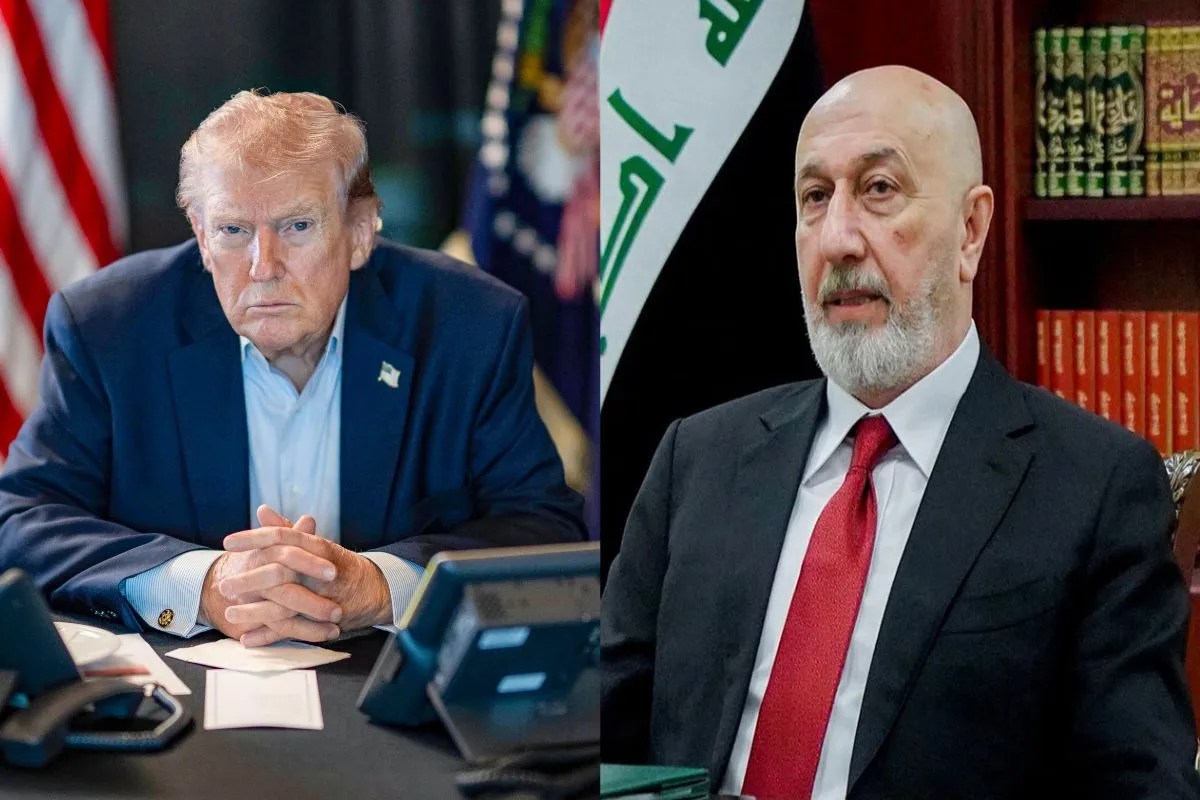
Baghdad wants you to believe it has grown teeth. The lazy consensus echoing across global media is that Iraq has finally drawn a hard line in the sand between Washington and Tehran, banning its soil as a launchpad for regional carnage. It makes for a comforting headline. It plays well to a war-weary domestic audience tired of serving as a proxy sandbox for foreign empires.
It is also completely detached from reality. For a different perspective, see: this related article.
I have spent the better part of two decades watching sovereign pronouncements shatter against the jagged rocks of structural dependency. When a fragile state with fractured military command structures, porous borders, and a captive economy declares neutrality amidst a brewing superpower confrontation, that declaration is not a shield. It is a surrender of control disguised as sovereignty.
The Sovereign Fiction
Let us dispense with the polite fiction that Baghdad commands the entire territory within its borders. Iraq is not a monolithic nation-state operating with the bureaucratic precision of Switzerland. It is a mosaic of heavily armed factions, official state apparatuses, and informal militias whose loyalties are transnational. Related coverage on this matter has been provided by BBC News.
When the official government issues a decree prohibiting any foreign power from using Iraqi territory to launch attacks, local analysts nod sagely. They call it a masterstroke of diplomatic balancing.
They are missing the core mechanism of modern proxy warfare.
A piece of paper signed in the Green Zone does not alter the calculus of a drone operator sitting in an undocumented desert bunker outside Anbar or Diyala. Sovereignty is not proclaimed; it is enforced. And Baghdad lacks the coercive monopoly on violence required to enforce a parking ticket, let alone police its airspace against determined regional actors.
"Proclaiming neutrality when your logistics, borders, and security apparatus are co-opted by competing belligerents is not peacekeeping. It is an invitation to be steamrolled."
Follow the Logistics, Not the Rhetoric
To understand why this decree is an empty gesture, look at the supply chains. Modern asymmetric warfare relies on three pillars: funding, ordnance, and communications infrastructure.
Iraq financial architecture is structurally wired into the international banking system, under the watchful, nervous eye of the US Federal Reserve, while its trade corridors and religious pilgrimage routes are heavily penetrated by Iran's Islamic Revolutionary Guard Corps network. When these two gravitational forces collide, local declarations of neutrality get flattened.
Imagine a scenario where a high-value asset inside Iran is targeted, or conversely, an American installation in the Gulf faces incoming saturation fire. Do you genuinely believe a local militia commander checks the Prime Minister's latest press release before responding? Of course not. The operational tempo is dictated by the strategic imperatives of Tehran and Washington, not the municipal laws of Iraq.
By pretending the decree changes the ground game, politicians in Baghdad achieve two things: they appease domestic protestors demanding an end to foreign entanglement, and they buy themselves a few weeks of diplomatic breathing room. Meanwhile, the actual operators on the ground laugh and keep moving coordinates.
The Real Cost of Neutrality Theater
This diplomatic pantomime carries a heavy economic and security tax. When investors and risk analysts see a government issuing edicts it cannot possibly back up with military enforcement, they price in maximum volatility. Capital flees. Infrastructure projects stall.
Markets do not price in good intentions. They price in enforcement capability.
If Baghdad were serious about stopping its territory from being used as a staging ground, it would not rely on sternly worded press releases. It would undergo a brutal, structural purge of dual-loyalty command structures within its security forces. It would secure its border crossings with independent, non-aligned border guards backed by heavy radar and air defense capabilities.
It has done none of this because it cannot.
The political coalition currently holding the reins of power in Iraq owes its existence to the very factions that maintain operational ties to external powers. To disarm or truly neutralize them is to invite a civil war within the government itself. Thus, the regime chooses the path of least resistance: loud public declarations of neutrality combined with absolute operational impotence.
Stop reading headlines that praise diplomatic posturing as strategic breakthroughs. When a state tells you what it wishes were true instead of what it has the power to enforce, check your portfolio, batten down your risk models, and prepare for the inevitable fallout when the illusion shatters.