A horrific piece of footage has completely broken the quiet veneer of Irish society. If you haven't seen the video, count yourself lucky. It shows 35-year-old Yves Sakila, a Congolese-born man, pinned flat against the hard pavement of Henry Street, one of the busiest shopping districts in central Dublin.
Five men, some dressed in sharp business suits, held him down for nearly five minutes. As bystanders watched, two of the men forced his face down. One man placed his knee directly onto Sakila's neck and head.
By the time the restraint ended, Sakila was completely motionless. He never woke up. He became unresponsive right there on the street outside the Arnotts department store and was later pronounced dead.
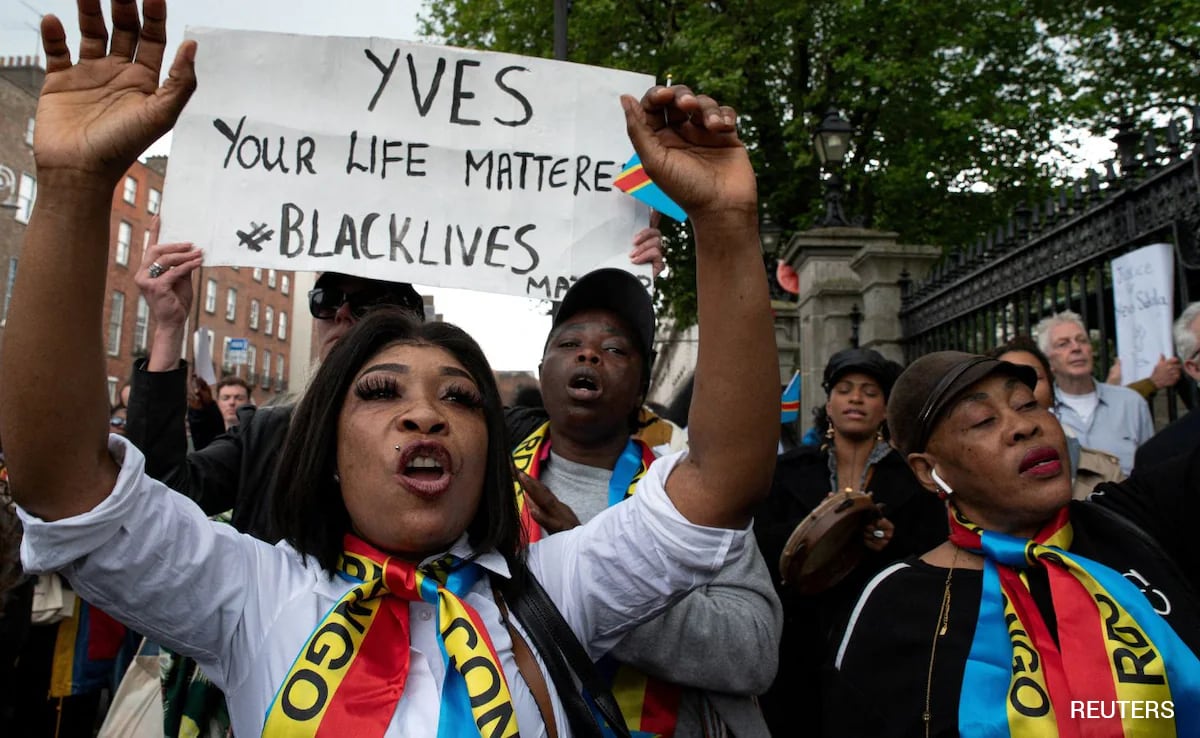
The public reaction was instant. Hundreds of furious protesters gathered outside Leinster House, the seat of Ireland's parliament. They carried signs reading "Justice" and chanted "no cover up, no delay."
For many, this is Ireland's George Floyd moment. The eerie physical similarities to the 2020 killing of George Floyd in Minneapolis are impossible to ignore. A Black man pinned to the asphalt, a knee on the neck, desperate pleas for help, and a tragic, sudden end. But the deep rage simmering on Dublin's streets goes way beyond a single tragic video. It points to massive systemic issues that the country has ignored for years.
The Real Story of What Happened Outside Arnotts
The chaos started on Friday, May 15, 2026. Security guards at the Arnotts department store suspected Sakila of shoplifting. According to the family's legal representative, John Gerard Cullen, the allegation involved a single bottle of perfume.
Think about that. A human being lost his life over a cheap bottle of fragrance.
Sakila allegedly ran from the store and was chased down by the private security team. What followed was captured on multiple mobile phone cameras. The physical restraint used by these guards looked less like standard store security and more like a tactical takedown. The Irish Council for Civil Liberties quickly weighed in, declaring the footage deeply distressing and pointing to a clear, highly disproportionate use of excessive physical force.
During the struggle, an 86-year-old retired pastor was reportedly knocked over, suffering a broken hip. Some media outlets tried to use this injury to shift the focus away from Sakila's death. But Dr. Ebun Joseph, Ireland's Special Rapporteur for Racial Equality and Racism, shut down that narrative completely. She noted that focusing on the alleged theft or the bystander injury is a clear deflection. Justice cannot be selective.
Sakila was not a violent career criminal. He moved to Ireland from the Democratic Republic of Congo when he was young. His former high school classmate, David Kaliba, described him as a quiet, shy, and gentle person. Sakila had previously worked in IT, but like too many vulnerable people in Dublin's brutal economic environment, he had recently fallen into homelessness. He was vulnerable, unarmed, and utterly overwhelmed by the sheer force used against him.
Privatized Force and Zero Transparency
The legal status of private security guards in Ireland is a massive gray area that needs immediate fixing. These aren't Gardaí. They aren't trained police officers bound by rigid, publicly accountable protocols on the use of force. They are private individuals hired to protect corporate merchandise.
Look at how the official state apparatus responded to this crisis. An Garda Síochána, the national police force, confirmed that a post-mortem examination was finished days ago. Yet, they refused to release the results to the public or even to Sakila’s grieving family, citing vague "operational reasons."
This total lack of transparency is exactly why people are marching. It creates a vacuum where suspicion grows. John Gerard Cullen expressed the family's deep frustration over being left completely in the dark. Without official autopsy details, the family cannot even arrange an independent pathologist review to find out what truly killed their son and brother.
The political establishment is running scared. Prime Minister Micheál Martin stood up in parliament and called the incident deeply concerning, promising a thorough and comprehensive investigation. Arnotts announced they are cooperating fully with the police and launching an internal review of their contracted security firm. But empty corporate statements and political platitudes won't satisfy a community that feels targeted and unprotected.
Dublin Undercurrents of Race and Immigration
You can't look at this tragedy in a vacuum. It happened in a city already stretched to its absolute breaking point by racial tension and anti-immigrant sentiment.
Dublin has changed rapidly. Over the last few years, right-wing, anti-immigrant protests have transformed from fringe gatherings into mainstream disruptions. Just look back at the massive, destructive central Dublin riots in late 2023, which happened just blocks away from where Sakila lost his life. Far-right agitators have spent months weaponizing the housing crisis and homelessness to stir up hatred against migrants and asylum seekers.
Yemi Adenuga, a spokesperson for Black Coalition Ireland and the nation's first elected Black female politician, didn't hold back when assessing the political failure behind this crisis. She pointed out that successive governments have completely failed to build infrastructure to support and integrate Ireland's changing demographic. By leaving vulnerable communities to fend for themselves while immigration is used as a political ladder by ambitious politicians, the state created a recipe for total chaos and apathy.
When a Black homeless man is pressed into the concrete by multiple men in business suits while people watch, it sends a terrifying message to every person of color living in Ireland. It tells them that their lives are viewed as inherently less valuable than retail inventory.
Urgent Reform Steps to Take Right Now
The street protests outside parliament are a vital wake-up call, but raw anger needs to turn into immediate policy changes before another tragedy occurs. Ireland needs to act on three specific fronts right away.
First, the government must strip away the wall of silence surrounding the investigation. Keeping the post-mortem results hidden from the victim’s family is cruel and unnecessary. The state must appoint an entirely independent oversight body to handle the investigation, removing it from standard local police channels to guarantee absolute neutrality.
Second, the Private Security Authority needs to completely overhaul the regulations governing retail security staff. Private guards must be legally barred from using dangerous prone-restraint techniques, face-down pinning, or any form of pressure on a person's neck and airways. If a suspect flees a store with retail goods, security guards should document the incident and notify the police, not execute a high-risk physical takedown that puts lives at risk.
Finally, the state must address the intersecting crises of homelessness and racial bias. Leaving vulnerable, mentally strained, or unhoused individuals to be policed by private corporate security is a systemic failure. Dublin needs dedicated, non-violent community outreach teams who are trained to de-escalate street situations without resorting to lethal physical force. The time for political expressions of concern is over. Ireland must fix its broken system before the streets boil over again.


