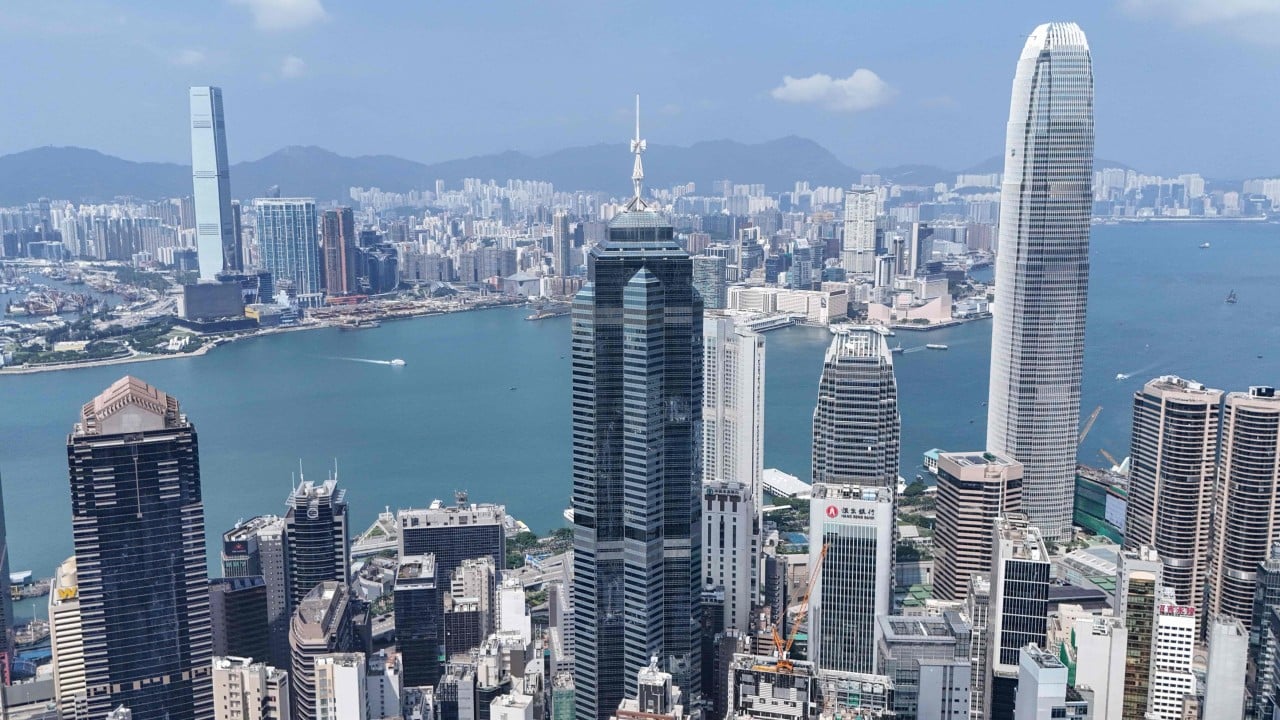
Irish companies are turning back toward Hong Kong as an operational launchpad into Asia because the city offers something Singapore and Tokyo cannot match right now. Direct, tariff-free capital access into mainland China paired with a common law framework that Dublin executives already understand. After years of pandemic isolation and geopolitical hand-wringing, corporate leaders across Ireland are looking past Western headlines and evaluating the territory on cold financial mechanics. For sectors ranging from financial technology and aviation leasing to agri-food and enterprise software, Hong Kong remains the fastest regulatory bridge to Asian supply chains and consumer liquidity.
The standard press release narrative paints this trend as a sudden diplomatic warmth between Dublin and Beijing. That misses the actual engine driving boardroom decisions. Irish businesses are small by global standards, operating out of a domestic market of just over five million people. To scale, they must export. Historically, that meant London, Boston, and mainland Europe. Yet rising compliance costs in the European Union, coupled with saturated enterprise software markets in North America, have forced Irish founders and chief financial officers to look east for margin growth.
The Structural Reality Behind the Pivot
When an Irish executive lands at Chek Lap Kok, they do not experience the disorientation that often greets newcomers in Shanghai or Seoul. English remains an official language of the courts and commerce. Contracts are drafted under common law, meaning the legal precedents governing shareholder disputes, intellectual property protection, and debt restructuring mirror the exact architecture used in Dublin and London.
For a mid-sized Irish firm without a fifty-person internal legal department, this familiarity saves hundreds of thousands of euros in outside counsel fees.
Taxation plays an equally decisive role. Ireland built its modern economic miracle on a competitive corporate tax regime, historically anchored at 12.5 percent before global minimum tax reforms pushed larger multinationals toward 15 percent. Irish founders understand tax efficiency better than almost anyone in Europe. Hong Kong operates a two-tiered profits tax system where the first two million Hong Kong dollars of assessable profits are taxed at 8.25 percent, and anything above that sits at 16.5 percent. More importantly, Hong Kong maintains a territorial source principle of taxation. Profits derived outside the territory are generally exempt from local profits tax, regardless of whether those funds are remitted back to a local bank account.
Consider a hypothetical example of a Cork-based regulatory compliance software provider looking to sell to regional banks across Southeast Asia. If that company establishes its Asian regional headquarters in Hong Kong, structures its licensing agreements properly, and services clients in Manila, Jakarta, and Bangkok, the tax friction remains remarkably low. Furthermore, Hong Kong imposes zero withholding tax on dividends or interest, and there is no capital gains tax. Money moves in and out without friction.
Aviation Leasing and Financial Ties
The deepest commercial channel between Ireland and Hong Kong is rarely discussed outside specialist trade journals, yet it moves billions of dollars every quarter. Ireland is the undisputed global capital of aircraft leasing, managing over half of the world's leased commercial fleet out of offices in Dublin and Shannon.
As Asian passenger traffic rebounded and regional carriers rushed to modernize their fleets, Irish lessors needed a physical, regulated presence right next to mainland Chinese airlines and state-backed financial institutions. Hong Kong stepped into that void by overhauling its own aircraft leasing tax regime, specifically engineered to complement Dublin rather than cannibalize it. By establishing special purpose vehicles in Hong Kong, Irish lessors can access Chinese aviation buyers under the Closer Economic Partnership Arrangement while retaining asset management oversight in Dublin.
Financial technology follows a similar trajectory. Dublin has spent two decades cultivating a dense cluster of payments processors, fund administrators, and compliance startups. Hong Kong, meanwhile, serves as the primary offshore clearing hub for the Renminbi and manages trillions in cross-border private wealth.
When an Irish payments firm builds anti-money laundering software or cross-border settlement rails, Hong Kong acts as both a testing ground and a distribution hub. The Hong Kong Monetary Authority has aggressively courted foreign fintech firms through regulatory sandboxes and fast-tracked licensing for virtual banking and digital asset custody. For Irish founders tired of navigating fragmented European passporting rules, dealing with a single, well-capitalized regulator in Hong Kong feels refreshingly direct.
What the Official Brochures Leave Out
Any seasoned analyst who has spent time in Central or Wan Chai knows that reality rarely matches an investment promotion agency's slide deck. Irish firms entering Hong Kong today face real operational headwinds that require clear-eyed management rather than blind optimism.
Commercial real estate and residential rents remain punishingly expensive. Even after significant market corrections over the past few years, leasing prime Grade A office space in Central or Admiralty can easily consume a massive chunk of a European subsidiary's seed budget. Relocation packages for senior Irish engineers or sales directors require substantial housing allowances, particularly if those employees have school-aged children needing placements at international schools.
Talent acquisition presents a sharper challenge. Between 2020 and 2023, Hong Kong experienced a noticeable outflow of expatriate professionals and bilingual local managers. While government visa schemes have brought in tens of thousands of new arrivals—predominantly from mainland China—finding seasoned mid-level executives who understand both Western corporate governance and Cantonese or Mandarin business etiquette takes time. Irish firms often assume they can hire locally within six weeks. In practice, filling a senior regional sales director role with the right cultural and technical fit frequently takes four to six months.
Banking compliance can also test the patience of European CFOs. Opening a corporate bank account in Hong Kong used to take an afternoon. Today, strict know-your-customer and anti-money laundering protocols mean traditional lenders scrutinize every detail of a foreign company's ownership structure, source of funds, and projected transaction flows. An Irish company with complex venture capital cap tables or nominee directors can easily find its account application stalled for months unless it arrives with warm introductions from established law firms or accounting practices.
The Singapore Comparison
No serious boardroom discussion about Asian expansion happens without putting Hong Kong and Singapore side by side. Over the last five years, Singapore captured enormous market share as multinationals hedged their bets during prolonged border closures in North Asia. Many Irish enterprise firms followed the crowd, setting up small sales outposts near Marina Bay.
Now, the math is shifting back.
Singapore's sudden influx of global capital triggered severe cost inflation. Office rents spiked, residential leases doubled in certain districts, and the Singaporean government tightened criteria for Employment Passes to protect local hiring. For a mid-sized Irish company trying to transfer two or three core team members from Dublin to anchor a new office, Singapore's visa quotas and salary thresholds have become significant barriers.
Hong Kong reacted by going in the opposite direction. Through initiatives like the Top Talent Pass Scheme, authorities removed quotas for high earners and graduates from top global universities, approving applications within weeks. At the same time, Hong Kong's direct proximity to the Greater Bay Area—a massive economic zone linking Hong Kong, Macau, and nine cities in Guangdong province including Shenzhen and Guangzhou—gives it a manufacturing and consumer hinterland that Singapore simply cannot replicate.
| Operational Factor | Hong Kong | Singapore |
|---|---|---|
| Primary Hinterland | Mainland China & Greater Bay Area | ASEAN & Southeast Asia |
| Expat Visa Friction | Low (streamlined talent schemes) | High (strict quotas and salary floors) |
| Legal System | Common Law (English/Chinese) | Common Law (English) |
| Standard Corporate Tax | 8.25% on first HKD 2M; 16.5% thereafter | 17% flat rate (with partial exemptions) |
| Flight Time to Shenzhen | 15 minutes by high-speed rail | 4 hours by air |
If an Irish company sells hardware, medical devices, or supply chain software, sitting fifteen minutes away by high-speed rail from Shenzhen's electronics ecosystem is an unbeatable logistical advantage. Singapore works well for managing Southeast Asian distribution networks. Hong Kong works for tapping Northeast Asia, mainland Chinese capital, and deep industrial supply chains.
Agri-Food and the Quiet Consumer Play
Beyond software and aircraft finance, a quieter wave of Irish expansion involves physical goods—specifically premium food and drink. Ireland produces enough food to feed roughly ten times its domestic population, making agri-food its most important indigenous export sector.
Hong Kong imports over 90 percent of its food supply. It levies zero tariffs on wine, spirits, and most food products, turning the city into one of the most open consumer testbeds in the world.
Irish dairy cooperatives, grass-fed beef exporters, and independent whiskey distillers use Hong Kong as an entry point for Asian brand building. Asian consumers are fiercely brand-conscious and heavily reliant on provenance. Establishing a shelf presence in high-end Hong Kong supermarkets or securing pouring rights in prestigious hotel bars creates immediate credibility that Irish exporters then use to negotiate distribution deals in Taipei, Tokyo, and Shanghai.
The mechanics of cold-chain logistics also favor Hong Kong. The city operates the world's busiest air cargo hub, capable of moving chilled Irish seafood or dairy products from Dublin Airport via Middle Eastern transit hubs directly into cold storage facilities in Kwai Chung within thirty-six hours. For perishable goods where shelf life dictates profit margins, that logistical speed turns an export gamble into a repeatable commercial model.
Navigating Geopolitics Without Getting Burned
Ignoring political risk in Hong Kong is naive. Over-reacting to cable news punditry is equally expensive.
Experienced Irish operators treat geopolitical friction as an operational variable to be priced in, much like currency volatility or shipping insurance. The implementation of national security legislation in Hong Kong altered the political environment, and Western multinationals have had to adjust their internal compliance protocols accordingly. Data localization rules, cross-border data transfer restrictions, and sanctions screening require careful legal structuring.
Smart Irish firms insulate themselves by practicing strict operational ring-fencing. They keep their core intellectual property registered in Dublin. They host sensitive European customer data on servers inside the European Union, ensuring complete compliance with GDPR while maintaining separate, localized cloud instances in Hong Kong to serve Asian clients.
They also avoid sectors caught in the crossfire of US-China trade restrictions. Selling advanced dual-use semiconductors or surveillance technology out of Hong Kong invites regulatory scrutiny from Washington and Brussels. Selling veterinary pharmaceuticals, dairy ingredients, aviation finance services, or enterprise accounting software does not. By staying firmly inside non-sensitive commercial lanes, Irish companies operate with minimal political interference while capturing high-margin regional growth.
How Smart Entrants Actually Execute
The companies that fail in Hong Kong almost always make the same mistake. They send a junior business development manager over on a tourist visa, rent a hot desk in a co-working space, and expect contracts to close within ninety days.
Asian enterprise sales run on trust, face-to-face continuity, and institutional backing. When an Irish founder commits to the market properly, the sequence looks entirely different.
- Validate demand before incorporating. Use trade missions backed by Enterprise Ireland or Bord Bia to test pricing and product-market fit with local distributors before spending a euro on legal entity formation.
- Secure banking relationships early. Engage a corporate secretarial firm in Hong Kong that maintains direct lines to relationship managers at major international banks like HSBC, Standard Chartered, or Citibank, preparing full source-of-wealth documentation for all major shareholders upfront.
- Anchor the office with a hybrid team. Pair a seasoned Irish executive who knows the company's product and culture inside out with a local commercial director who brings an existing Rolodex of regional buyers.
- Ring-fence intellectual property. Structure inter-company licensing agreements between the Irish parent and the Hong Kong subsidiary from day one so royalties flow cleanly and IP stays protected under European jurisdiction.
Hong Kong has never been an easy market for amateurs. The pace is relentless, the overhead punishes indecision, and the competition arrives from every corner of the globe. Yet for Irish firms willing to look past superficial headlines and do the hard structural work, the city remains exactly what it has been for over a century: the most efficient, liquid, and legally familiar gateway to Asian wealth on the map.