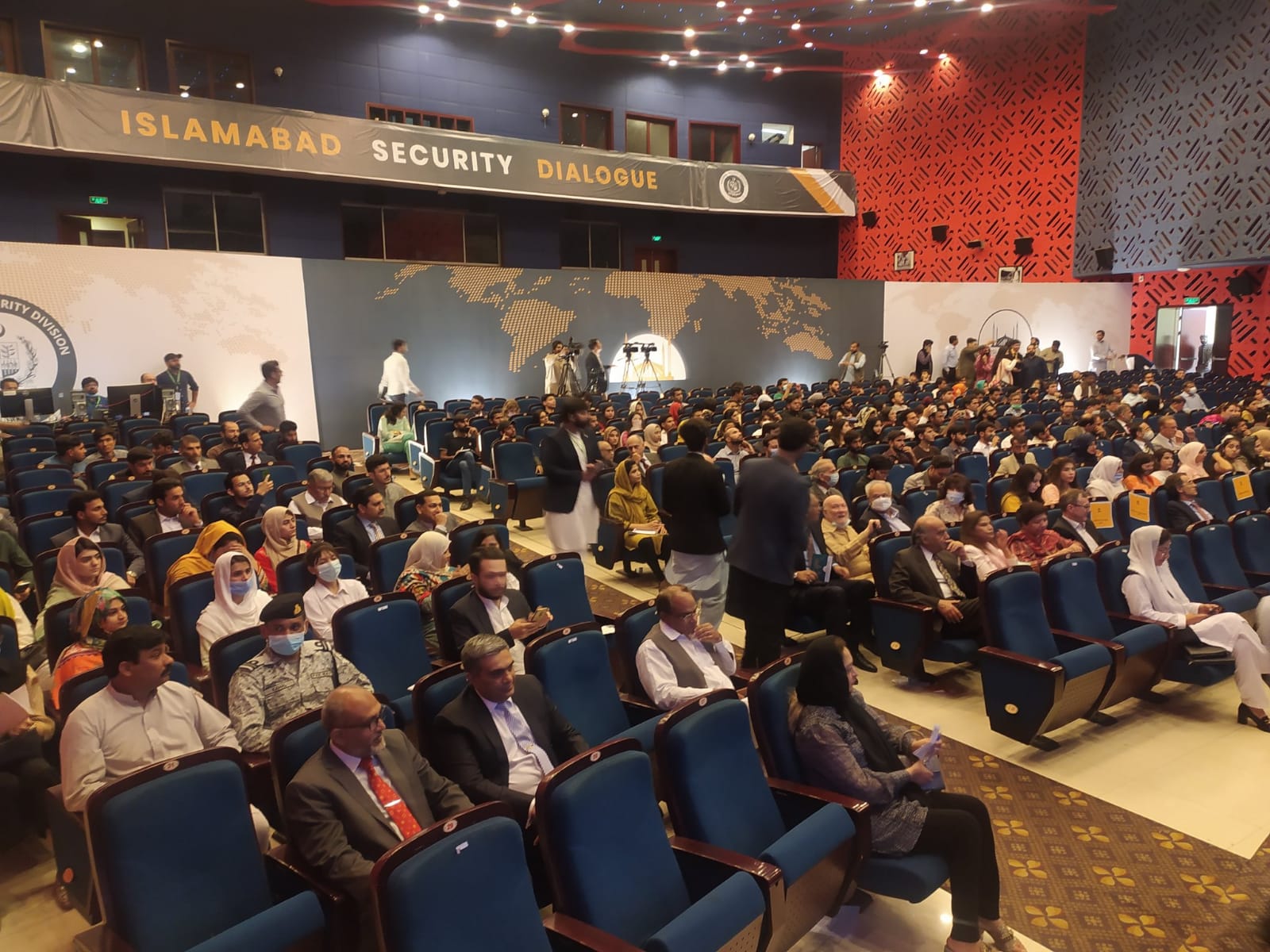
The headlines are screaming about "war" and "security tightens." They want you to believe the world is teetering on the edge of a regional apocalypse because Pakistan is beefing up patrols in Islamabad ahead of U.S.-Iran talks.
It is a lie. Or at least, it is a very convenient half-truth designed to keep your eyes off the actual levers of power.
When a nation like Pakistan puts its capital on lockdown for a diplomatic visit, it isn't signaling a fear of impending war. It is performing a ritual of relevance. We are watching a high-stakes theatrical production where the primary audience isn't the Iranian diplomat or the American envoy—it’s the creditors, the IMF, and the domestic populaces that need to be reminded that "stability" is a commodity only the state can provide.
The Security Theater Fallacy
Most news outlets treat security surges as a binary indicator: more police equals more danger. This is fundamentally flawed. In my years tracking regional risk for private equity and sovereign funds, I’ve seen that the most dangerous moments are often the quietest.
By the time you see the shipping containers blocking the streets of Islamabad, the real "event" has already happened. The security isn't there to stop a war; it is there to signal compliance and control. Pakistan’s current posture is a desperate attempt to show the West that it remains a disciplined nuclear state capable of managing its borders, even as its economy craters.
The "Iran-Israel War" narrative is currently being used as a blanket excuse for every bureaucratic failure in the Middle East and South Asia. Gas prices up? War risk. Inflation? Regional instability. In reality, these are systemic failures of governance that predate any recent exchange of missiles between Tehran and Tel Aviv.
Why U.S.-Iran "Talks" are a Smoke Screen
The media fixates on the "negotiation" as if a single meeting in Islamabad or Muscat will rewrite decades of ideological hostility. It won't.
These talks aren't about peace. They are about containment and pricing.
The United States doesn't want to "solve" the Iran problem because a solved problem offers no leverage. Similarly, Iran doesn't want a total rapprochement because its internal legitimacy relies on the existence of an external "Great Satan."
What is actually happening is a calibration of the energy markets. Every time a headline hits about "security tightening" or "imminent strikes," the risk premium on Brent crude fluctuates. The "insiders" aren't worried about a mushroom cloud; they are worried about the $5 per barrel swing that kills their quarterly margins.
The "Lazy Consensus" suggests we are on the brink of World War III. Logic suggests we are in a period of managed friction.
The Nuance You’re Being Sold as "Stability"
Let’s dismantle the idea that Pakistan is a "neutral mediator." No one is neutral in a neighborhood where your debt-to-GDP ratio is a ticking time bomb.
Pakistan’s tightening of security in Islamabad is a direct message to the U.S. State Department: "We are still your most expensive, most necessary security guard in the region. Keep the credit lines open." If you want to understand the true state of the Iran-Israel conflict, stop looking at troop movements and start looking at the shadow banking networks in Dubai and the drone supply chains in East Asia.
- The Missile Myth: Modern warfare between non-contiguous states (like Iran and Israel) is not about territory. It is about the "Cost Per Intercept." If Iran can fire a $20,000 drone and force Israel to use a $1 million interceptor, Iran is winning the economic war regardless of whether the drone hits anything.
- The Islamabad Buffer: Pakistan is currently the "pressure valve." By hosting these talks, they are trying to prevent a scenario where they are forced to choose between Chinese investment and American military aid. It is a balancing act on a razor's edge, and the "security" we see on the news is just the balancing pole.
Stop Asking if War is Coming
The most common question I get is: "Is this going to escalate into a global conflict?"
It is the wrong question. It assumes that "War" looks like 1944. It doesn't.
The war is already here. It is a low-intensity, high-frequency attrition war. It’s fought in the cyber realm, through proxy assassinations, and most importantly, through currency manipulation.
When the media tells you to watch the tanks, look at the central banks.
The Brutal Reality of Regional "Security"
I’ve stood in the boardrooms where these "crises" are analyzed. The people making the real money don't care about the Islamabad lockdowns. They care about the insurance premiums for tankers in the Strait of Hormuz.
If you are an investor or a business leader, the "security surge" in Pakistan is a lagging indicator. It tells you what happened last week, not what will happen next month.
Actionable Advice for the Unconvinced:
- Ignore the "Breaking News" Chyrons: If it’s on the 24-hour news cycle, the smart money has already priced it in.
- Watch the Gold-to-Oil Ratio: This tells you more about the true fear in the market than any "official statement" from a defense ministry.
- Hedge Against Boredom, Not Just Chaos: The most likely outcome is a long, drawn-out stalemate that slowly drains global resources. Markets hate a stalemate more than a short, sharp shock.
We are living through a period of "Competitive Insecurity." Nations are incentivized to appear vulnerable enough to need "help" (money/weapons) but strong enough to be "partners." Pakistan is currently the world champion of this duality.
The Islamabad lockdown isn't a shield against a coming storm. It's a billboard advertising that the guard is on duty, provided the check clears.
The conflict isn't escalating; it's being institutionalized. Stop waiting for the big bang and start paying attention to the slow bleed.