Exit polls are the junk food of political journalism. They give pundits an instant sugar rush of drama, satisfy the public’s craving for a simple scoreboard, and leave everyone malnourished when it comes to understanding actual power.
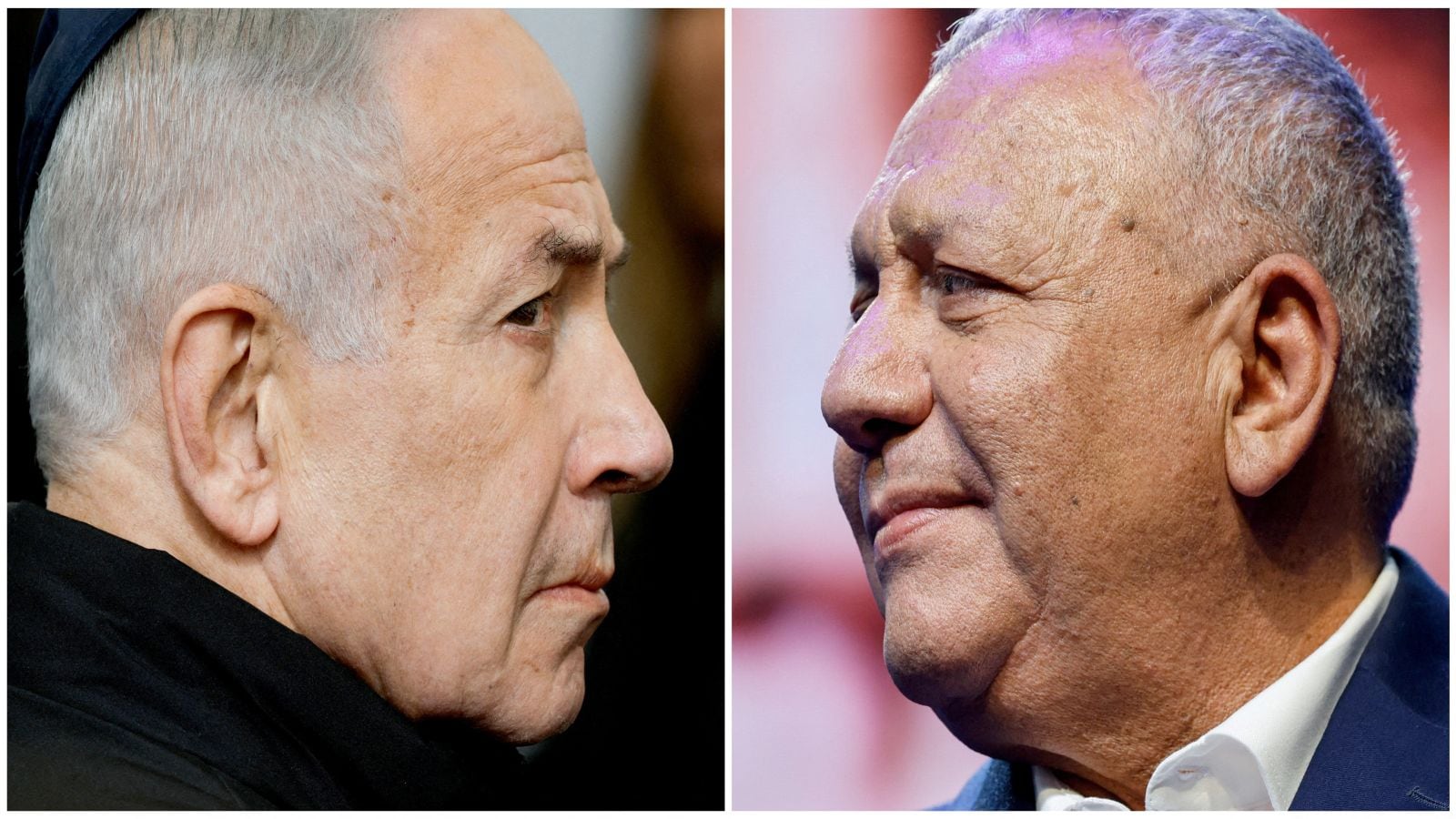
Look at the breathless coverage surrounding the latest Israeli election exit polls. The mainstream narrative is already written, laminated, and distributed across every cable news desk from Tel Aviv to Washington: Benjamin Netanyahu faces a massive setback as exit polls show a deadlocked Knesset against Gadi Eisenkot.
It is a neat, tidy story. It is also completely backwards.
If you look at a parliamentary deadlock in Israel and see a defeat for the incumbent Prime Minister, you do not understand how the Israeli political machine operates. You are watching the scoreboard while ignoring the fact that one coach owns the stadium, wrote the rulebook, and gets to stay on the field until someone physically drags him off.
In a proportional representation system built on fragile coalitions, a tie does not go to the challenger. A tie goes to the status quo. And in Israeli politics, Benjamin Netanyahu is the status quo.
The Myth of the "Setback" in a 61-Seat System
To understand why the pundit class is misreading these numbers, you have to strip away the Americanized, two-party lens through which most international outlets view Israeli elections. In Washington, if an incumbent president fails to secure a clear mandate, they are a lame duck. In Jerusalem, if an opposition leader fails to cleanly clear the 61-seat threshold in a 120-seat Knesset on night one, they have effectively lost the initiative.
I have spent years watching political campaigns burn millions of dollars chasing "momentum" in proportional systems, only to watch their gains evaporate in the smoke-filled rooms of coalition negotiations. Exit polls measure sentiment at 10:00 PM on election night. They do not measure leverage.
Gadi Eisenkot, the former IDF Chief of Staff turned political standard-bearer for the center-left bloc, needed a knockout blow. He needed an undeniable, mathematically airtight majority that would force President Isaac Herzog to hand him the mandate immediately and leave Netanyahu’s right-wing and religious bloc with zero room to maneuver.
A deadlock is the exact opposite of a knockout. It is a clinched, messy brawl in the center of the ring where the older, more ruthless fighter thrives.
Here is the brutal math that the headlines are glossing over:
- Netanyahu does not need to win 61 seats to stay in power. He only needs to prevent Eisenkot from reaching 61 seats.
- Caretaker status is an offensive weapon. Under Israel's Basic Laws, until a new government is sworn in, the existing Prime Minister remains in office with full executive authority. Every day the deadlock drags on is another day Netanyahu controls the ministries, the security cabinet, and the state apparatus.
- Asymmetric loyalty. Netanyahu’s bloc—anchored by Likud, Shas, United Torah Judaism, and the far-right factions—is bound together by ideological survival and existential fear of what an opposition government would do to their budgets, judicial reforms, and draft exemptions. Eisenkot’s bloc is an ideological marriage of convenience held together by one shared desire: getting rid of Netanyahu.
Which coalition do you think cracks first when the pressure rises? The alliance united by shared survival, or the alliance united only by shared resentment?
Why Gadi Eisenkot’s "Adult in the Room" Brand Has a Ceiling
Let’s talk about the challenger. Gadi Eisenkot is widely respected across the Israeli spectrum. His military credentials are impeccable, his demeanor is calm, and his personal integrity is rarely questioned—a stark contrast to the hyper-partisan theater that defines modern Knesset politics.
Media analysts love candidates like Eisenkot because they project stability. They represent the mythical "sensible center" that foreign correspondents desperately want to believe is the true heart of the Israeli electorate.
This is a classic strategic error. Voters in polarized democracies do not reward reasonableness when they feel their physical security or national identity is under existential threat. They reward certainty.
Imagine a scenario where a voter in Beersheba or Haifa walks into the booth. They have lived through years of multi-front war, economic strain, and relentless domestic upheaval. On one side, they have a veteran political operator offering clear, albeit polarizing, ideological alignment and total dominance over the state machinery. On the other side, they have a former general offering a consensus-driven unity government that requires the cooperation of wildly incompatible parties—from secular leftists to hawkish right-wing defectors and Arab factions—just to pass a basic budget.
Eisenkot’s very strength—his refusal to engage in scorched-earth populism—becomes a liability the moment the polls close.
In coalition horse-trading, nice guys finish dead last. While Eisenkot is calculating how to balance the competing demands of Yair Lapid, Benny Gantz, Avigdor Lieberman, and the left-wing Democrats, Netanyahu is picking off individual Knesset members one by one. We have seen this movie before. In previous cycles, Netanyahu has repeatedly fractured opposition blocs by offering single lawmakers—or tiny, ambitious factions—cabinet portfolios, ambassadorships, or ideological concessions that their own bloc leaders could never match.
To form a government, Eisenkot needs everyone in his tent to say yes. To block him, Netanyahu only needs two or three people in Eisenkot’s tent to hesitate.
The Structural Flaw in "People Also Ask" About Israeli Elections
Whenever an Israeli election hits a dead end, the same frantic questions flood search engines and cable news panels. Most of them are built on a flawed premise. Let’s dismantle them.
"Does a deadlock mean Israel is heading for another round of repeat elections?"
People ask this as if repeat elections are a disaster for everyone involved. They aren't. Between 2019 and 2022, Israel held five elections in less than four years. The international press treated this as a catastrophic breakdown of Israeli democracy.
For Netanyahu, however, those five elections were a masterclass in political survival. Every single time the opposition failed to assemble a cohesive alternative, the country went back to the polls, exhausting the electorate and depressing turnout among centrist voters who grew cynical about the process. Meanwhile, Netanyahu’s base—disciplined, mobilized, and ideologically committed—showed up every single time. A repeat election is not a bug in the system for Likud; it is a war of attrition they are built to win.
"Can Gadi Eisenkot form a unity government without Netanyahu?"
On paper, yes. In reality, a "unity government" that excludes the largest single party on the right and the entire ultra-Orthodox sector is not a unity government—it is a fragile minority-minded coalition masquerading as consensus.
To reach 61 seats without Likud or the Haredi parties, Eisenkot has to bridge the chasm between right-wing secular nationalists like Avigdor Lieberman and left-wing or Arab parties like Ra'am or Hadash-Ta'al. During wartime or periods of intense security anxiety, asking right-wing voters to accept a government reliant on Arab parties is political suicide. Netanyahu knows this, and he will spend every waking hour framing any Eisenkot-led coalition as illegitimate and dangerous to national security.
"Why hasn't Netanyahu's base abandoned him despite the setbacks?"
Because Western analysts fundamentally misunderstand the social contract between Likud and its voters. Critics view Netanyahu through the lens of his legal troubles, his polarizing rhetoric, and the security failures of the past. His voters view him through the lens of class, identity, and historical grievance.
For decades, Israel’s political, judicial, and military establishment was dominated by a secular, Ashkenazi elite—the very demographic that Gadi Eisenkot personifies. To millions of Mizrahi, traditional, and working-class Israelis, an attack on Netanyahu is not seen as an accountability measure against a flawed politician; it is seen as an attempt by the old guard to reclaim power they lost at the ballot box. Until the Israeli center-left stops treating Likud voters like victims of brainwashing and starts addressing their actual political grievances, that base isn't going anywhere.
The Real Battleground: What Happens in the Dark
Forget the television graphics showing colorful pie charts of Knesset seats. The real election in Israel begins the morning after the exit polls are published, and it happens entirely behind closed doors.
If you want to know who is actually winning this deadlock, stop watching the press conferences and start tracking three specific pressure points over the next fourteen days:
- The Haredi Defection Myth: Every election cycle, pundits predict that the ultra-Orthodox parties—Shas and United Torah Judaism—will finally abandon Netanyahu and cut a deal with the center-left to secure funding for their yeshivas and protect their draft exemptions. It almost never happens. Why? Because the Haredi rank-and-file voter is overwhelmingly right-wing. If Shas leader Aryeh Deri tried to take his party into a coalition with Yair Lapid and the secular left, his own voters would revolt. Netanyahu holds a veto over the ultra-Orthodox parties simply because their base refuses to sit with his enemies.
- The "Trojan Horse" Strategy: Watch the smaller right-wing parties that campaigned on replacing Netanyahu. Politicians like Gideon Sa'ar and Naftali Bennett have proven in the past that ideological principles in Israeli politics are remarkably flexible when a prestigious ministry—like Defense or Foreign Affairs—is placed on the table. Netanyahu does not need to flip an entire party; he only needs to fracture one.
- The Presidential Mandate Clock: Under Israeli law, once the official results are certified, President Herzog consults with all party leaders and assigns the mandate to form a government to the candidate with the highest realistic chance of assembling 61 seats. That candidate gets 28 days, plus a possible 14-day extension. If Herzog gives the mandate to Netanyahu first based on the sheer size of his unified bloc, Netanyahu gets six full weeks to control the narrative, dispense patronage, and wear down the opposition before Eisenkot even gets a turn at the wheel.
The Downside of the Contrarian View
Let’s be brutally honest about the risks of this analysis. Betting on Benjamin Netanyahu’s political immortality has made fools of smart people before—most notably in 2021, when Naftali Bennett and Yair Lapid actually pulled off the impossible and stitched together an eight-party "change coalition" that briefly pushed Netanyahu into the opposition.
That government proved that an anti-Netanyahu deadlock can be broken if the opposition leaders are willing to swallow their egos, sacrifice their flagship policy goals, and accept an ideological stalemate just to remove one man from Balfour Street.
If Gadi Eisenkot possesses the ruthless political discipline to lock his faction leaders in a room, strip them of their pet demands, and force through a bare-bones coalition agreement within 72 hours, he can still pull the rug out from under Likud. Speed is the only antidote to Netanyahu’s poison. If Eisenkot moves fast, he wins.
Stop Reading Exit Polls Like a Scoreboard
The 2021 "change government" lasted barely a year before collapsing under the weight of its own contradictions, paving the way for Netanyahu’s return. That is the ultimate lesson that the mainstream media refuses to learn.
In Israel, winning an election is easy. Governing is the hard part.
By framing a statistical tie as a "setback" for Netanyahu, journalists are confusing a difficult night with a lost war. Gadi Eisenkot doesn't just have to beat Netanyahu in the Knesset; he has to build a functioning government out of spare parts while the most skilled political demolition expert in modern democratic history takes a sledgehammer to its foundation every single day.
Until Eisenkot stands at the podium with 61 signatures in his hand, there is no deadlock. There is only Benjamin Netanyahu, still sitting in the Prime Minister’s chair, waiting for his opponents to tear each other apart.