Marco Rubio didn't go to Rome just for the espresso. He spent the last 48 hours trying to convince Italy—and by extension, the rest of Europe—that the U.S. isn't actually planning to pack its bags and leave the continent to fend for itself. It’s been a tense couple of days. Between Donald Trump’s threats to yank troops out of Germany and Italy, and the White House’s public spats with Pope Leo XIV, the "special relationship" has felt more like a bad breakup.
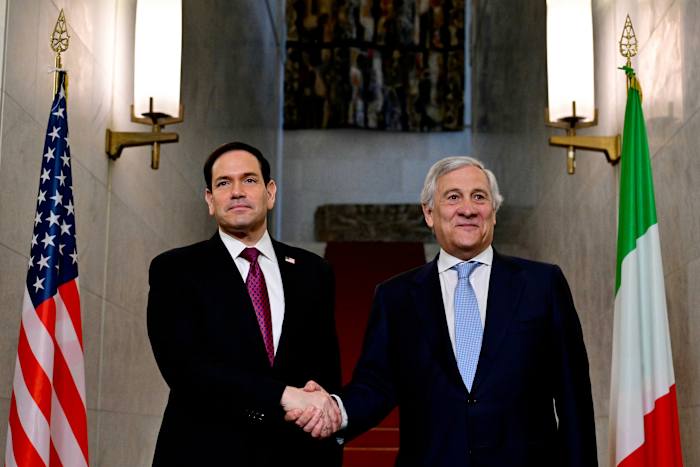
But Friday’s wrap-up meeting between Rubio and Italian Foreign Minister Antonio Tajani was all about damage control. Tajani put it bluntly. He told Rubio that Europe needs America, but he made sure to add that America needs Europe just as much. It's a classic case of mutual dependence that neither side can afford to break, no matter how much they bicker over trade or Middle East policy.
The awkward reality of the US Italy alliance
Let’s be honest about where things stand. Relations have been icy. The Trump administration hasn't been shy about criticizing Italy’s stance on the U.S.-Israeli conflict in Iran. They've even threatened to withdraw a chunk of the 12,000 U.S. troops currently stationed on Italian soil. For Rome, that’s not just a blow to national security; it’s a massive economic hit to the local communities that support those bases.
Tajani’s message was a reminder of what's actually at stake. Italy acts as the primary logistics hub for U.S. operations across the Mediterranean and North Africa. If the U.S. pulls back, it doesn't just hurt Italy’s defense—it blindsides America’s ability to project power in a region that's currently on the verge of a massive energy crisis.
Why the Strait of Hormuz changed everything
You can't talk about this visit without talking about Iran. Rubio warned today that if Tehran tries to seize control of the Strait of Hormuz, the U.S. response will be "they're going to get blown up." That’s typical Rubio rhetoric, but it’s causing headaches in Rome.
Italy depends on that waterway for its energy. Prime Minister Giorgia Meloni has been clear. She’s worried that the escalating conflict is squeezing the purchasing power of Italian households. While the U.S. is focused on military dominance, Italy is looking at its utility bills. This gap in priorities is exactly why Rubio had to show up in person. He needed to prove that Washington still cares about the economic fallout its foreign policy creates for its allies.
Meloni and the cooling of a political friendship
It’s no secret that Meloni was once seen as Trump’s best friend in Europe. They shared the same "country first" DNA. Lately, that’s changed. Trump has openly complained about the "cooling" of their relationship. Why? Because Meloni has refused to give the U.S. a blank check to use Italian airbases for offensive strikes in the Iran war.
Under the Italian Constitution, those bases are for NATO logistics and training, not for launching unilateral bombing raids. Meloni knows that if she bypasses Parliament to help the U.S. go on the offensive, her government could collapse. She's walking a tightrope between being a "reliable ally" and following her own country’s laws.
The Vatican factor and Pope Leo XIV
Rubio also spent two and a half hours at the Vatican. That’s a long time for a Secretary of State to sit down with church officials. The White House has been trading jabs with Pope Leo XIV for weeks, mostly over the humanitarian cost of the war in Iran.
By meeting with the Pope and Cardinal Pietro Parolin, Rubio was trying to show that the U.S. still values "human dignity" and "durable peace." It was a PR move, sure, but a necessary one. You can't ignore the Holy See when you're in Rome, especially when the Pope has a direct line to the hearts of millions of voters in both the U.S. and Italy.
What actually happened behind closed doors
While the cameras were clicking, the real talk was about three things:
- Freedom of navigation: Keeping the shipping lanes open so Italy doesn't go broke buying gas.
- Ukraine: Making sure the West doesn't lose interest in Kyiv while distracted by the Middle East.
- Economic protection: Ensuring that U.S. tariffs don't kill Italian exports like wine, cheese, and machinery.
Rubio is trying to play the "reasonable guy" in an administration that often prefers the sledgehammer to the scalpel. He’s betting that by reaffirming the need for U.S. troops in Europe, he can keep Italy from drifting further away toward a more independent—and perhaps less pro-American—European defense policy.
What you should watch for next
The "fence-mending" isn't over just because Rubio’s plane left Rome. The real test comes when the U.S. actually decides what to do with those 5,000 troops it’s already scheduled to pull from Germany. If those troops get sent home instead of being reassigned within Europe, Tajani’s "mutual need" argument is going to look a lot weaker.
Keep an eye on the Italian Parliament over the next month. If the U.S. pushes for more base access and Meloni says no, expect the rhetoric from the White House to get a lot louder. For now, the "tensions have been calmed," but in the world of 2026 geopolitics, that usually only lasts until the next tweet or missile launch.
If you’re tracking the impact on markets, watch the energy sector. Any further disruption in the Strait of Hormuz will make Italy’s "need" for the U.S. military a lot more desperate, regardless of how much they dislike the current administration's tone.