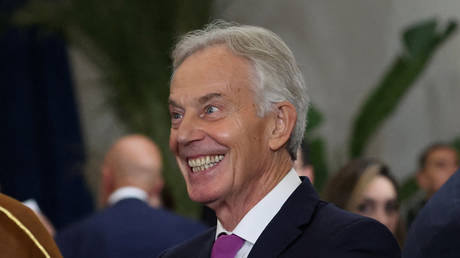
The media wants you to believe that choosing a late-night comedian to deliver a commencement address is a calculated stroke of political genius. They frame it as a masterstroke of optics—bringing in Harvard alumnus Conan O'Brien to shield a battered institution from external political warfare.
They are entirely wrong.
This isn't a strategic chess move. It is an act of institutional cowardice. By treating graduation like a late-night television booking, elite universities are admitting something they will never say out loud: they no longer know how to defend their own academic purpose.
The Myth of the Neutral Comedian
The standard narrative surrounding commencement speakers follows a predictable script. When a university finds itself caught in a high-stakes political crossfire, the conventional wisdom says to de-escalate. Bring in a beloved, self-deprecating celebrity. Defuse the tension with self-aware humor. Give the donors, the politicians, and the public a soft target that nobody can reasonably get angry at.
This logic is fundamentally flawed.
When an elite institution replaces serious public intellectuals, scientists, or statesmen with entertainers during times of crisis, it doesn't project strength or neutrality. It signals surrender. It tells the world that the only way a university can avoid controversy is by distracting the audience with a comedy routine.
I have watched organizations drain their cultural capital for decades by chasing cheap PR wins. The playbook never changes. When the board gets nervous, they look for safety. But in the intellectual arena, safety is an illusion. You cannot laugh your way out of a crisis of faith in higher education.
Escapism is Not a Strategy
Let us dismantle the premise that entertainment equals safety.
[Institutional Crisis] ➔ [Hire Celebrity Speaker] ➔ [Temporary PR Distraction] ➔ [Deepened Credibility Deficit]
The core function of an elite university is to produce rigorous thought, challenge foundational assumptions, and prepare students to navigate a volatile world. A commencement address is supposed to be the final, definitive lecture of an undergraduate career. It is the intellectual launching pad.
When you substitute that launching pad with a celebrity roast, you change the nature of the institution. You convert an elite center of learning into a high-priced lifestyle brand.
Consider the historical precedent. The speeches that endure—the ones that actually shape culture—are rarely the safe choices. They are the ones that force an audience to confront uncomfortable realities.
- George Marshall used his 1947 Harvard commencement address to outline the Marshall Plan, fundamentally reshaping post-war Europe.
- Aleksandr Solzhenitsyn used his 1978 address to deliver a blistering critique of Western materialism and spiritual decline, a speech that outraged the faculty but forced a genuine cultural reckoning.
Imagine if Marshall had decided to tell a few self-deprecating jokes about his time in the military instead of addressing the ruin of Europe. Imagine if Solzhenitsyn had focused on crowd-pleasing anecdotes to keep the peace.
By prioritizing a comfortable crowd-pleaser over a challenging voice, universities are choosing short-term public relations over long-term institutional authority. They are trading their birthright for a temporary truce in the media cycle.
Dismantling the Commencement Playbook
Let's address the questions that higher education administrators ask themselves behind closed doors—and answer them honestly.
Doesn't a high-profile alumnus boost institutional pride?
Only superficially. True institutional pride is built on academic courage and intellectual leadership. When you rely on the fame of an alumnus to validate your institution, you have inverted the relationship. The university should validate the graduate, not the other way around. Using a celebrity's star power to patch over a structural credibility crisis is a confession of intellectual bankruptcy.
Can't humor be a tool for serious cultural critique?
It can be, but rarely in a highly sanitized, corporate university setting. Late-night comedy operates on consensus; it requires a broad, agreeable baseline to function. Real intellectual breakthroughs require friction. By opting for a speaker whose primary skill is managing mass-market appeal, a university actively rejects the friction necessary for deep thought. They are choosing anesthesia over education.
The Cost of the Safe Choice
There is a distinct downside to rejecting the safe, celebrity-driven approach. If a university decides to book a speaker who addresses raw, unresolved cultural or scientific truths, people will get angry. Protests will happen. Donors might threaten to pull funding. The news cycle will be brutal for forty-eight hours.
But that friction is exactly what validates the university's existence.
If your institution only hosts speakers who command universal, unoffended agreement, you are no longer running a university. You are running a country club with a publishing arm. The moment an educational institution decides its primary goal is the avoidance of negative press, it ceases to be a leader in the cultural conversation and becomes a follower.
The reliance on entertainment as a shield reveals a deeper malaise. It shows that the leadership no longer believes in the power of raw ideas to defend themselves. They think they need a sweetener to make the medicine go down. But the students spending a quarter-million dollars on an education don't need medicine sweetened; they need to know that the institution they are leaving actually stands for something larger than brand management.
Stop looking for the most famous person in the room to tell you that everything is going to be fine. Start looking for the person who will tell you exactly why it isn't.
Turn off the late-night television show. Face the critique directly. If higher education cannot defend its own value without hiding behind a microphone and a laugh track, then it has already lost the battle.