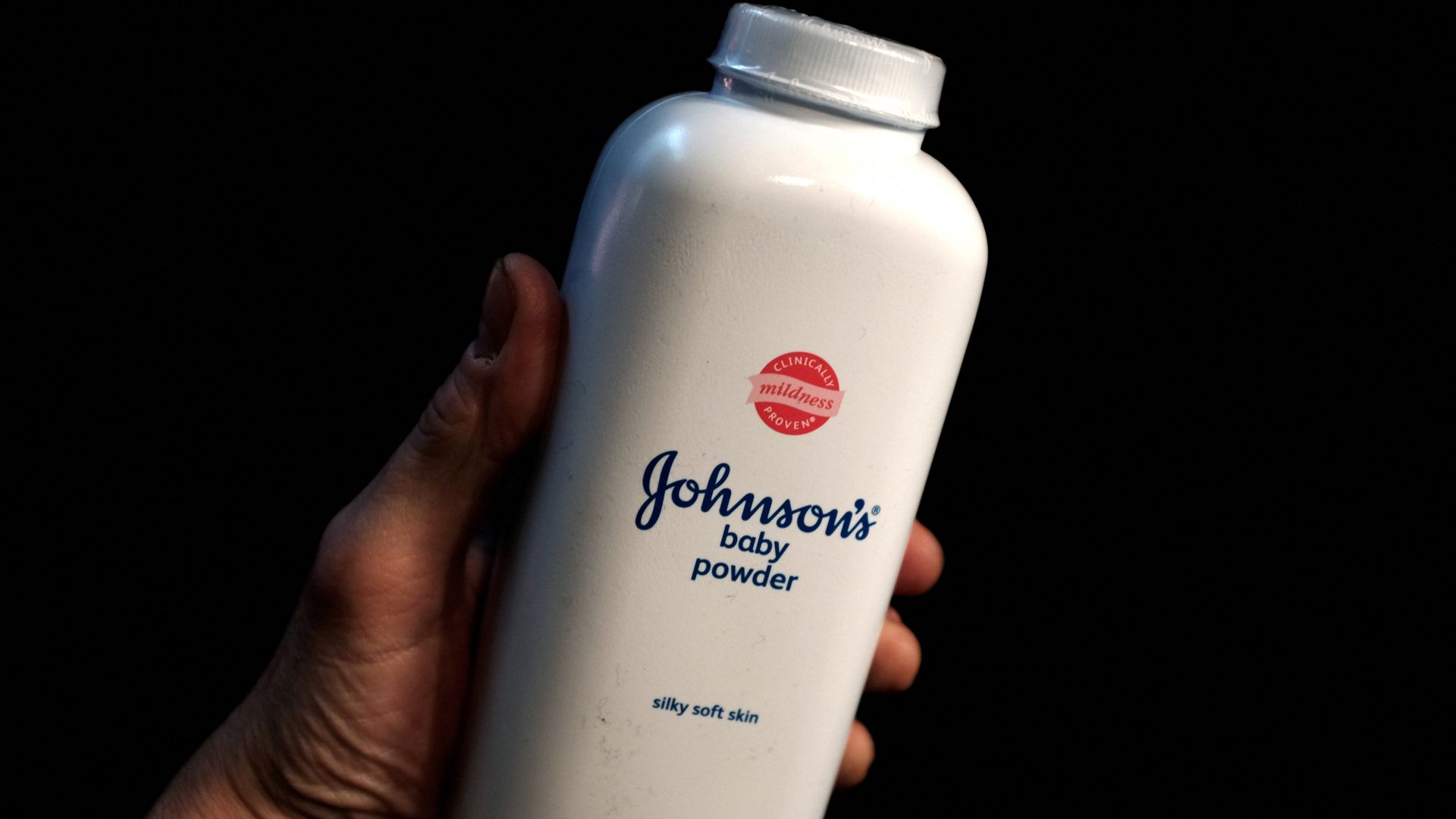
The headline reads like a corporate surrender. Johnson and Johnson dangling billions to make the noise go away. The lazy consensus says liability has been proven, accountability has arrived, and the pharmaceutical giant is finally paying the piper for decades of corporate negligence regarding talcum powder.
That narrative is entirely wrong.
Settling for billions has nothing to do with guilt. It has everything to do with risk mitigation, actuarial math, and the sheer operational paralysis of defending against thousands of fragmented tort claims. I have watched corporations bleed cash in endless legal discovery not because they lost, but because the cost of winning exceeded the value of their entire balance sheet.
Let us look at the mechanics of mass tort litigation. When a product touches millions of households over generations, the statistical baseline guarantees that a portion of those consumers will contract severe illnesses. That is a grim biological reality. The litigation machine sweeps up every single case, blends correlation with causation, and presents a terrifying existential threat to the manufacturer.
The defense team does not look at science first. They look at juries. They look at emotional resonance. They look at the probability of a runaway verdict driven by sympathy rather than epidemiology.
The Fallacy of the Settlement Check
Every major news outlet frames this payout as an admission of fault. That perspective misunderstands modern corporate finance entirely.
Imagine a scenario where a company manufactures a widget that is demonstrably safe by every rigorous, peer-reviewed standard available. Now imagine a legal environment where plaintiff lawyers can pool thousands of individual complaints into a single jurisdiction, leveraging public outrage to force a massive payout. If fighting those claims costs five billion dollars in legal fees and ties up capital for a decade, while settling costs five billion dollars and clears the stock price for immediate recovery, the CFO takes the checkbook out every single time.
That is not justice. That is a shakedown scaled to enterprise level.
The scientific consensus surrounding cosmetic talc has always been nuanced. Regulators like the FDA have repeatedly tested samples over the years and found no asbestos. Yet, the legal definition of truth operates differently from the scientific method. Science requires replication, rigorous controls, and statistical significance. Lawsuits require a compelling story, a sympathetic plaintiff, and a jury willing to punish a successful brand.
When a company offers billions to settle, they are buying certainty. They are purchasing the right to focus on operations rather than depositions.
Dismantling the People Also Ask Illusion
Type the phrase into any search engine and watch the predictable queries populate. Did talcum powder cause cancer? How much will claimants actually receive? Is Johnson and Johnson bankrupting its subsidiary to dodge payments?
The questions themselves are flawed because they accept the premise that the legal system acts as an objective arbiter of medical truth.
The reality is starker. Claimants often see a fraction of the headline figure after legal fees, expert witness retainers, and administrative costs bleed the settlement fund dry. The primary beneficiaries of multi-billion dollar mass torts are almost never the patients. They are the class-action attorneys who turn judicial proceedings into a lucrative industry.
Meanwhile, the subsidiary bankruptcy strategy—often criticized as a corporate dodge—is actually a rational tool designed to aggregate claims and create an equitable distribution channel rather than letting the first few plaintiffs bleed the well dry before others even file. It is aggressive, clinical, and completely misunderstood by commentators who prefer moral outrage over corporate restructuring mechanics.
The Cost of Cowardice in Product Defense
The real danger of this settlement precedent extends far beyond one company. It rewards predatory litigation models.
When multi-billion dollar payouts become the default response to unproven or scientifically tenuous claims, every consumer goods manufacturer faces a new calculus. Innovation stalls. Defending a legacy product becomes mathematically impossible if a wave of litigation can materialize out of thin air decades later. Companies stop investing in high-risk, high-reward formulations because the tail risk of litigation outweighs any potential market gain.
We are training corporations to capitulate.
If you want accountability, you demand rigorous scientific standards in the courtroom. You require proof of causation before a settlement check clears. You stop letting emotional appeals override empirical data.
Johnson and Johnson just bought their way out of a headache. The rest of the market just bought a lifetime of vulnerability.