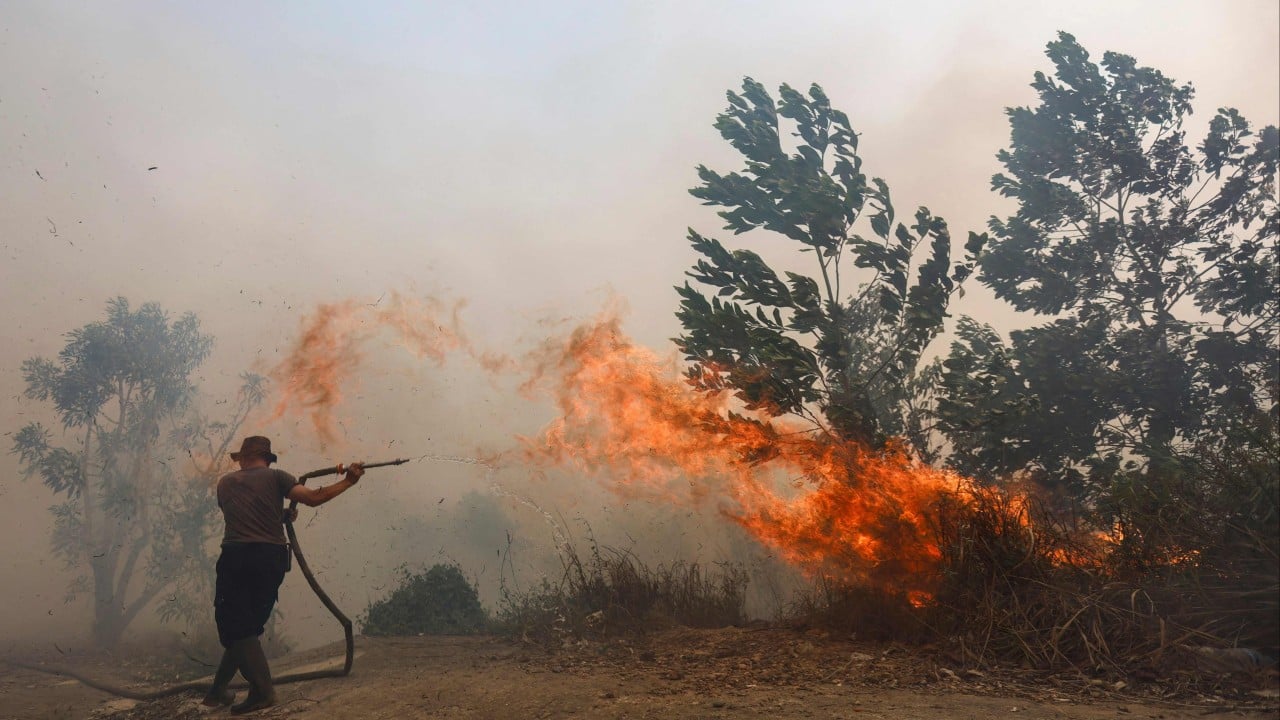
Jakarta resists declaring Indonesia haze a national disaster because doing so triggers rigid bureaucratic mandates, invites foreign interference into domestic land governance, and forces an immediate political reckoning over agrarian and peatland policies. Every dry season, acrid smoke blankets Sumatra and Kalimantan, drifting across borders into Malaysia and Singapore while sending respiratory clinic visits climbing. Yet the central government consistently treats the crisis as a localized or regional emergency rather than a national catastrophe. That reluctance is rarely accidental. It reflects decades of institutional design, economic trade-offs, and diplomatic sensitivities that keep crisis management tightly centralized in the hands of ministries and provincial governors.
Spend enough years covering Southeast Asian environmental and commodity politics and a clear pattern emerges. Smoke is seasonal; political calculus is year-round. When air quality indexes spike into hazardous territory, outside observers often expect a sweeping declaration to unlock limitless resources and sweep away red tape. In practice, declaring a national disaster under Indonesia’s disaster management framework alters chains of command, shifts budget authority, and turns a recurring land-use failure into an explicit admission that normal state mechanisms have broken down.
How Disaster Law Shapes the Smoke Response
Indonesia’s legal architecture for emergencies is built around Law Number 24 of 2007 on Disaster Management. Under this framework, disasters are categorized by scale into local, provincial, and national tiers, determined by criteria such as casualties, economic losses, infrastructure damage, psychological impact, and the capacity of lower administrative levels to cope.
On paper, severe cross-provincial haze looks like a textbook candidate for an elevated status. Thick smoke shuts schools, grounds flights, damages crops, and strains public health systems across multiple regencies and provinces. In reality, elevating an event to a national disaster changes who runs the show. It places authority over emergency response squarely under a national incident command structure led by the National Disaster Mitigation Agency (BNPB), overriding routine departmental turf and reshaping how emergency funds are drawn down and audited.
Governments rarely enjoy surrendering discretionary control to emergency protocols that come with intense public scrutiny. When a crisis is managed as a provincial emergency or a targeted task-force operation, ministries can deploy water bombing aircraft, weather modification cloud-seeding flights, and hotspot patrol teams while framing the effort as proactive problem-solving rather than systemic collapse. A national disaster label, by contrast, reads like a flashing red light on the international stage.
Sovereignty Sensitivities and Neighboring Pressure
Cross-border smoke turns an internal land-management problem into a diplomatic flashpoint. When winds carry fine particulate matter—especially PM2.5—toward neighboring capitals, governments in Kuala Lumpur and Singapore face domestic pressure to demand stronger action from Jakarta.
For Indonesian policymakers, foreign criticism easily touches a raw nerve around national sovereignty. Historically, Jakarta has pushed back against suggestions that outside states or international bodies should dictate how Indonesia polices its forests, plantations, or concession maps. A formal national disaster declaration can be seized upon by external actors as proof that domestic containment has failed, strengthening calls for outside oversight, conditional assistance, or trade scrutiny tied to deforestation and burning.
Diplomatic friction also complicates regional cooperation. The ASEAN Agreement on Transboundary Haze Pollution exists precisely to coordinate monitoring, information sharing, and fire prevention across member states. Yet cooperation and blame frequently travel on the same wind. Neighboring governments point to plantation concessions and peat drainage; Indonesian officials emphasize dry El Niño conditions, historical land-tenure disputes, and fires ignited by smallholders as well as larger operators. Keeping the domestic legal threshold high helps Jakarta maintain control over the narrative and the pace of response.
Peatlands, Fire Ecology, and Why Smoke Persists
Understanding why fires flare so stubbornly requires looking below the surface. Literally. Much of the worst Indonesia haze comes not from ordinary surface brush fires, but from burning peatlands—thick layers of waterlogged, partially decomposed plant material accumulated over thousands of years.
Healthy peat is soaked like a sponge and resists catching fire. Once drained through canals to make way for commercial crops such as oil palm, acacia pulpwood, or rubber, the peat dries out and oxidizes. When dry season heat arrives—especially during El Niño years that stretch dry spells and weaken monsoon rains—drained peat becomes tinder. Worse still, peat fires smolder underground, creeping laterally along root networks and re-emerging even after surface flames appear extinguished.
Smoldering Beneath the Surface
Surface water drops from aircraft can cool top layers without quenching deep-seated peat combustion. Extinguishing entrenched peat fires often requires flooding canals, raising water tables, and digging firebreaks—slow, grinding work that lacks the dramatic visuals of a helicopter scoop, yet determines whether smoke returns three days later.
To address this vulnerability, Indonesia created the Peatland and Mangrove Restoration Agency (BRGM), building on earlier peat restoration efforts. Restoring degraded peat means blocking drainage canals and rewetting landscapes that local communities and concession holders have long used for access, transport, and cultivation. Blocking a canal is not just an engineering task; it alters drainage on adjacent plots, sparking friction over livelihoods, boundaries, and compensation.
Clearing Land With Fire
Fire remains cheap and fast compared with mechanical clearing, particularly on fragmented or contested land. Smallholders clearing small plots and larger commercial actors operating through complex subcontracting or land-bank arrangements have historically faced incentives that collide with zero-burning rules.
Even when satellite monitoring flags hotspots quickly, enforcement on the ground runs into tangled land tenure and overlapping permits. A single parcel of land may carry conflicting claims involving customary communities, local households, district-level permits, and corporate concessions. Sorting out legal responsibility in court takes years; smoke arrives in weeks.
The Economic Stake Behind Political Caution
Wildfire smoke is expensive, yet the costs and benefits of land use do not land on the same balance sheet. Palm oil and timber products are major pillars of export earnings and rural employment in Indonesia. Millions of livelihoods—from smallholder farmers to mill workers, transporters, and traders—depend directly or indirectly on plantation supply chains.
Consider a hypothetical example of a regency chief facing a dry-season spike in fires near a major plantation corridor. Shutting down operations abruptly or revoking permits mid-crisis could trigger local economic pushback, labor unrest, and legal challenges, while doing nothing risks health complaints and media criticism. Politicians operating in that environment often favor calibrated measures—targeted warnings, joint patrols, and selective enforcement—over sweeping declarations that could rattle investment confidence or freeze local commerce.
International market pressures add another layer of complexity. Buyers in Europe and elsewhere have tightened deforestation and traceability requirements, pushing major producers to adopt no-deforestation, no-peat, no-exploitation commitments. While corporate pledges and certification schemes have raised compliance standards among larger exporters, enforcement gaps persist across informal supply chains and disputed boundaries.
Public Health and the Quiet Toll of Haze
While policy debates focus on laws, canals, and commodities, residents breathing thick smoke bear the immediate physical cost. Fine particulate matter penetrates deep into the lungs and enters the bloodstream, aggravating asthma, acute respiratory infections, bronchitis, and cardiovascular strain.
Children, older adults, outdoor workers, and people with pre-existing heart or lung conditions face the sharpest risks. Schools close for days or weeks at a time, disrupting learning, while families pay out of pocket for masks, clinic visits, and lost workdays.
Smoke does not announce itself by jurisdiction; it settles into classrooms, markets, and lungs wherever the wind carries it.
Public health responses—distributing masks, opening temporary shelters or clean-air spaces, and stocking clinics—are vital cushions during peak episodes. Still, handing out masks treats exposure rather than ignition. Until fire incidence drops structurally, seasonal clinics remain a recurring fixture of the dry calendar.
Bureaucratic Reality Versus Emergency Rhetoric
A common misconception outside Indonesia is that refusing a national disaster label equals doing nothing. In practice, the state mobilizes substantial assets during severe haze episodes: military and police personnel, firefighting crews, water-bombing fleets, cloud-seeding operations, satellite hotspot tracking, and law enforcement investigations.
Why, then, does the label itself remain so contentious? Because labels carry legal and political weight. Declaring a national disaster signals that normal governance is overwhelmed and activates special emergency rules that can complicate post-crisis accountability. Administrators who have spent careers navigating strict audit rules and overlapping mandates know how easily emergency spending can later draw scrutiny.
| Governance Lever | What It Unlocks | Why Officials Hesitate |
|---|---|---|
| National disaster declaration | Centralized national command, elevated emergency protocols, broad mobilization | Signals systemic failure, invites foreign scrutiny, complicates post-crisis audit trails |
| Task-force and provincial response | Targeted deployment of aircraft, patrols, and aid under existing ministries | Can stretch local capacity during prolonged or multi-province smoke events |
| Peatland rewetting and canal blocking | Long-term reduction in underground fire risk | Disrupts local drainage and access, requiring sustained community negotiation |
| Concession and permit enforcement | Accountability for illegal burning or non-compliance | Slowed by overlapping maps, disputed land claims, and legal appeals |
That table captures the central tension of Indonesia haze management. Short-term suppression buys breathing room; long-term prevention requires rewiring incentives and land governance across years, not weeks.
What Real Progress Demands Beyond Dry Season Fixes
Real change happens in the quiet months between smoke seasons, not during the scramble when visibility drops to a few meters. That means pairing rapid fire suppression with unglamorous fundamentals: accurate, publicly reconciled concession and peat maps; consistent canal blocking monitored through dry spells; real support for smallholder fire-free land preparation; and firm consequences when peatlands are drained or burned unlawfully.
Regional neighbors also have a stake in moving past finger-pointing toward practical verification, shared early-warning data, and supply-chain transparency that rewards verified fire-free production rather than penalizing entire regions indiscriminately. Air quality does not care about diplomatic phrasing or administrative categories.
Every dry season tests whether prevention gained ground over the preceding wet months. Watch how many degraded peat canals stay blocked before the rains stop—that single detail tells you far more about the next haze season than any emergency press conference.