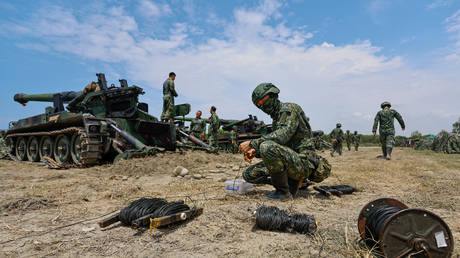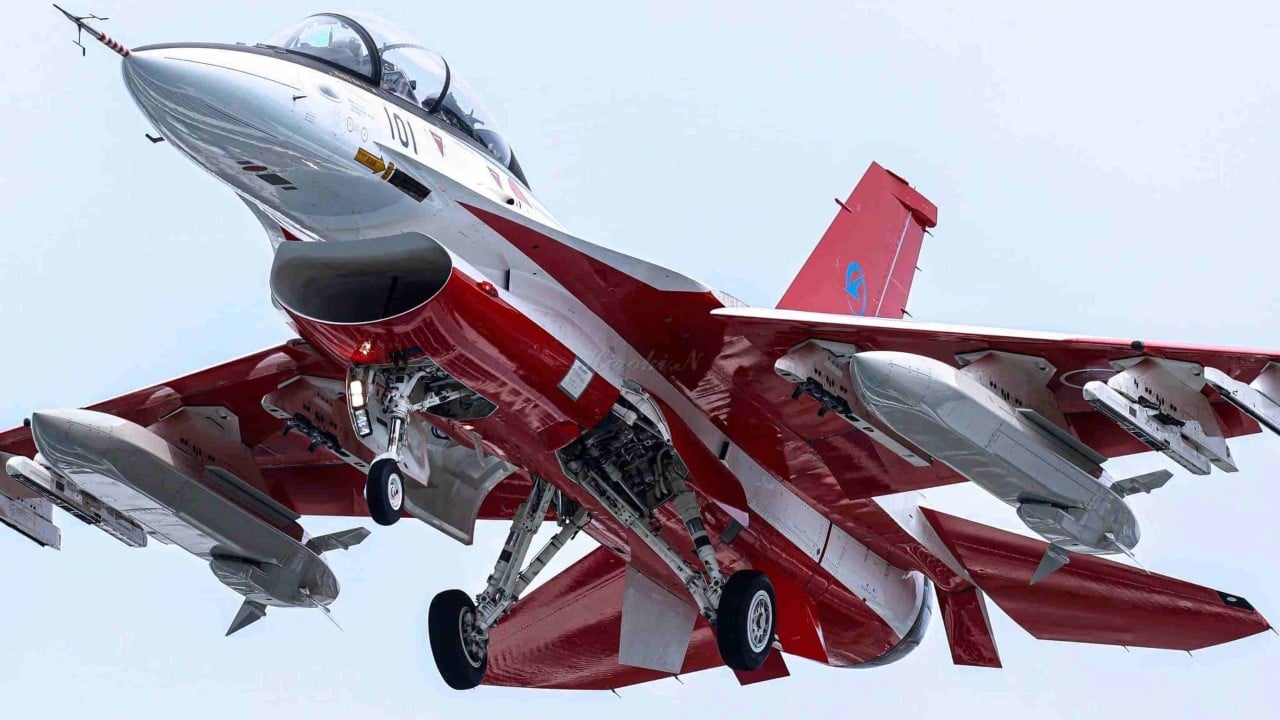
The headlines treat the upgraded Type 12 surface-to-ship missile as a seismic geopolitical awakening. Tokyo extends the range past a thousand kilometers, mounts it on trucks, slaps it onto destroyers, and straps it to fighter jets. Defense analysts nod in solemn agreement. The narrative writes itself: pacifist nation finally grows a spine, buys long-range teeth, and deters regional escalation.
It is a comforting fantasy for anyone who likes clean geopolitical fiction.
It is also strategically bankrupt.
I have watched defense budgets burn for two decades on hardware that looks great in a PowerPoint presentation and vanishes in the opening thirty minutes of an actual peer conflict. The lazy consensus says range equals security. If a missile can fly twice as far, Tokyo is twice as safe.
Physics and modern kill-chains laugh at that logic.
The Range Fallacy In Modern Logistics
Distance means nothing if the sensor architecture feeding the weapon is blind, fragile, or dead.
The upgraded Type 12 relies on a command-and-control network that sits squarely in the crosshairs of advanced electronic warfare and kinetic anti-satellite weapons. Giving a ground-launched truck the ability to hit targets a thousand kilometers away sounds terrifying until you remember that finding those targets requires persistent, vulnerable intelligence, surveillance, and reconnaissance assets.
If the satellite link drops, if the airborne radar gets swatted out of the sky by long-range air-to-air missiles, or if the command node turns into a smoking crater, a thousand-kilometer missile is nothing more than an expensive steel pipe filled with rocket fuel.
Tokyo is spending billions buying the spear while ignoring the hand holding it.
What The Pentagon Secretly Knows About Mobile Launchers
Everyone loves truck-mounted launchers because they look mobile. Mobility implies survivability. Move the launcher into a forest, fire, and scoot before the return fire arrives.
That works against insurgents. It fails against an adversary with multi-spectral satellite tracking, persistent drone swarms, and hyper-precise synthetic aperture radar. A heavy military truck rolling down a paved road or hiding under a sparse tree line on a densely populated island chain is not invisible. It is merely waiting for high-resolution confirmation before taking a direct hit from a hypersonic glide vehicle or a cluster munition.
We are engineering weapons for a Cold War map that no longer exists.
The Strategic Trap Of Symmetric Escalation
Why is Japan racing to match adversary strike volume? That is the core error.
Beijing does not fear a thousand Japanese cruise missiles. Beijing understands mass, depth, and industrial capacity. Japan's domestic defense industrial base is choked by export restrictions, high unit costs, and long production cycles. Trying to win an exchange of long-range strike munitions against a manufacturing superpower is like trying to drain the ocean with a bucket.
Every yen spent building hundreds of expensive cruise missiles is a yen diverted from asymmetric resilience.
The Alternative Nobody Wants To Fund
Imagine a scenario where Tokyo stops trying to play a game of long-range ping-pong and instead turns the entire home archipelago into an impenetrable subterranean and cyber-hardened porcupine.
Instead of chasing cruise missile parity, capital should flood into three unglamorous domains:
- Deeply buried command infrastructure that can survive direct ballistic bombardment.
- Distributed autonomous undersea denial systems that turn the surrounding straits into a logistical graveyard.
- Massive, redundant, low-cost drone swarms that overwhelm incoming threats through sheer economic attrition rather than technological gold-plating.
A missile sitting in a depot waiting for a fragile satellite link is a liability. A decentralized web of coastal denial assets that requires zero external guidance to ruin an amphibious invasion fleet is a deterrent.
The Type 12 upgrade is a political security blanket disguised as military strategy. It reassures allies in Washington and makes good press releases in Chiyoda. But when the shooting starts, nobody will care how far the missile can fly if the system launching it is already offline.
Stop buying range. Start buying survivability.