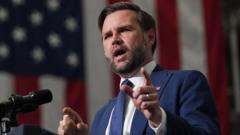
The old rules of American foreign policy are officially dead. If you needed proof, you just had to listen to US Vice President JD Vance on Joe Rogan's podcast.
In a raw, three-hour conversation, Vance didn't just offer standard diplomatic grumbling. He went completely off-script, accusing "certain elements" within the Israeli government of actively trying to manipulate American public opinion to prolong the war with Iran indefinitely. For those behind the quiet, heavily funded smear campaigns targeting him over his diplomatic efforts, Vance had a simple, punchy message: "Go to hell."
This isn't just a minor diplomatic spat. It's a massive shift. For decades, questioning the US-Israel relationship was a career-ending move for any Republican politician. Now, the sitting Vice President is openly accusing America's closest Middle Eastern ally of running covert influence operations on US soil to tank a peace deal.
Here's what's actually happening behind the scenes, why this rift is widening, and what it means for the future of American foreign policy.
The Secret Campaign to Tank the Iran Deal
To understand why Vance is so angry, you have to look at the diplomacy he's been leading. Just last month, the Trump administration secured a ceasefire deal with Iran. Critics immediately pounced, arguing the deal failed to dismantle Iran's nuclear infrastructure or halt its ballistic missile program.
But Vance revealed that the opposition wasn't just coming from organic domestic debate. It was being manufactured.
Citing a recent Time magazine investigation, Vance pointed to a highly organized, foreign-funded influence campaign running inside the US. The reporting linked an Israeli government-funded operation to Brad Parscale, Donald Trump's former campaign manager. According to the reports, Israel allocated hundreds of millions of dollars to boost support for the war, including a $45 million lobbying contract awarded to Parscale's network.
This money allegedly went toward paying conservative online influencers to attack Vance and other administration officials who supported the ceasefire.
"When I open up the pages of Time magazine and see that there's a literal foreign influence campaign being funded to tank the very deal that I was pursuing... and many of those people receiving that money were attacking me in completely dishonest ways... my response to that is, 'well, go to hell,'" Vance told Rogan.
Parscale has denied the allegations, claiming there is no evidence he acted against the administration. But for Vance, the paper trail is clear enough. He sees a deliberate attempt by elements within Jerusalem to bypass official diplomatic channels and brainwash the American public into supporting an endless military campaign.
Moving Beyond Unquestioning Support
This feud highlights a deep ideological divide. Older-generation Republicans have long operated under a policy of absolute, unquestioning support for Israel. Vance represents a completely different breed of conservative nationalism.
To Vance, Israel is an ally—like France or the UK—but not a partner whose interests will always align perfectly with America's.
He rejects the idea that questioning Israeli policy makes someone anti-Israel or antisemitic, calling those accusations "insane." Instead, he views foreign policy through a strictly transactional, "America First" lens.
There's a massive difference between supporting an ally's self-defense and letting that ally dictate American military deployments. Vance argued that a permanent war with Iran serves no clear strategic US objective.
- The Shipping Issue: Critics of the ceasefire argue military force is the only way to keep trade routes open. Vance disagrees. He noted that even a sustained bombing campaign cannot fully secure the Strait of Hormuz because Iran can easily target cargo ships with cheap, asymmetric weapons. You have to talk to them eventually.
- The Nuclear Goal: Vance agrees that Iran must never acquire a nuclear weapon. But he argues diplomacy is a far more effective tool to achieve this than an endless, open-ended war that drains American resources.
- The Financial Reality: Vance previously reminded Israeli officials that two-thirds of the defensive weapons keeping their skies safe are built by American workers and paid for by American taxpayers.
The message to Jerusalem is clear: America will help you defend yourself, but we aren't writing blank checks for wars we don't want to fight.
The Real Danger of Foreign Influence
Interestingly, Vance didn't express outrage that Israel is trying to influence US policy. He views that as a normal, if ugly, part of international relations. Every country does it—allies and adversaries alike.
The real issue is how easily American leaders and media figures capitulate to it.
When foreign money can buy off American political influencers to attack their own government's diplomatic efforts, it compromises domestic decision-making. Vance's frustration lies with the pundits and politicians who claim to be "America First" but quickly fall in line with foreign agendas the moment the funding starts flowing.
This public clash is going to make things incredibly awkward between Washington and Tel Aviv in the coming months. It signals to other allies that the US is no longer willing to tolerate covert influence operations designed to manipulate domestic public opinion.
If you want to understand where American foreign policy is heading, stop looking at traditional think-tank papers. The real strategy is being laid bare on podcast microphones. The US is narrowing its global commitments, demanding more from its allies, and refusing to get dragged into conflicts that don't directly serve its immediate national interest.
For America's partners, the era of unconditional support is officially over.