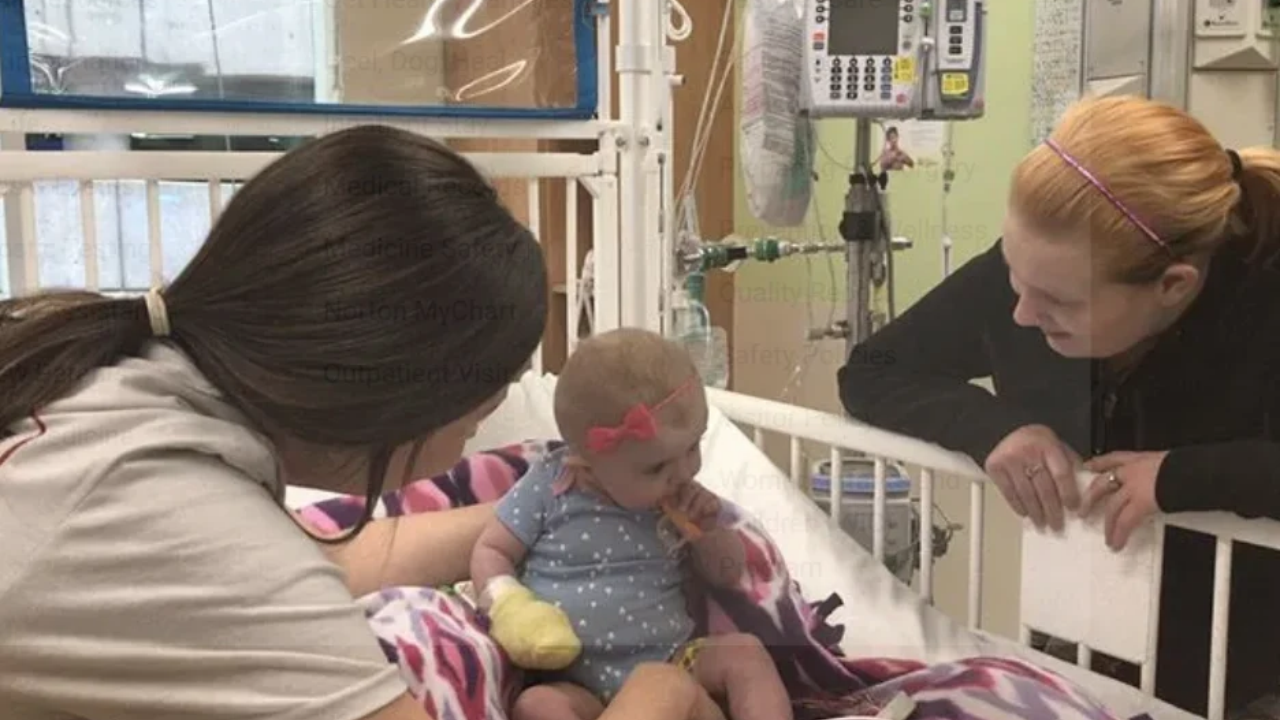
Celebrity charity headlines usually vanish by Tuesday. Someone cuts a check, poses for a press release, and moves on to the next red carpet. That's not what happened when Jennifer Lawrence pledged $2 million in February 2016 to build a specialized cardiac unit in her hometown of Louisville, Kentucky.
Her gift through the Jennifer Lawrence Foundation helped spark a broader community push that raised over $4 million through the Norton Children's Hospital Foundation. Years later, in December 2019, Norton Children's Hospital formally dedicated the Jennifer Lawrence Cardiac Intensive Care Unit, with the first patients moving in early 2020. The unit opened with 17 private rooms, including three designed specifically for newborns, giving critically ill children recovering from heart procedures, open-heart surgery, and complex heart conditions a dedicated space built around both medical precision and family presence.
Looking back at that $2 million gift in 2026, it stands out less as a feel-good celebrity moment and more as a blueprint for how hometown philanthropy works when it targets a real clinical bottleneck.
The Real Bottleneck Behind Pediatric Heart Care
People often read "children's cardiac unit" and picture a nicer hospital room with cartoon murals on the wall. That misses the point completely.
Congenital heart defects are the most common type of birth defect in the United States, affecting nearly 1% of births—roughly 40,000 babies every year. About one in four babies born with a heart defect has a critical congenital heart defect, meaning they typically need surgery or catheter-based interventions during their first year of life.
When an infant or child goes through open-heart surgery or heart failure treatment, general pediatric intensive care isn't always enough. Post-op cardiac recovery is razor-thin. Blood pressure swings, fluid shifts, rhythm disturbances, and ventilator weaning require round-the-clock coordination among pediatric cardiologists, cardiothoracic surgeons, cardiac anesthesiologists, specialized nurses, respiratory therapists, pharmacists, and child life specialists.
In Louisville, expanding dedicated cardiac intensive care capacity wasn't about vanity upgrades. As pediatric heart care grew more advanced and more children with complex heart conditions survived past infancy, hospitals needed purpose-built spaces where families could stay close without sacrificing clinical monitoring.
Why Challenge Gifts Beat Standalone Celebrity Checks
Here's a hard truth from nonprofit fundraising that rarely makes entertainment blogs: a single celebrity check, even a big one, rarely finishes a major hospital build on its own.
What made Lawrence's move smart was the challenge attached to it. Instead of quietly handing over money and walking away, she paired her $2 million commitment with a public challenge urging others in the community to step up. That nudge helped push fundraising past $4 million through the foundation.
From years of watching hospital capital campaigns play out, challenge gifts work for a very practical reason. Local business owners, families, and mid-sized donors often wait on the sidelines until they see momentum. A high-profile anchor gift lowers the hesitation threshold. It signals that the project isn't theoretical and that their contribution will actually move the needle rather than disappear into a giant budget hole.
Still, let's be honest about the limits. Two million dollars—or even four million—doesn't cover the lifetime cost of running a high-acuity cardiac unit. Specialized nursing salaries, perfusion gear, imaging technology, and ongoing clinical research cost tens of millions over time. Private philanthropy acts as a catalyst and an accelerator, not a substitute for sustainable healthcare financing or public investment in congenital heart research, which advocates have long noted lags behind the sheer number of people affected.
What Happened Between 2016 and 2020
A lot of viral recaps compress this story into a single sentence, making it sound like Lawrence donated money on Friday and a 17-room unit opened on Monday. Hospital construction doesn't work like that—especially inside an active children's hospital.
- The February 2016 pledge: Lawrence announced the $2 million gift through her foundation to establish the cardiac intensive care unit at what is now Norton Children's Hospital in Louisville, paired with a call for community support.
- Campaign momentum and planning: Her gift helped drive broader fundraising—topping $4 million—while hospital leaders and planners worked through multi-year facility upgrades and care expansion plans.
- December 2019 dedication: Norton Children's Hospital officially dedicated the 17-room Jennifer Lawrence Cardiac Intensive Care Unit on December 23, 2019, with donors, clinicians, patients, and families present.
- Early 2020 patient move-in: Patients began moving into the unit in January 2020. Official hospital updates noted that Louisville infant Addisynn Seay—born with a complex single-ventricle heart defect—was the first patient to recover in the new unit after undergoing her second open-heart surgery.
Four years from announcement to opening is actually pretty normal for specialized clinical space. Building out critical care rooms with modern monitoring, infection control, and family accommodations takes time, permits, and zero shortcuts.
Family Space Isn't "Extra" in Pediatric Care
If you've ever spent hours in a hospital waiting room, you know how exhausting the logistics are. Now imagine doing it for weeks at a time while your baby is hooked up to monitors after open-heart surgery.
One detail highlighted in Norton Healthcare's coverage of the unit was the inclusion of space for families to stay with their children. To some observers, that sounds like a nice comfort perk. In pediatric medicine, it's practical necessity.
Parents aren't just visitors in a cardiac ICU. Over a multi-week stay, they learn their child's baseline cues, participate in care updates, coordinate with social workers and discharge planners, and prepare to manage complex medications and home monitoring once they leave the hospital. When families have cramped chairs or get pushed out into distant waiting areas, stress spikes and communication gets harder. Giving families room right alongside specialized care supports emotional stability during one of the scariest stretches a household can face.
Common Misconceptions Worth Clearing Up
Whenever an older philanthropic story resurfaces on social media, a few inaccuracies tend to tag along. Getting the facts straight keeps the conversation grounded.
- It happened overnight: The gift was announced in February 2016, while the unit was dedicated in December 2019 and welcomed its first patients in early 2020.
- She funded the entire hospital expansion alone: Her $2 million gift was a major catalyst, and community fundraising through the foundation brought in more than $4 million overall.
- Cardiac units only treat one type of heart problem: A pediatric cardiac intensive care unit cares for children dealing with both congenital heart defects present from birth and acquired heart conditions, including those recovering from heart surgery or awaiting or recovering from heart transplants.
- Survival means "cured" forever: Advances in pediatric surgery and intensive care have dramatically improved survival for children with heart defects over recent decades. Still, many kids with complex congenital heart conditions need lifelong cardiology follow-up, repeat procedures, and support for neurodevelopmental or emotional challenges as they grow.
Practical Ways to Support Pediatric Heart Care
If reading about a hometown cardiac unit makes you want to do something concrete rather than just share a post, focus on high-leverage support that actually helps families and clinicians.
- Back local children's hospital foundations with specific designations: If you donate to a children's hospital foundation, check whether you can direct funds toward cardiac care, family support services, or child life programs rather than leaving it completely open-ended.
- Support congenital heart advocacy and research groups: Organizations like the Children's Heart Foundation focus specifically on congenital heart defect research, while the Centers for Disease Control and Prevention publishes reliable national data on prevalence, survival, and long-term needs.
- Help families with non-medical costs: Ask local pediatric units or family houses what practical items families actually need during long stays—think meal cards, gas vouchers, parking support, or quiet comfort items—because out-of-pocket non-medical costs add up fast when a child is hospitalized far from home.
- Stay informed on lifelong transition care: As children with congenital heart defects grow into teens and adults, staying connected with adult congenital heart specialists prevents gaps in care when they age out of pediatric clinics.