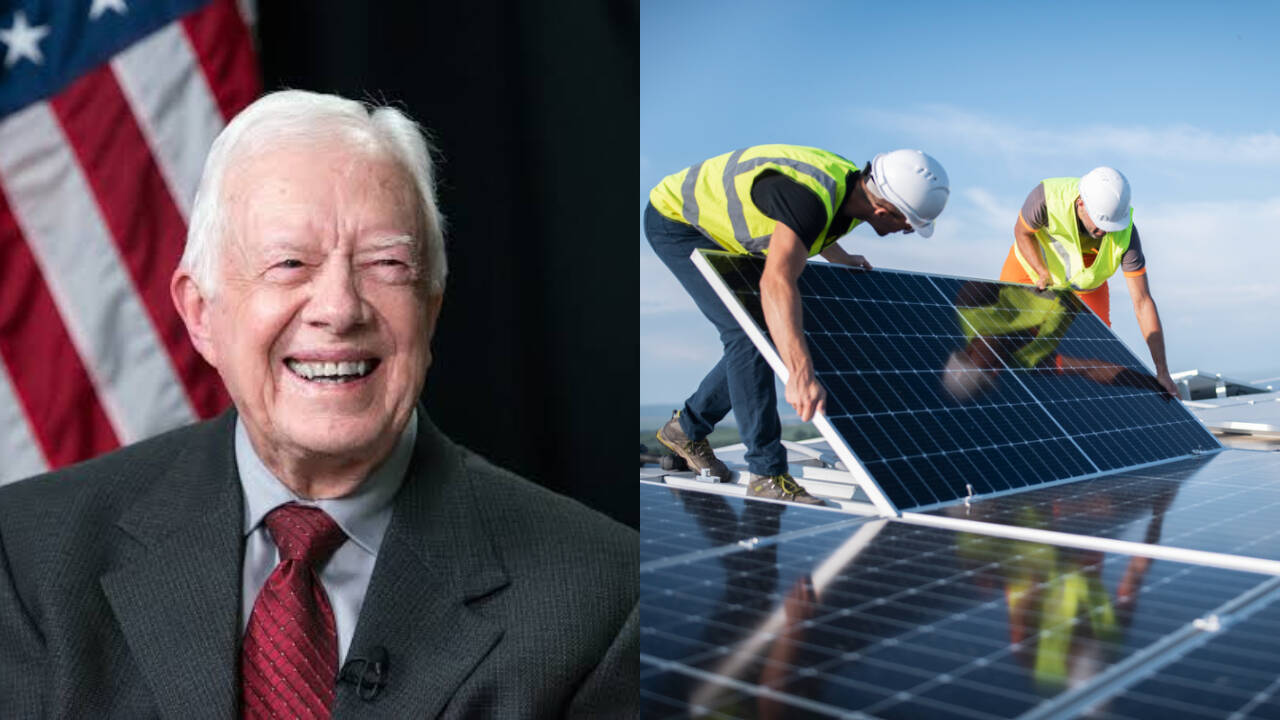
Long before solar panels became a standard suburban backyard fixture, Jimmy Carter was trying to warn us. Back in 1979, during the crunch of the oil crisis, he installed solar water heaters on the roof of the White House. Washington mocked the move as a quirky stunt. His successor famously tore them down. But Carter didn't stop believing in alternative energy. Decades later, the peanut farmer from Georgia took matters into his own hands and transformed a chunk of his family farmland into a 1.3-megawatt solar array that quietly powers a massive share of his tiny hometown.
If you look at how small towns traditionally handle energy, it is a story of total reliance on legacy utility monopolies. Plains, Georgia, home to roughly seven hundred residents, changed that script when Carter leased ten acres of his farm to SolAmerica Energy. The resulting installation boasts more than three thousand solar panels. On a sunny day, this array generates enough electricity to supply roughly sixty percent of the entire town's power needs.
Walking the Walk on Renewable Energy
Most politicians talk about clean energy transitions during campaign cycles and leave office to cash checks from oil conglomerates. Carter went back to rural Georgia and got his hands dirty. He literally helped drive some of the six-inch steel I-beams into the ground during construction.
The project wasn't just about sticking panels in a dirt field. Agricultural land conversion usually triggers local pushback over lost crop yields. By partnering with developers and working around a long-term power purchase agreement with Georgia Power, the initiative proved that farming and photovoltaics can actually coexist.
Beyond the Panels: The Biodiversity Experiment
What most media coverage misses is what happened underneath those panels. Instead of paving over the acreage or letting invasive weeds take over, researchers from the University of Georgia stepped in. They planted native wildflowers and low-growing flora beneath the solar arrays to create a thriving habitat for local pollinators like bees and butterflies.
This approach solves one of the biggest headaches of utility-scale solar installations: ground maintenance. Instead of spending thousands of dollars constantly mowing or using heavy chemical herbicides, the flowering ground cover keeps the soil healthy, manages stormwater runoff, and helps local ecosystems bounce back. It transforms a standard industrial energy footprint into a functional ecological asset.
The Real Legacy We Can Learn From
The project in Plains stands as a blueprint for decentralized, local energy independence. Communities don't always have to wait for massive federal grids to overhaul their infrastructure. Small municipalities can partner with private developers to utilize idle land, lower municipal utility overhead, and build resilience against grid failures.
Carter lived to see his vision vindicated, passing away at age one hundred knowing that his hometown was running partly on sunshine harvested from the very dirt where he once grew peanuts. Next time someone tells you that renewable infrastructure is too complicated or localized for rural America, point them straight to Sumter County, Georgia. Action speaks louder than policy briefs.