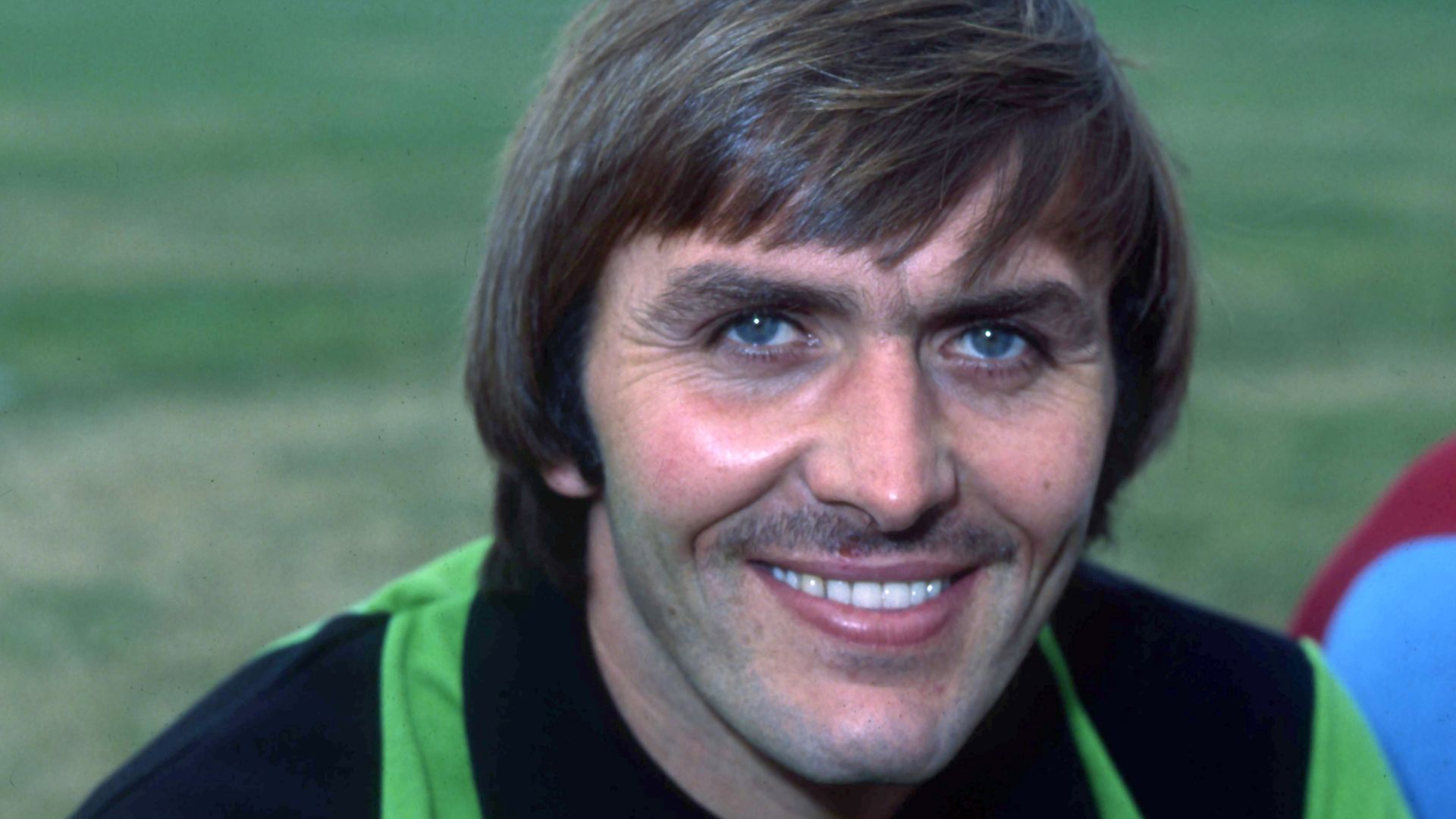
The passing of Jimmy Rimmer at the age of 78 closes the ledger on one of the most uniquely bizarre résumés in the history of British football.
Rimmer collected two European Cup winner medals across a career that spanned more than two decades, yet he spent a grand total of zero minutes on the pitch during the actual finals. In 1968, he sat on the bench as Manchester United's understudy to Alex Stepney when Matt Busby's side conquered Europe at Wembley. Fourteen years later, fate played an even crueler trick in Rotterdam. Standing in goal for Aston Villa against Bayern Munich, Rimmer felt his shoulder give way after just nine minutes, forcing a terrified twenty-three-year-old Nigel Spink off the bench for only his second senior appearance. Villa won. Spink became a club immortal. Rimmer got the medal, the history books, and an enduring footnote about the cruelest kind of bad luck.
Reduce Rimmer to those two finals, however, and you miss the substance of a goalkeeper who was foundational to the architecture of English club football through the nineteen-seventies and eighties.
Long before the modern era of sports science, hyper-specialized dietary tracking, and billion-pound squad depth, goalkeeping was a trade mastered through sheer resilience. Rimmer operated in an era when penalty boxes were populated by aerially dominant center-forwards whose primary objective was often testing the structural integrity of the custodian's ribs. Standing at five-foot-eleven, he was hardly a giant by modern metrics, yet he possessed exceptional positional intelligence and an unflappable temperament that earned the trust of managers across the First Division.
His path was defined by patient endurance. Developing as a youngster at Manchester United, he spent years waiting behind Stepney before a loan spell at Swansea City offered a brief glimpse of regular first-team action. Arsenal recognized his capacity and brought him south in 1974 to inherit the gloves from the retiring Bob Wilson. In North London, Rimmer established himself instantly, sweeping up Arsenal's Player of the Year award in 1975 during a transitional period for the club. He was dependable, vocal, and consistently positioned behind defensive units that required a steady hand to steady turbulent campaigns.
The defining chapter of his playing days arrived when Ron Saunders took him to Aston Villa in 1977.
Villa were assembling a meticulously structured squad built on defensive compactness and blistering counter-attacking precision. Rimmer was the anchor. He marshaled a backline featuring Kenny Swain and Allan Evans with an understated authority, culminating in the 1981 First Division title. That league championship was no fluke. It was constructed on the back of twenty-two clean sheets and an ironclad defensive unit that conceded only thirty-four goals all season. Rimmer played every single minute of that campaign, cementing his status as arguably the finest goalkeeper in the club's history.
Then came Rotterdam. The cruel twist of his shoulder injury against Bayern Munich could have bred bitterness. Instead, Rimmer's legacy survived intact because his teammates and supporters understood what he had contributed to get them to the summit. Without his steady performances throughout the domestic rounds and qualifying ties, Villa never boards the plane to the Netherlands.
Football often reserves its loudest applause for the player who scores the winning goal or makes the dramatic last-minute save in front of the television cameras. Rimmer's career serves as a reminder of the quiet competence required to sustain a winning culture over a long season. He moved from Old Trafford to Highbury and onward to Villa Park, adapting to changing tactical demands while maintaining a baseline of elite performance that few of his contemporaries could match.
He earned one senior cap for England in 1976 against Italy, a statistic that many analysts agree was criminally low for a goalkeeper of his consistency. Yet international recognition is fickle, often dictated by the dominant club side of the moment rather than individual merit. Rimmer did not need a drawer full of international caps to validate his standing among his peers. The managers who signed him, the defenders who trusted him behind them, and the supporters who watched him week after week knew his value.
The game has changed utterly since Rimmer hung up his gloves following spells back at Swansea and brief stints later in his career. Modern goalkeepers are expected to function as auxiliary outfield playmakers, initiating attacks with precise distribution under intense high-press systems. The physical demands, the tactical sophistication, and the sheer financial scale of the sport today would be entirely unrecognizable to a goalkeeper who learned his trade on the pitches of Lancashire in the early nineteen-sixties.
Yet the core requirement of the position remains identical. A goalkeeper must project calm amidst chaos.
Jimmy Rimmer did that better than almost anyone of his generation. He accepted the strange quirks of his destiny—the medals won from the bench or from the treatment table—with the same quiet professionalism that defined his work between the posts. As football reflects on his passing, the enduring image should not be the injury in Rotterdam, but the steady, reliable presence of a goalkeeper who helped build two of English football's most historic champions.